
A soft growl, a stealth walk leaving pug marks on the soft clay soil, ears twitching to catch the slightest sound.
Claws sharpened on the trunks of the sal trees. A set jaw, containing fang like teeth. The tail moving side to side in aggression.
The body the weight of 4 men and length the size of 2 men. The glistening orange coat emphasizing its stripes.
Concealed in the bushes of the wild marijuana leaves, it watches its prey.
A barking deer senses danger and raises an alarm. The jungle falls silent, in anticipation of the tiger making a move.
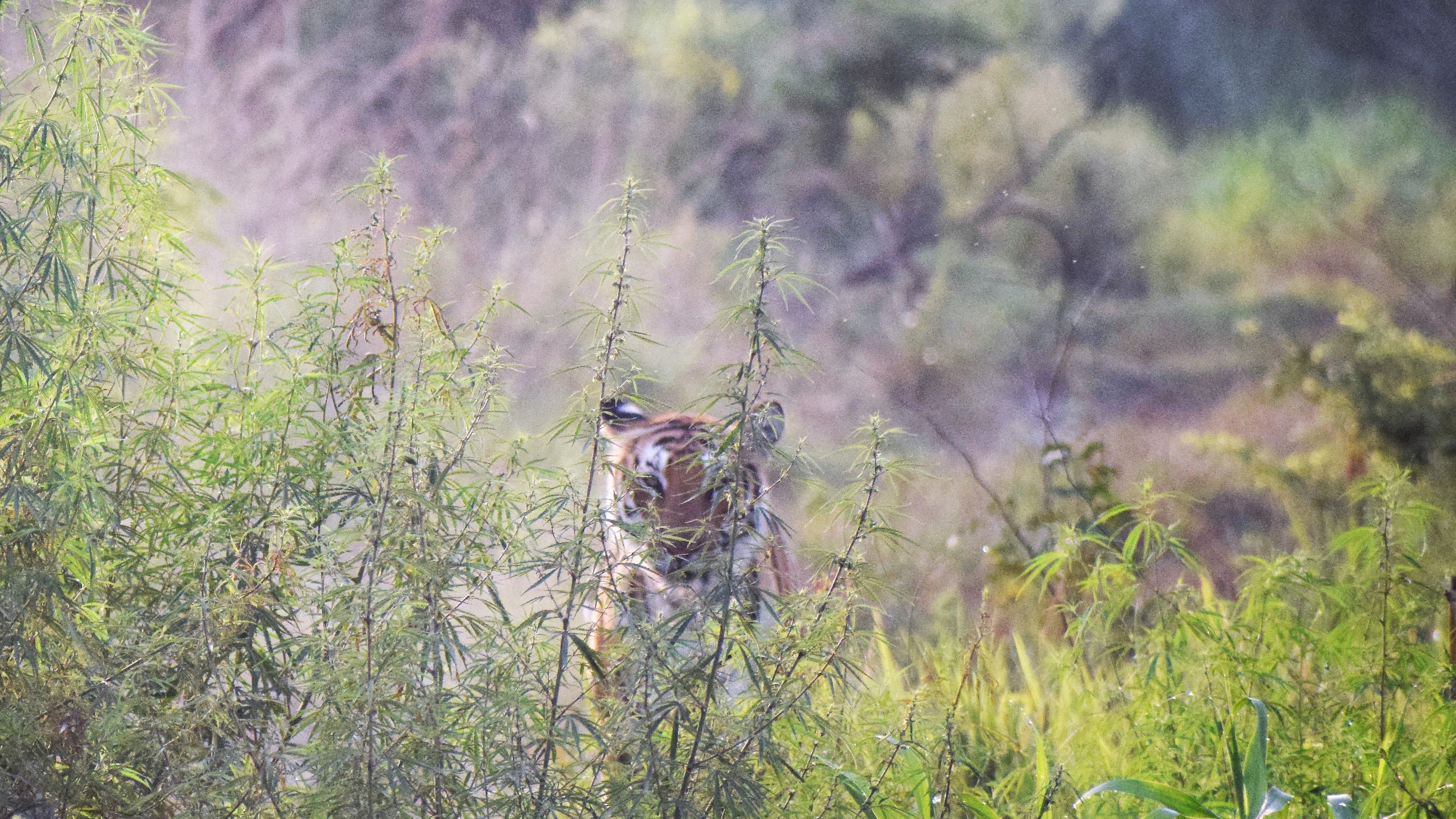
India’s oldest and most diverse forest reserve, Jim Corbett, attracts wildlife enthusiasts from all over the world. A safari here is an opportunity to see a myriad species of birds, animals, and plants in the wild.
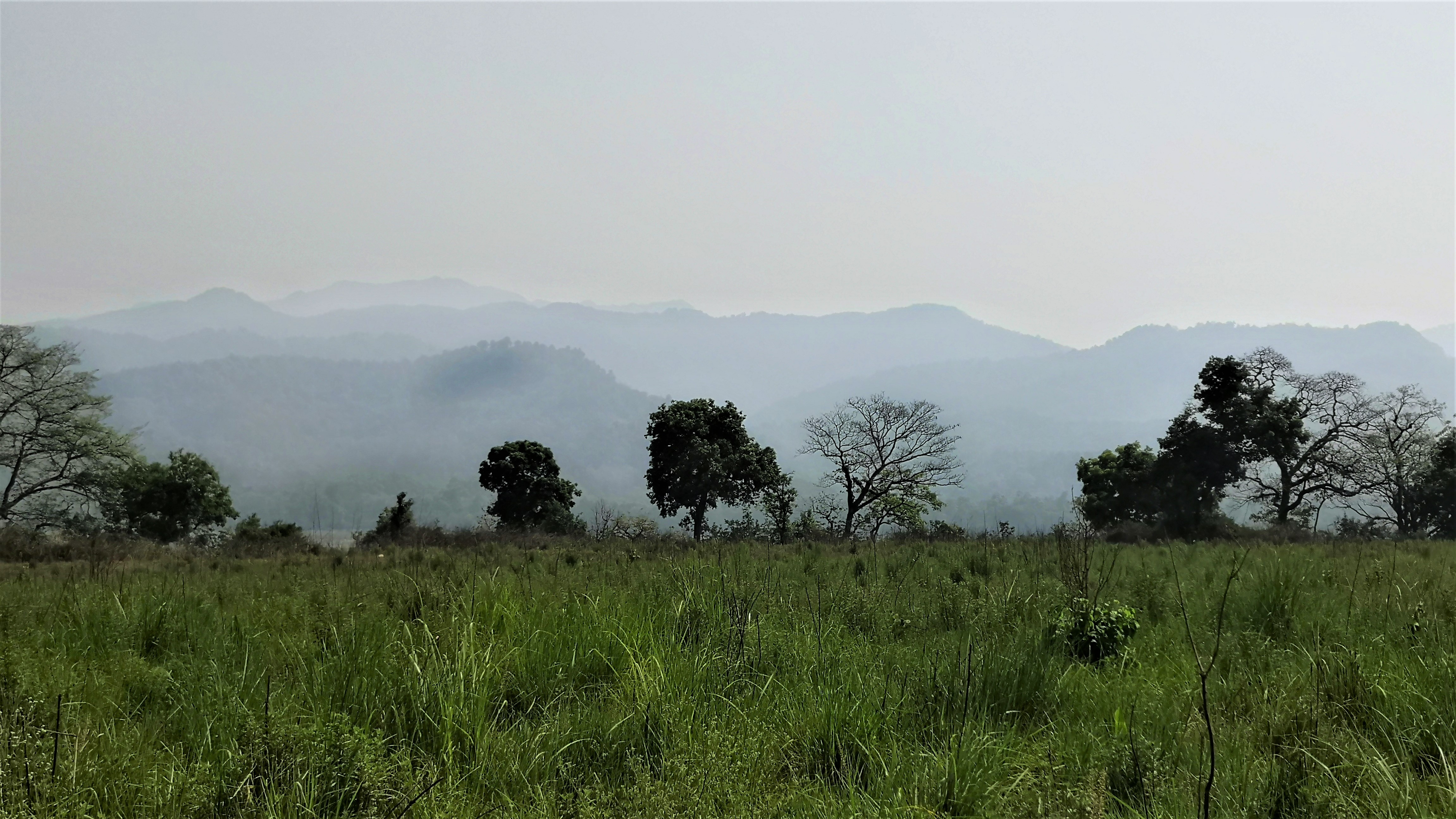
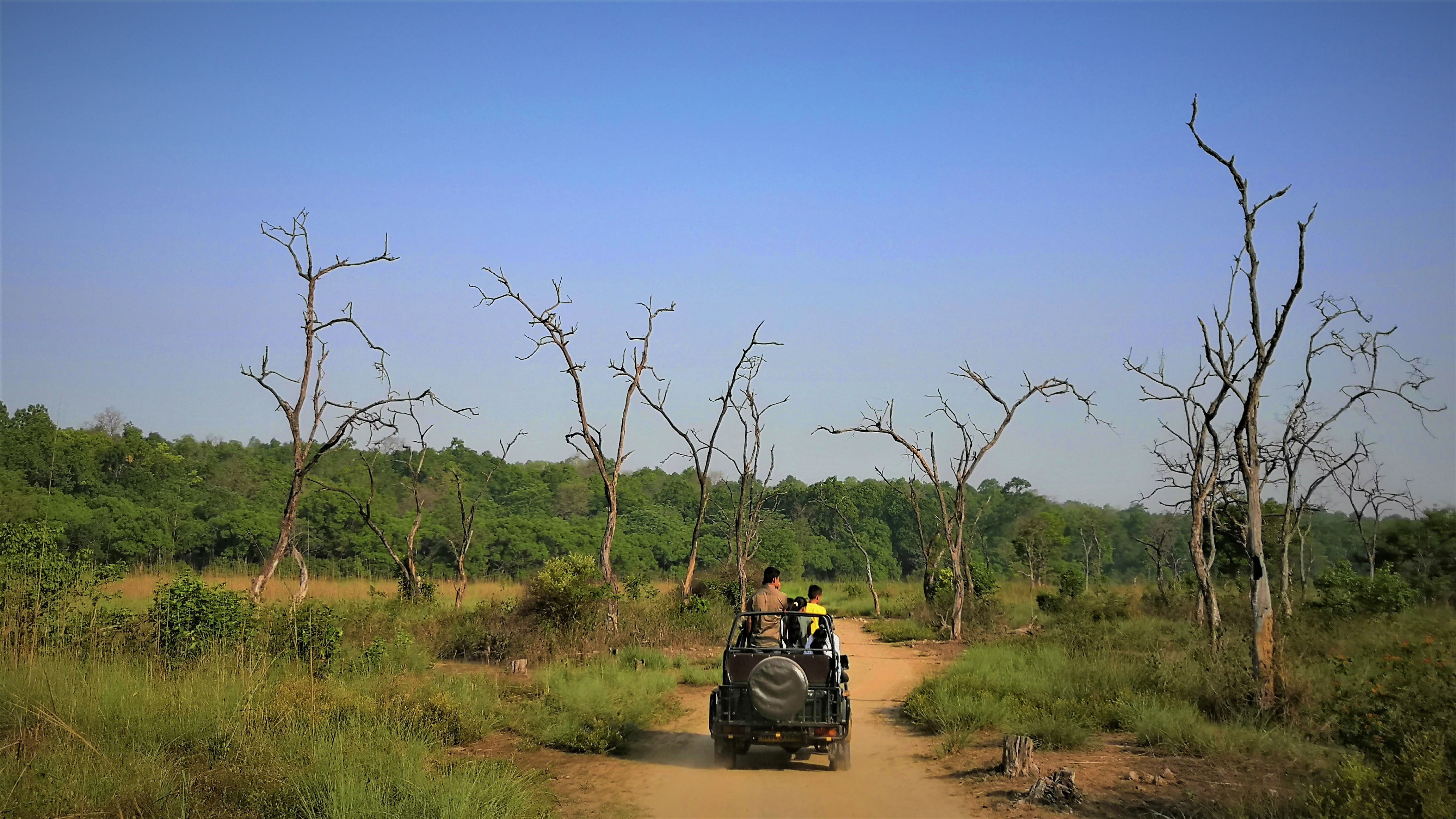
The park is divided into several zones given the huge forest cover. Dikhala zone is the most sought after as tiger density is high here.
The safari spanned across two days, which gave us an ample opportunity to spot a variety of wildlife.
We drove over glistening streams strewn with boulders scanning the forest for elephants, birds, and the elusive tigers.
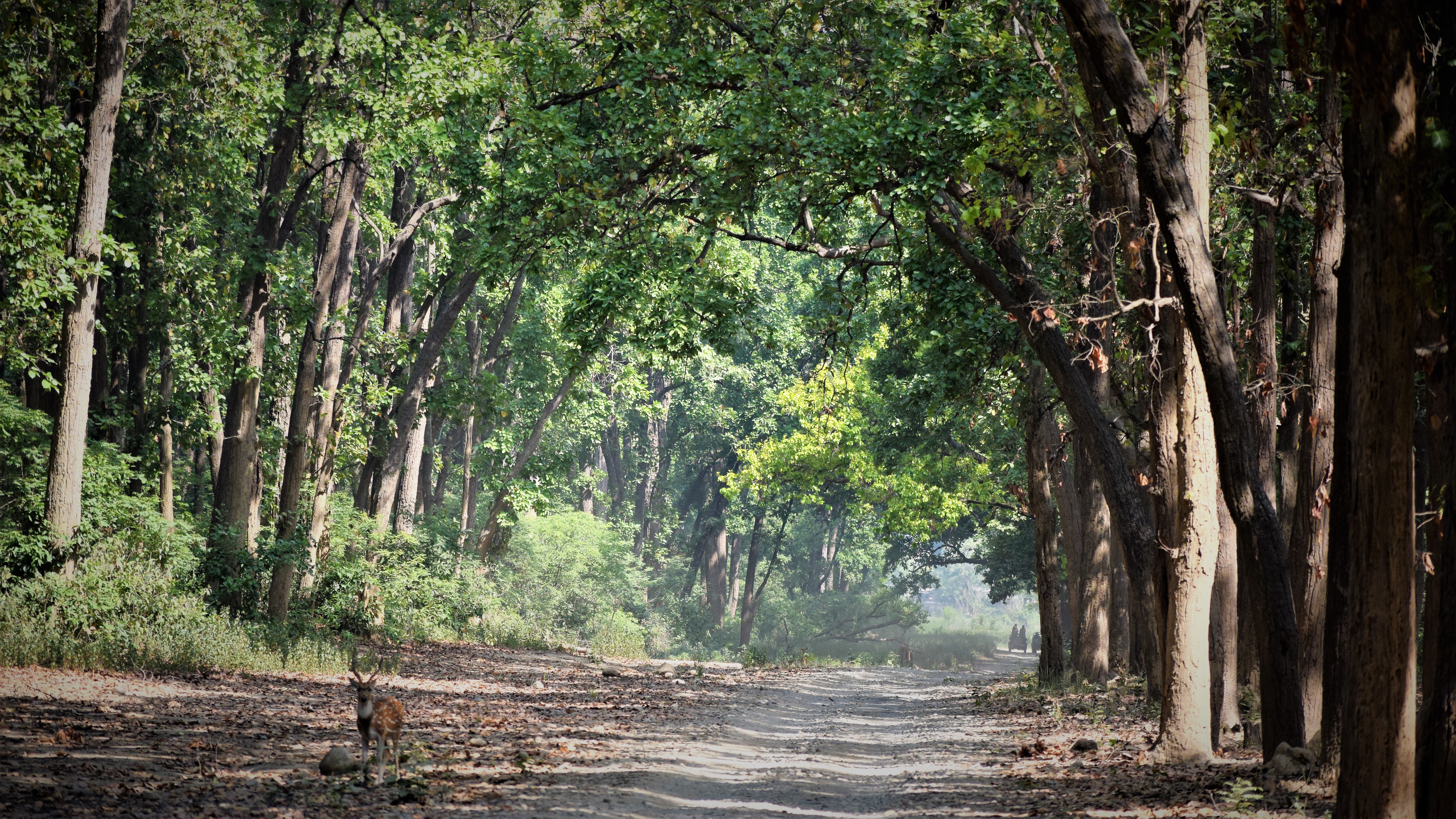
As the jeep tires spit the powdery clay soil below us, trees as tall as the high-rises, in an urban jungle, formed a canopy above us. Dead leaves were carpets of yellow, red, and brown.
The dusty lanes and the thick spread of the sal trees had an eerie silence. Sunlight streaming faintly through the dense and dark forest gave me vibes of Hansel and Gretel.
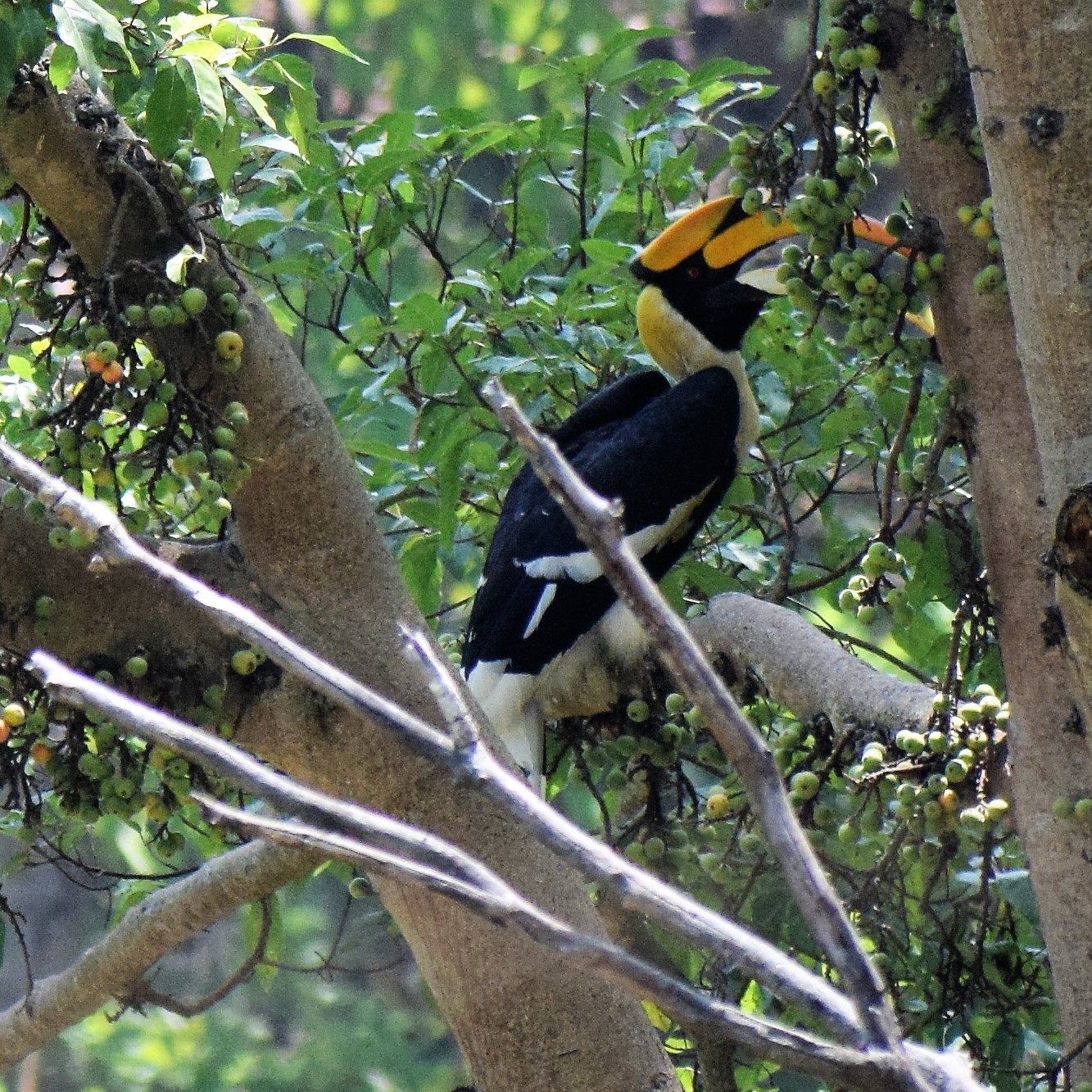
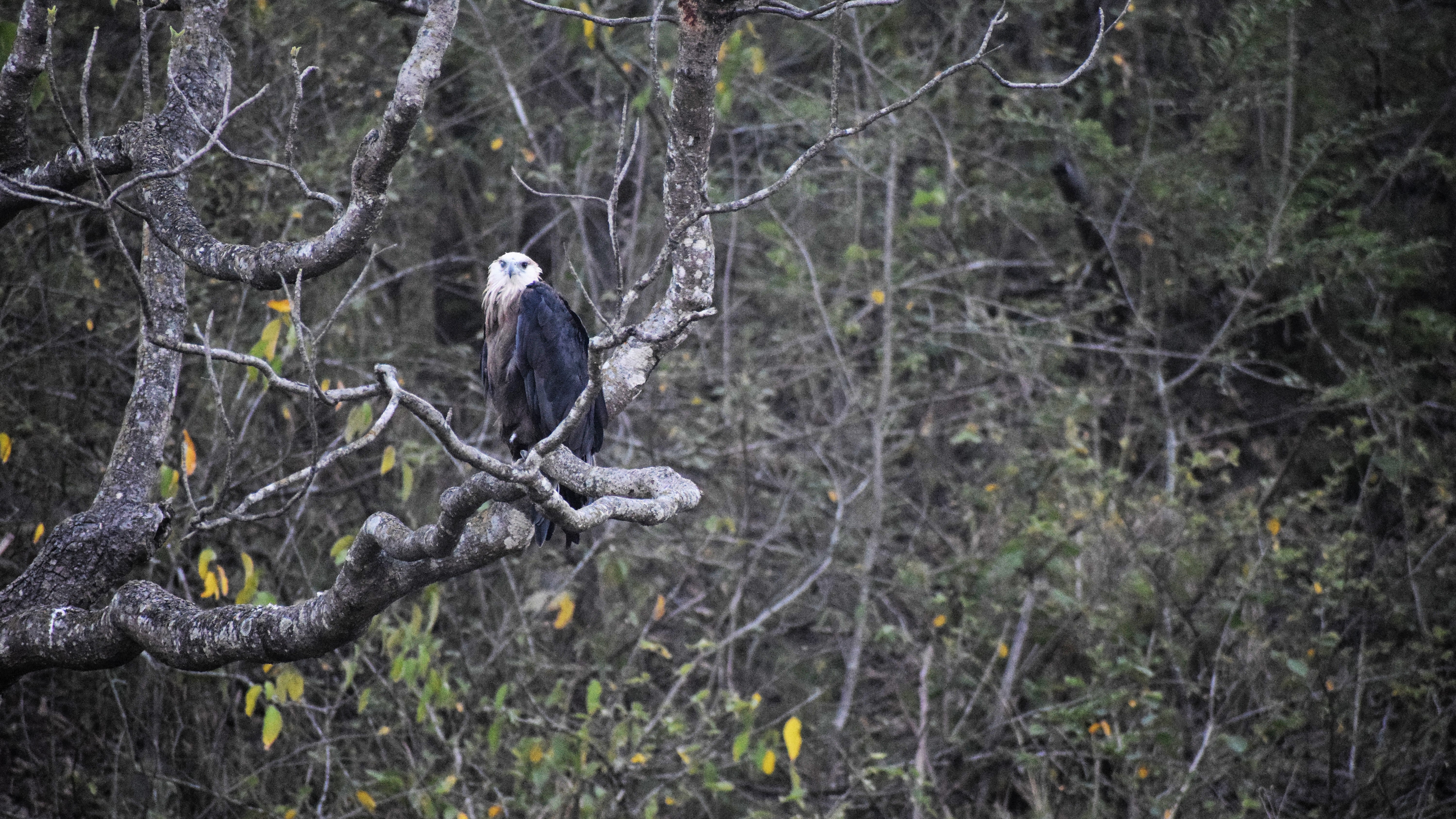
Spotting the fish eagle in the breaking dawn was a good start to the morning safari. The great hornbill is a shy bird and spotting it twice during the safari was a stroke of good luck.
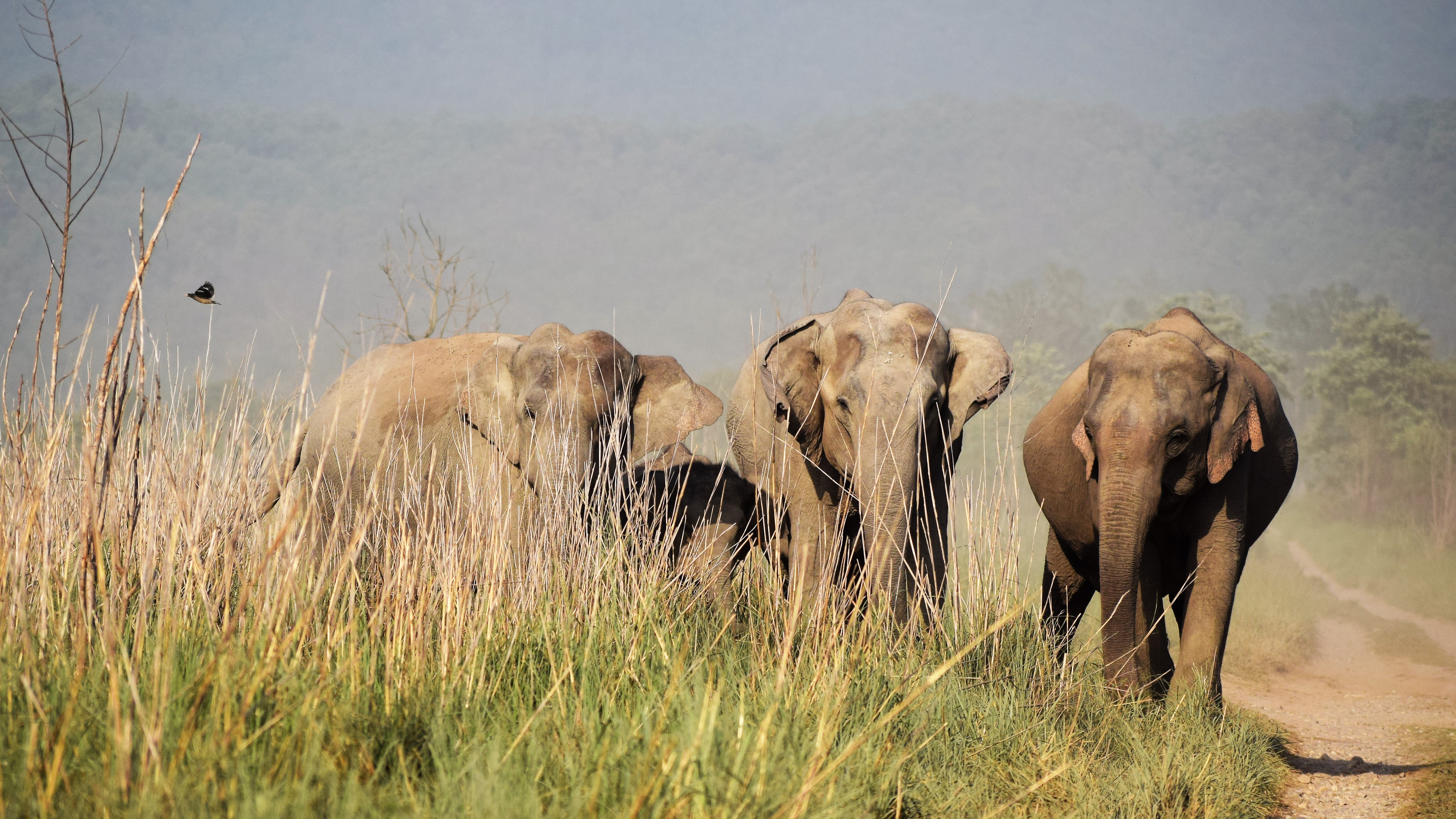
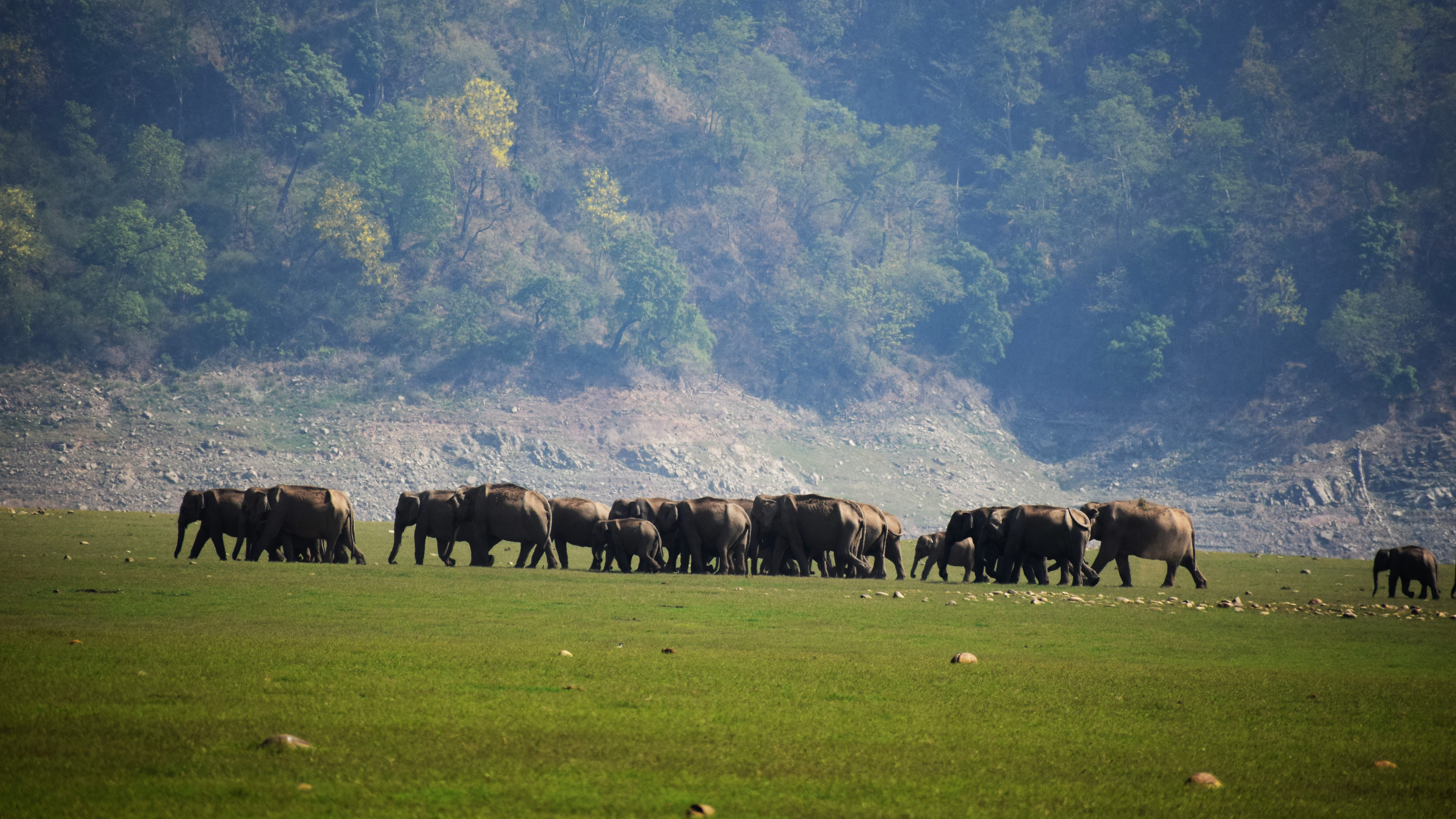
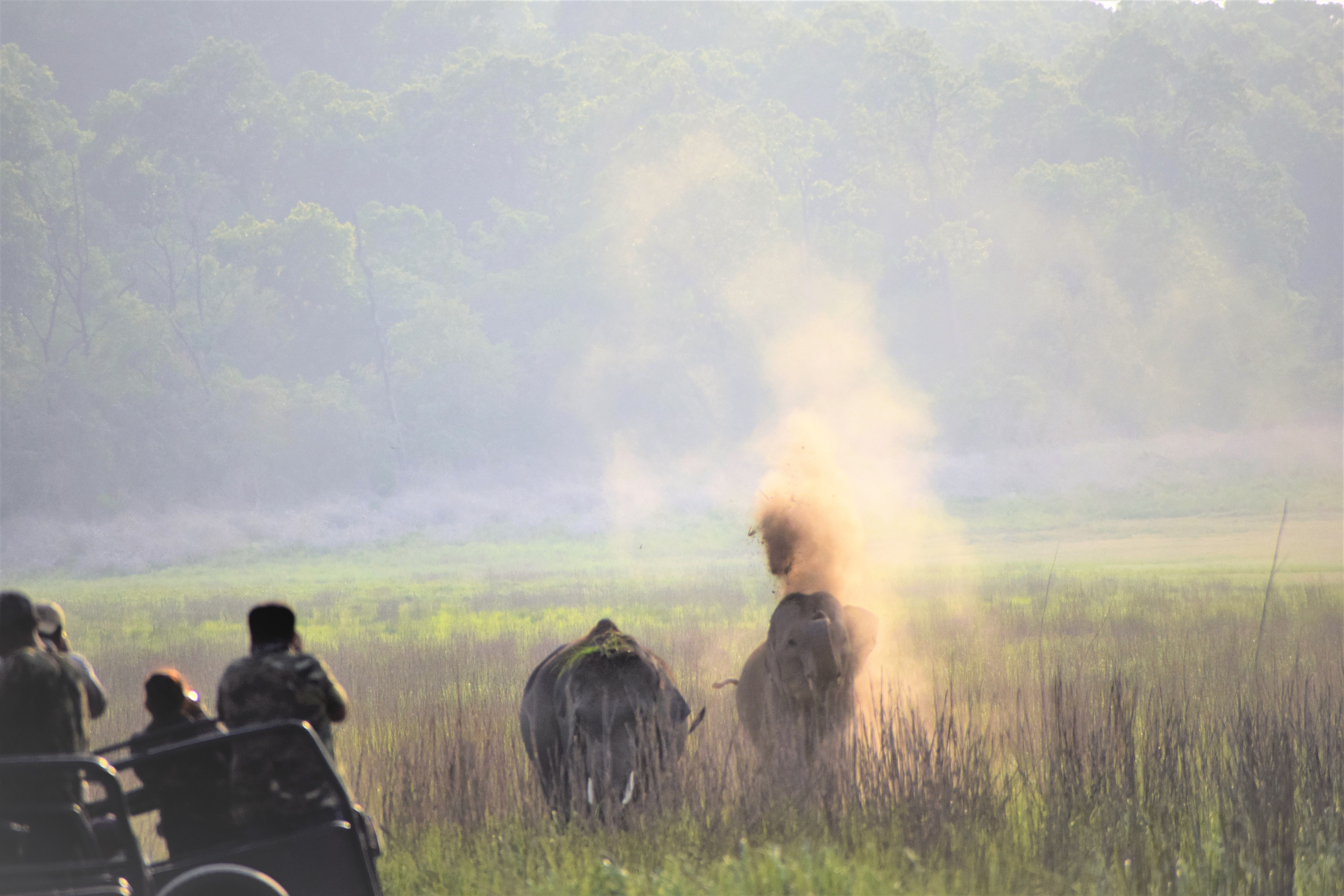
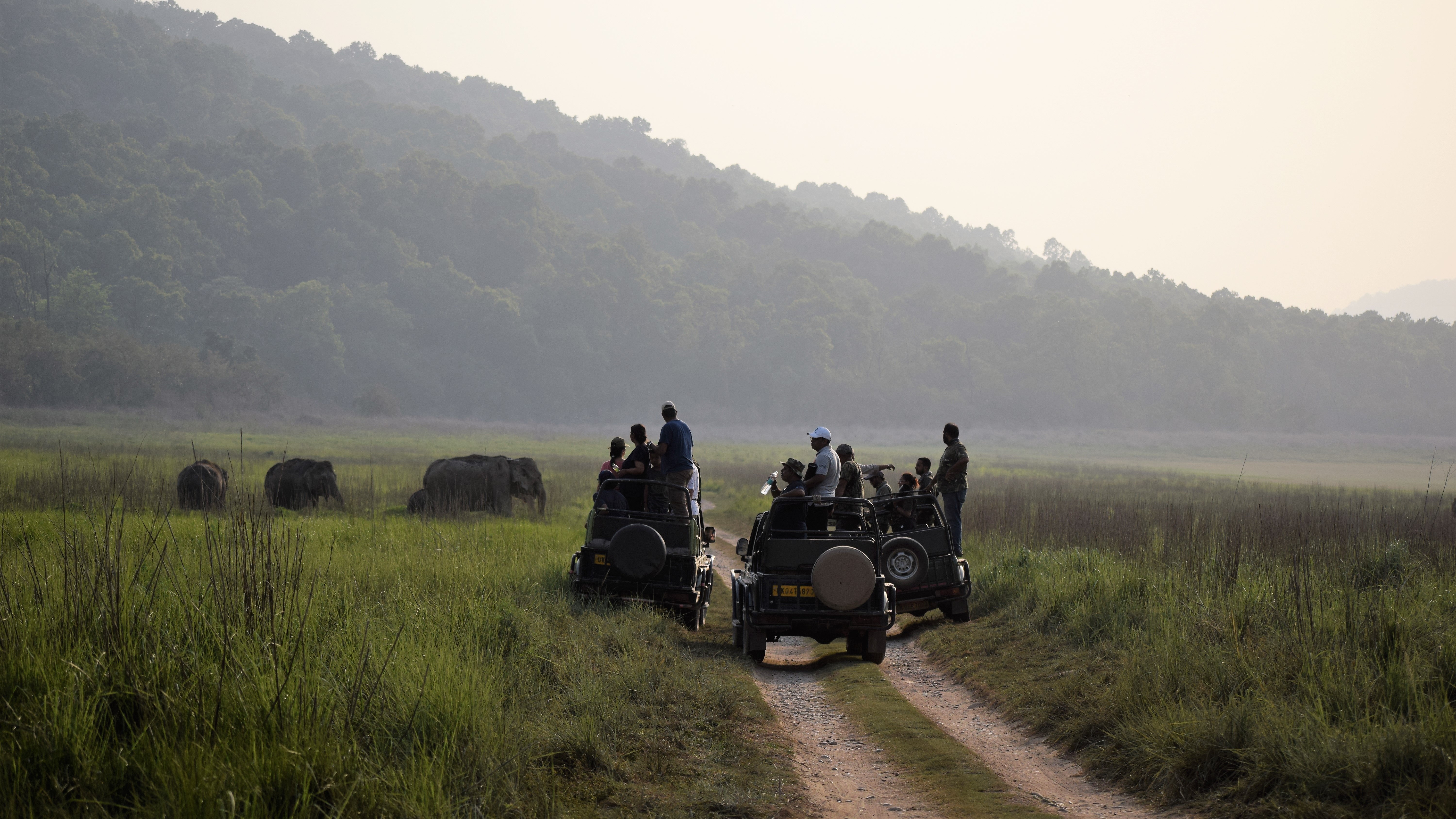
Wild elephants were seen everywhere moving in herds near the grasslands and the rivers.
Spotting tigers is the highlight in every safari. Patience is the secret. Wait, watch, listen, and you will be rewarded with a rare sighting. The tiger, usually camouflaged under a bush or in the grasses, is silent, panting and watching your every move.
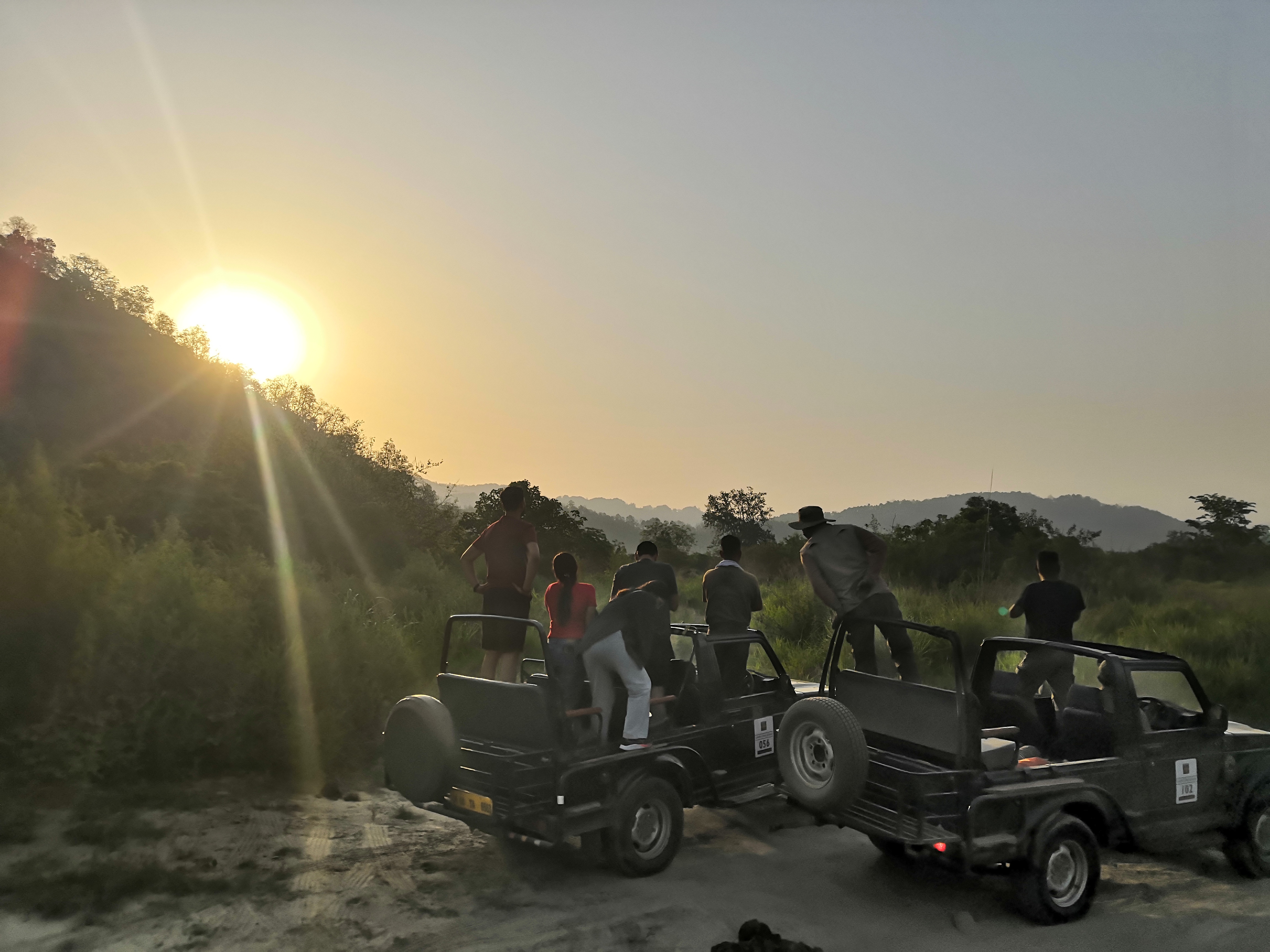
The morning sun was moving higher so a drink of water was irresistible. It appears as if teleported from deep inside the woods. The reflection of this majestic hunter in the still waters seems as if there are two of them.

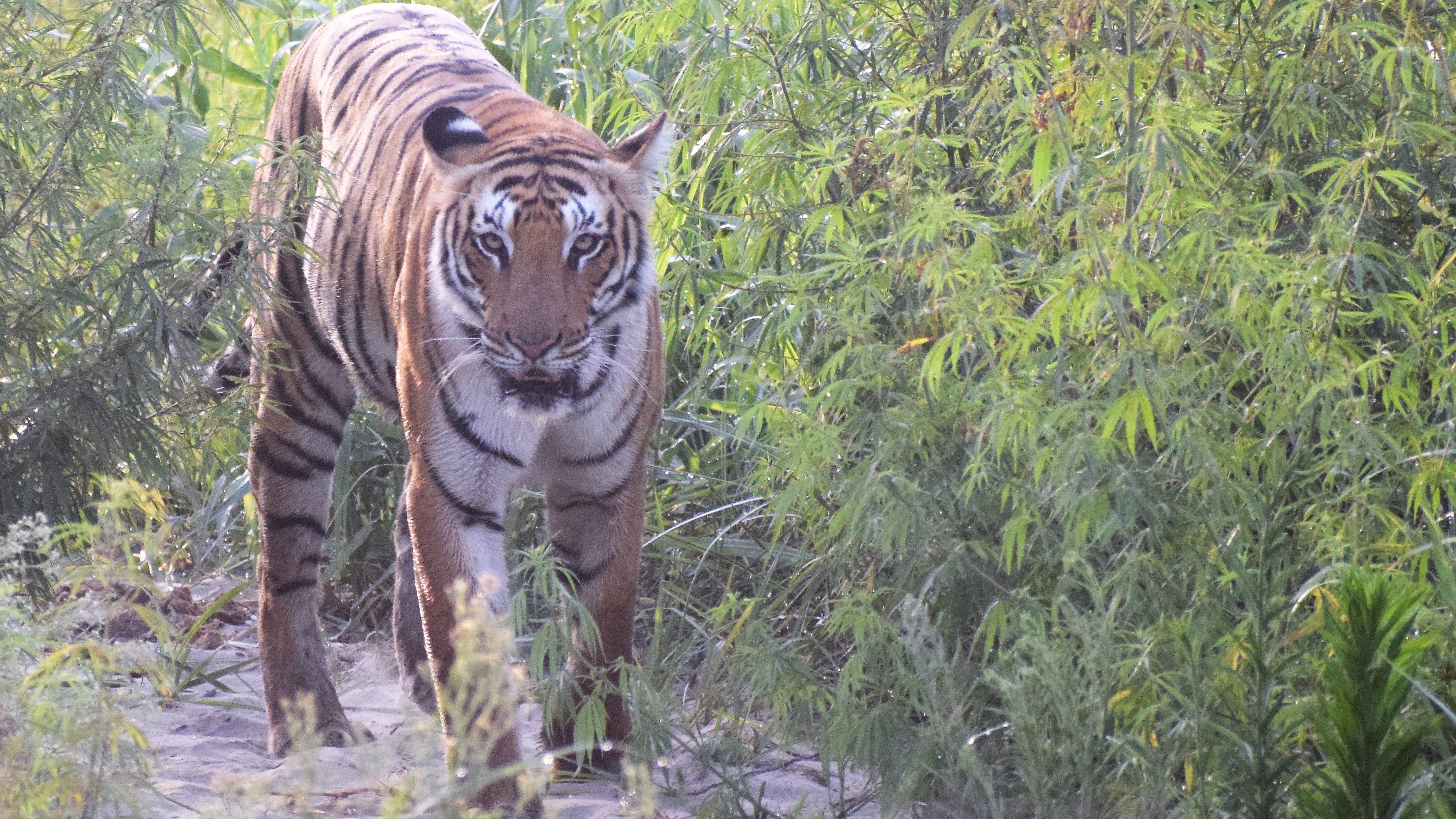
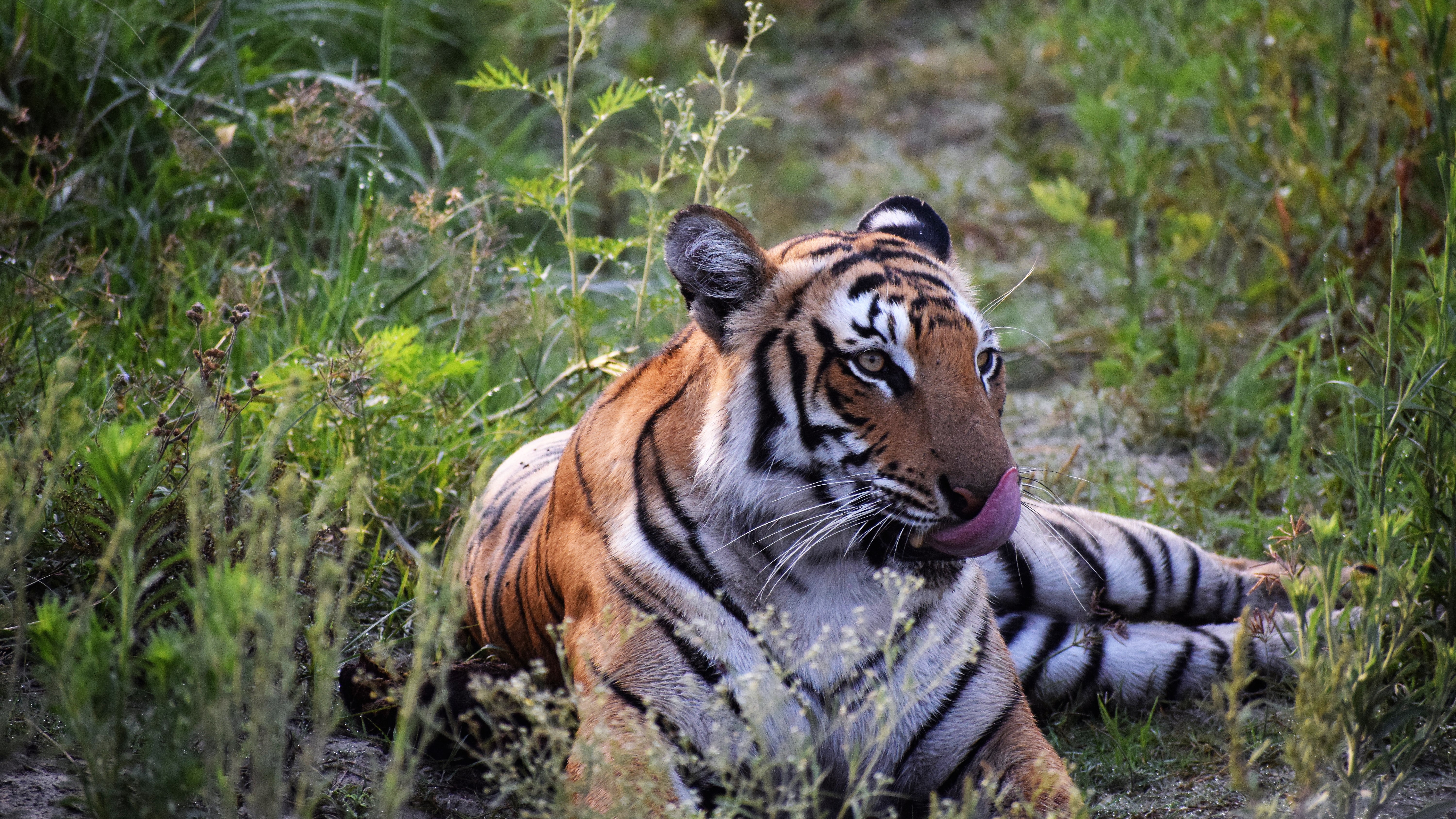
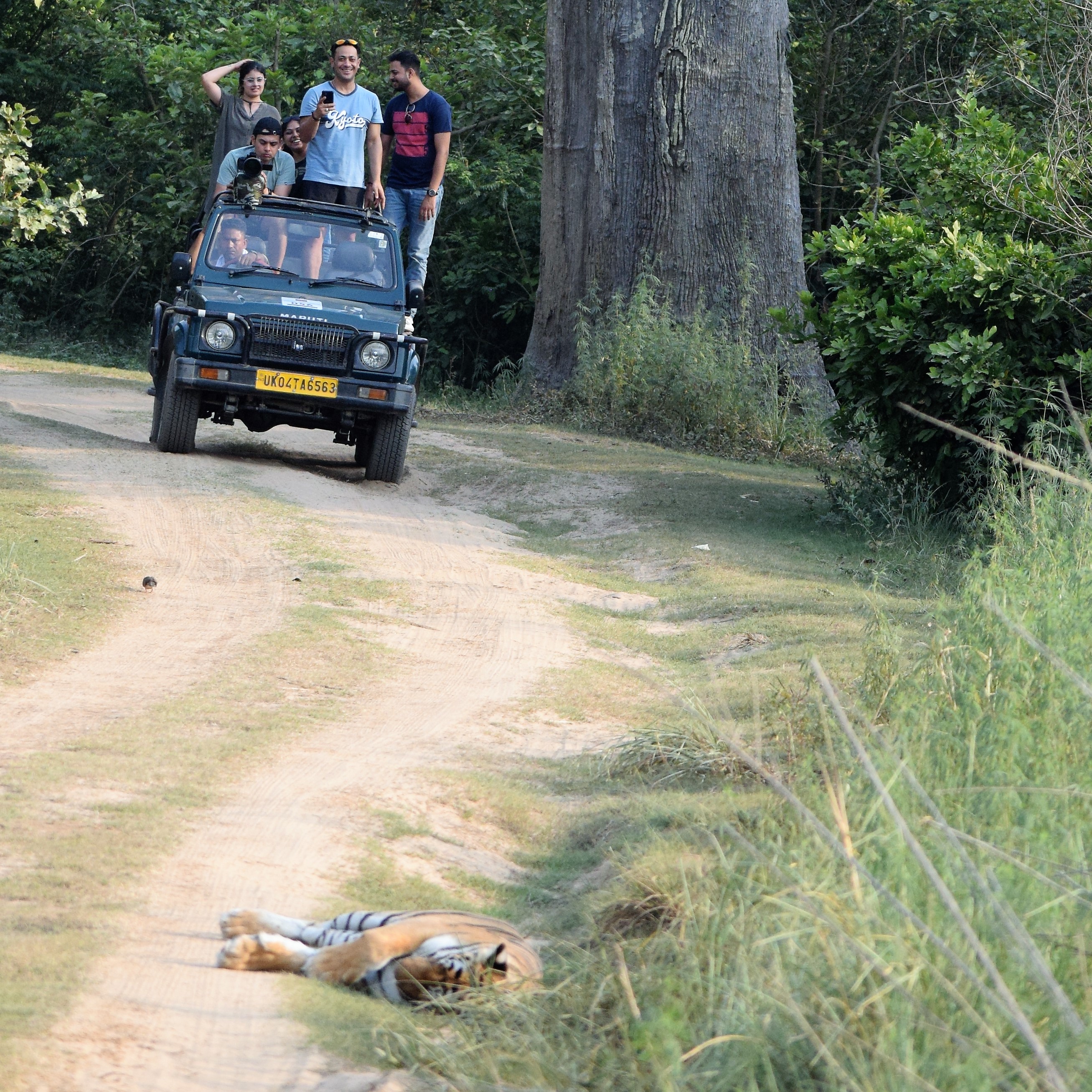
They were excited to be so close and could not believe their luck.
Each person has a different emotion – one has a “i told you so” look, another has the hand on the head in disbelief, a couple of ear to ear smiles, one with a serious gaze ready for a good shot. Lets not talk about the driver. 😊 The tiger, meanwhile, has decided to sleep.
The forest has its way of revealing itself. A subtle movement in the elephant grass, or a branch lowered for an instant, a flash of color in the air, a rustle among the fallen leaves or a howl in the distant trees.
The hunter camouflaged, watching its prey or maybe stealing a quick glance in your direction, checking if you can possibly be one?

Wildlife in the 21st century is endangered. Urban development cannot be at the cost of destruction of forests. The conflict of man v/s wild is due to human encroachment that rightly belongs to the wildlife.
Our forest cover needs saving more than its residents. Wild corridors between forest reserves are used by tigers, elephants and other animals. A rapid decline in the forest cover has resulted in these corridors disappearing due to the so called urban development.
The forest is a treasure for us to enjoy respectfully and not grab greedily. Its destruction will endanger our own survival eventually.

Also read…

Kaziranga National Park is a sumptuous spread of grey marshy wetlands, lush elephant grasses and an assortment of indigenous trees. A harmonious existence of all species balances the sensitive ecology of the region.

 The Smiling Travellerr
Wow! Elephants and tigers – you are so lucky! I hope to see them one day!
LikeLiked by 1 person
Hope you will see them as well
LikeLike
Wow! Elephants and tigers – you are so lucky! I hope to see them one day!
LikeLike