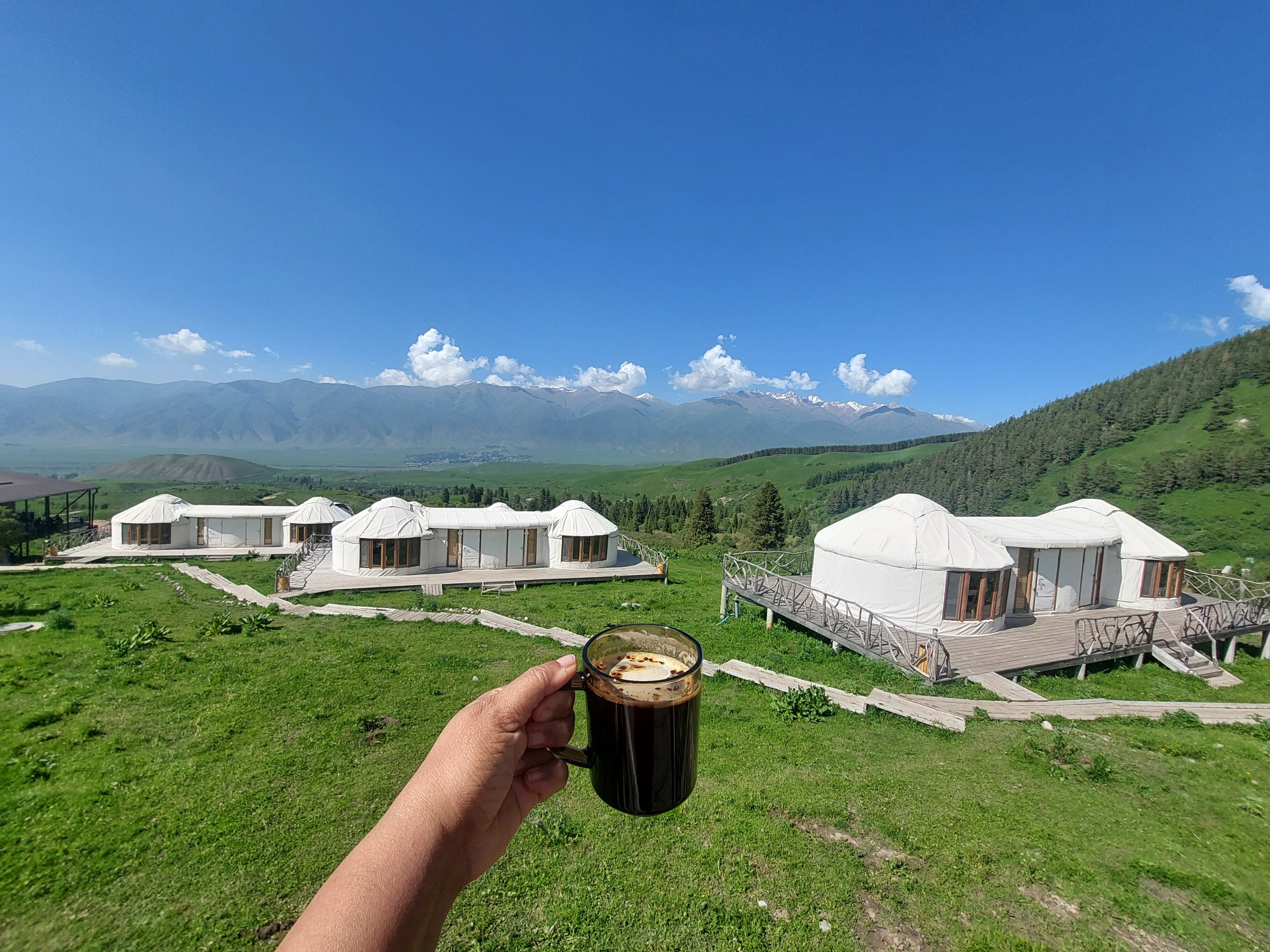
Across the vast green pastures of Kyrgyzstan, life moves with the rhythm of the seasons.
The Kyrgyz people, traditionally nomadic, travel with their horses and sheep in search of fresh grazing lands, following the changing colours of the seasons. Their lives remain deeply connected to the mountains, the weather, and the endless openness of the countryside.
Winter arrives harshly, bringing snow, ice, and temperatures that fall far below freezing.
But when spring returns and the snow begins to melt, the landscape slowly awakens. The valleys turn green, the pastures come alive, and the nomadic families move once again with their herds, following the promise of greener pastures.
And wherever they travel, they carry their homes with them.
The yurt, a graceful circular dwelling, stands at the heart of nomadic life. Found across Central Asia among the Kyrgyz, Kazakhs, Tajiks, and other nomadic communities, the yurt is perfectly suited to a life on the move.

Its wooden lattice frame can be dismantled and carried, while thick felt made from sheep’s wool—forms its walls and roof.
Simple in appearance yet ingenious in design, the yurt offers remarkable protection from the cold. Layers of felt keep the warmth inside while shielding the family from the harsh mountain weather. Beneath its rounded roof, the vastness of the landscape seems to disappear, replaced by a small circle of warmth and shelter.
Inside, the yurt is a palette of of colours. Rich blankets, woven textiles, and beautifully embroidered fabrics decorate the walls. Many lovingly created by the women of the household.
Each pattern seems to carry a story, connecting the present with generations of family, tradition, and memory.
Traditionally, the left side belongs to the men, where weapons, riding equipment, coats, and other belongings are kept. The right side belongs to the women, with the kitchen and hearth forming the centre of domestic life.
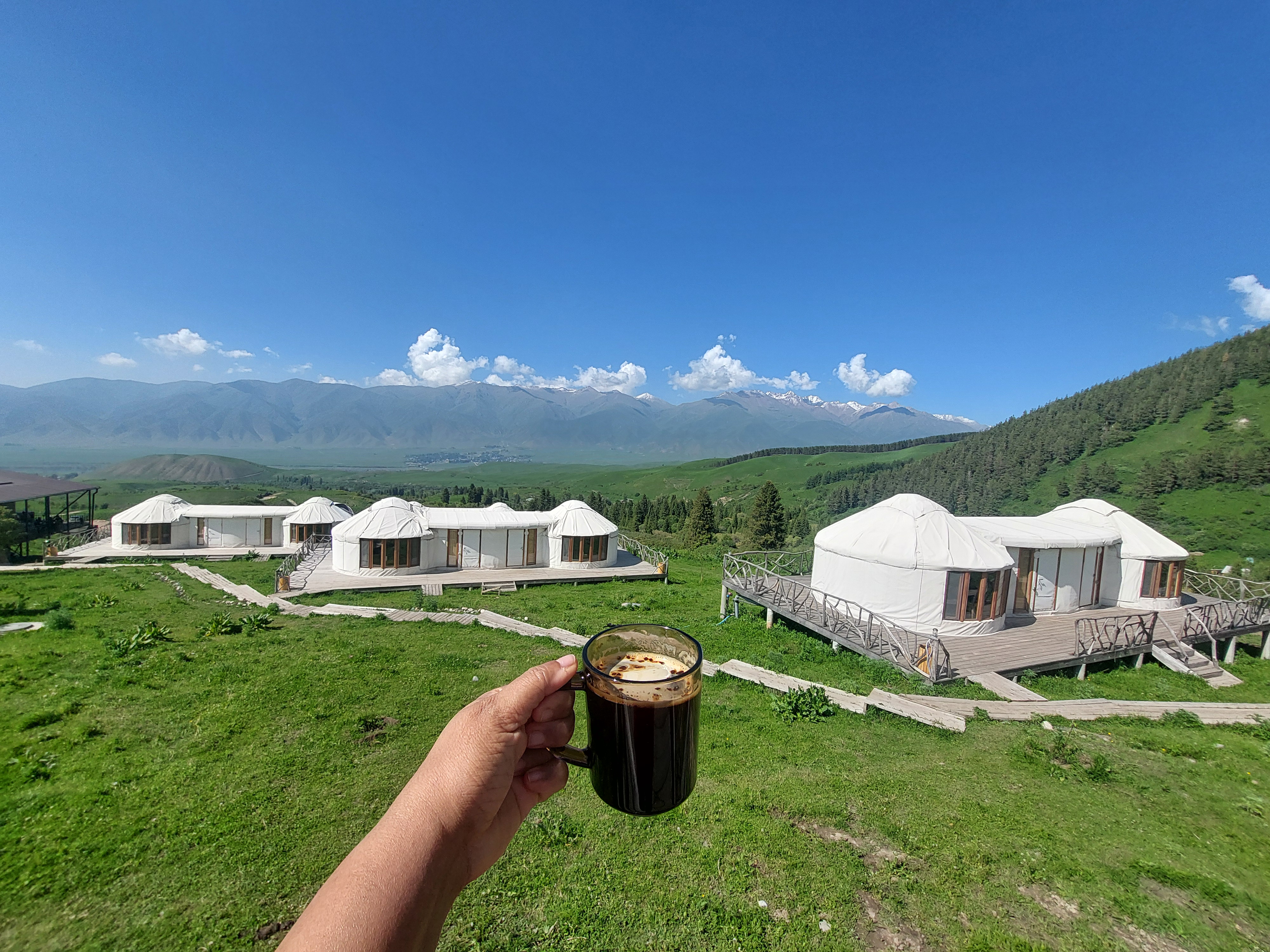
The traditional Kyrgyz yurt is also recognised by UNESCO as part of the Intangible Cultural Heritage of Humanity, reflecting its enduring importance to the cultural identity and traditions of Central Asian communities.
Today, travellers can experience something of this timeless world by staying in a yurt camp or homestay. For a night, the pace of modern life slows. The felt walls hold the warmth, the mountains surround the camp, and the silence seems to stretch endlessly beneath the open sky.
While driving towards Lake Issyk-Kul, we spent a night in a yurt.
We sleep beneath a roof that shelters us from the night, surrounded by the same mountains and valleys through which generations of nomadic families travelled with their animals. Outside, the landscape disappears into darkness. Inside, there is warmth, quiet, and a comforting sense of connection to a world that feels both ancient and alive.

Perhaps the greatest luxury in the Kyrgyz countryside is having nowhere to be.
Here, the best thing to do is simply nothing.
We slow down. We sit beneath the open sky. We let the hours pass without asking them to hurry. Our eyes wander across the green valleys, distant mountains, and winding trails that disappear into the landscape.
The countryside invites us to walk without a destination. Gentle paths lead towards clear streams, across open meadows, and into quiet corners where the only sounds are the wind, running water, and birdsong.
An early morning walk feels especially magical.
The air is crisp and pure, carrying the scent of grass and earth. The mountains stand quietly in the distance as the first light touches their slopes. Birds stir among the trees, and the valley slowly awakens around us.
Then there are the horses.
Horse riding is more than an activity here; it is a glimpse into the soul of Kyrgyz nomadic culture. Horses remain a source of pride, freedom, and companionship, deeply woven into the history and identity of the Kyrgyz people.

We ride through green valleys with mountains rising around us and the horizon opening endlessly ahead.
The horses move steadily beneath us. The wind brushes against our faces. The grass stretches towards the mountains, and the silence is broken only by the rhythm of hoofbeats.

For a little while, there is only the mountains, the horses, the open sky—and the quiet, breathtaking beauty of Kyrgyzstan.


