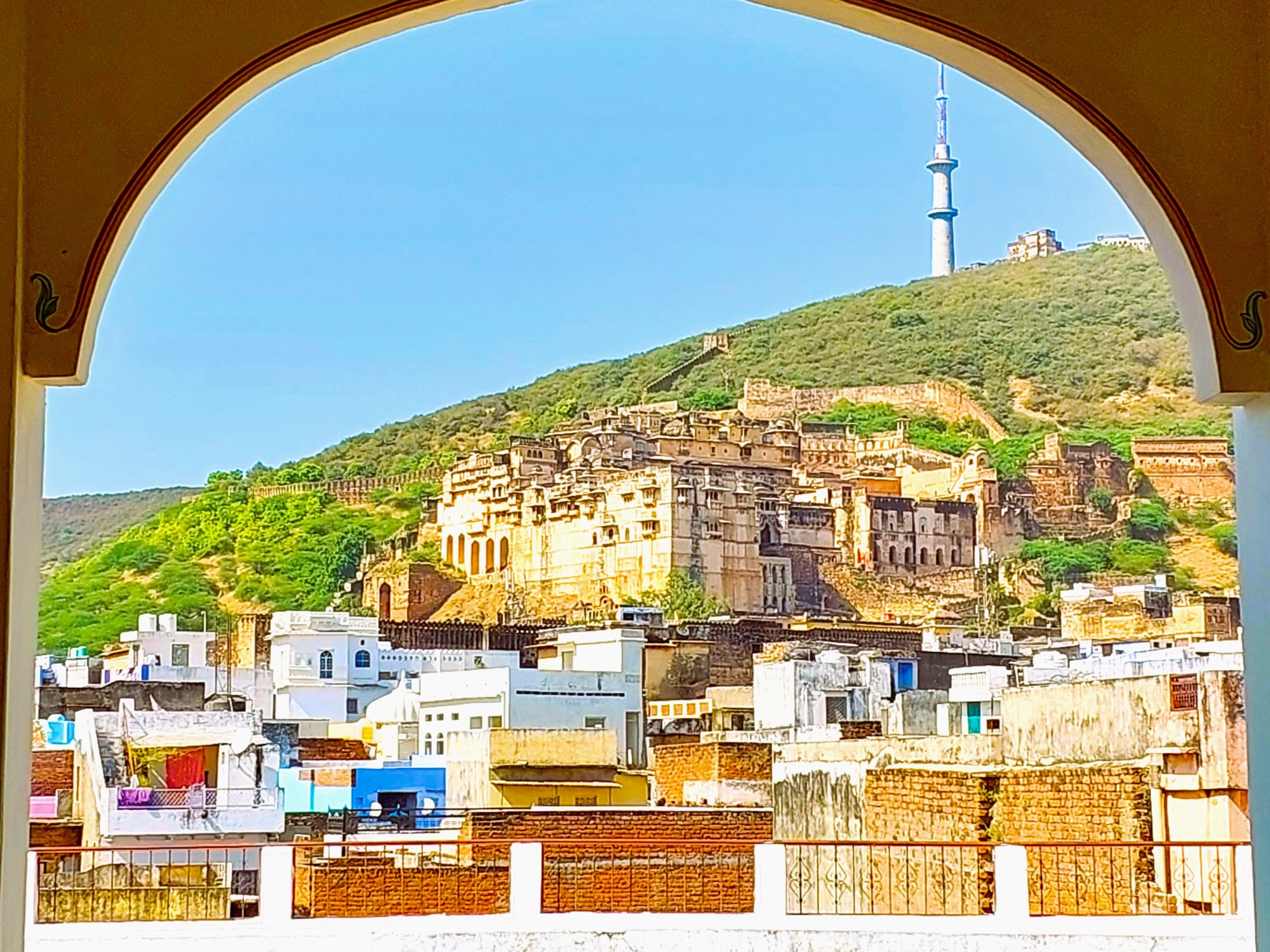
The hot and dry region of Mewad, in Rajasthan is steeped in tales of valor and violence, bloodshed, and betrayal.
Bundi is a small, but significant town nestled at the foothills of the Aravali mountains. It has its own share of the Mewad way of life.
The Garh Palace complex and the Tara Garh, or Star Fort are significant chapters in the history of Bundi. Visting with friends we had trekked the Tara Garh fort and were on our way to visit the Garh palace complex.
Here’s more about my hike to Taragarh…
Garh palace is not one single palace, but a cluster of small palaces, each with its own theme.
Additions to the palace cluster were done, by different generations of the Hada Chauhan dynasty. It took approx. 300 years to complete the palace.
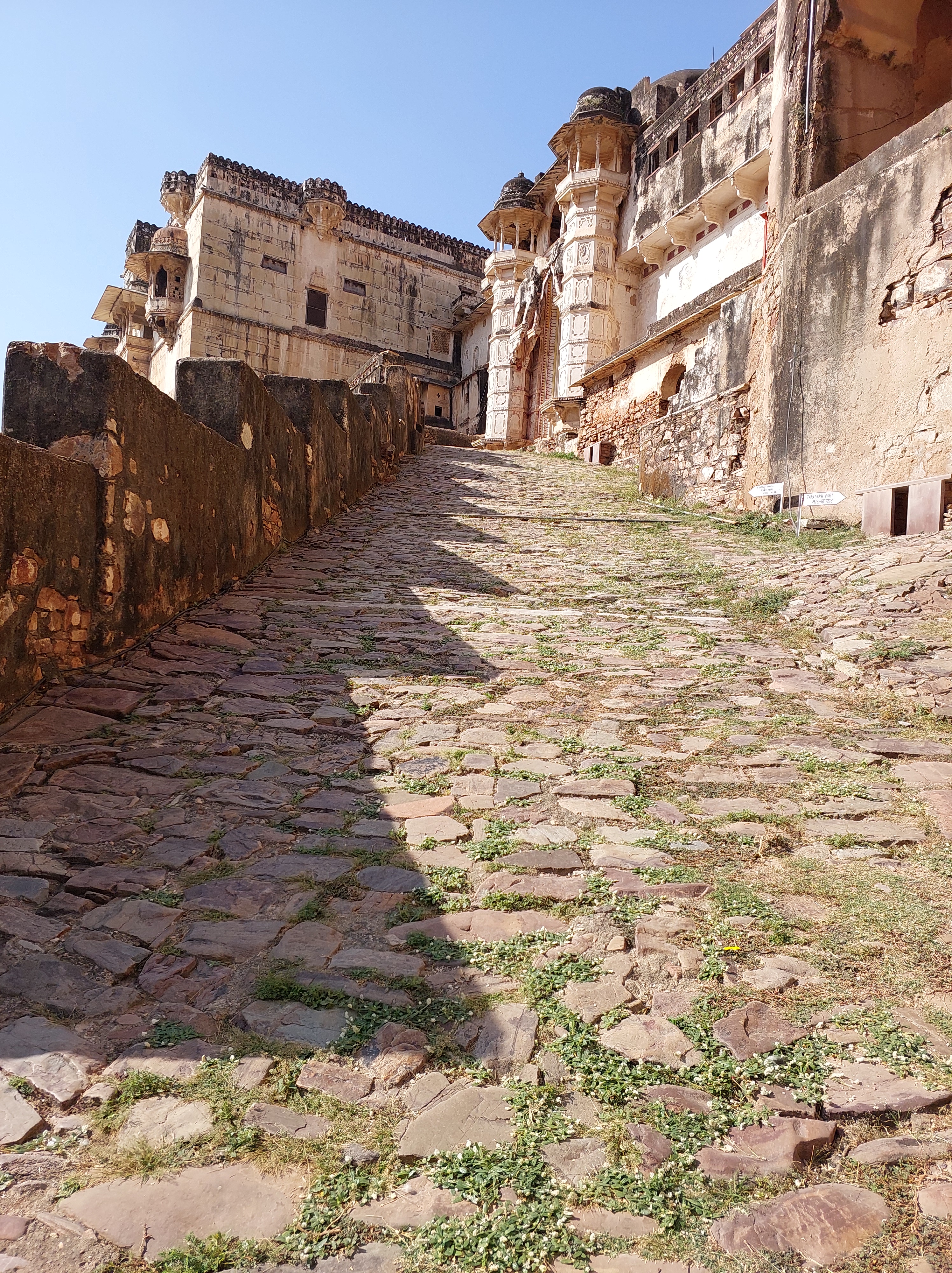
To enter, we had to walk a steep ramp, which led us to the palace complex.
How to navigate Garh Palace
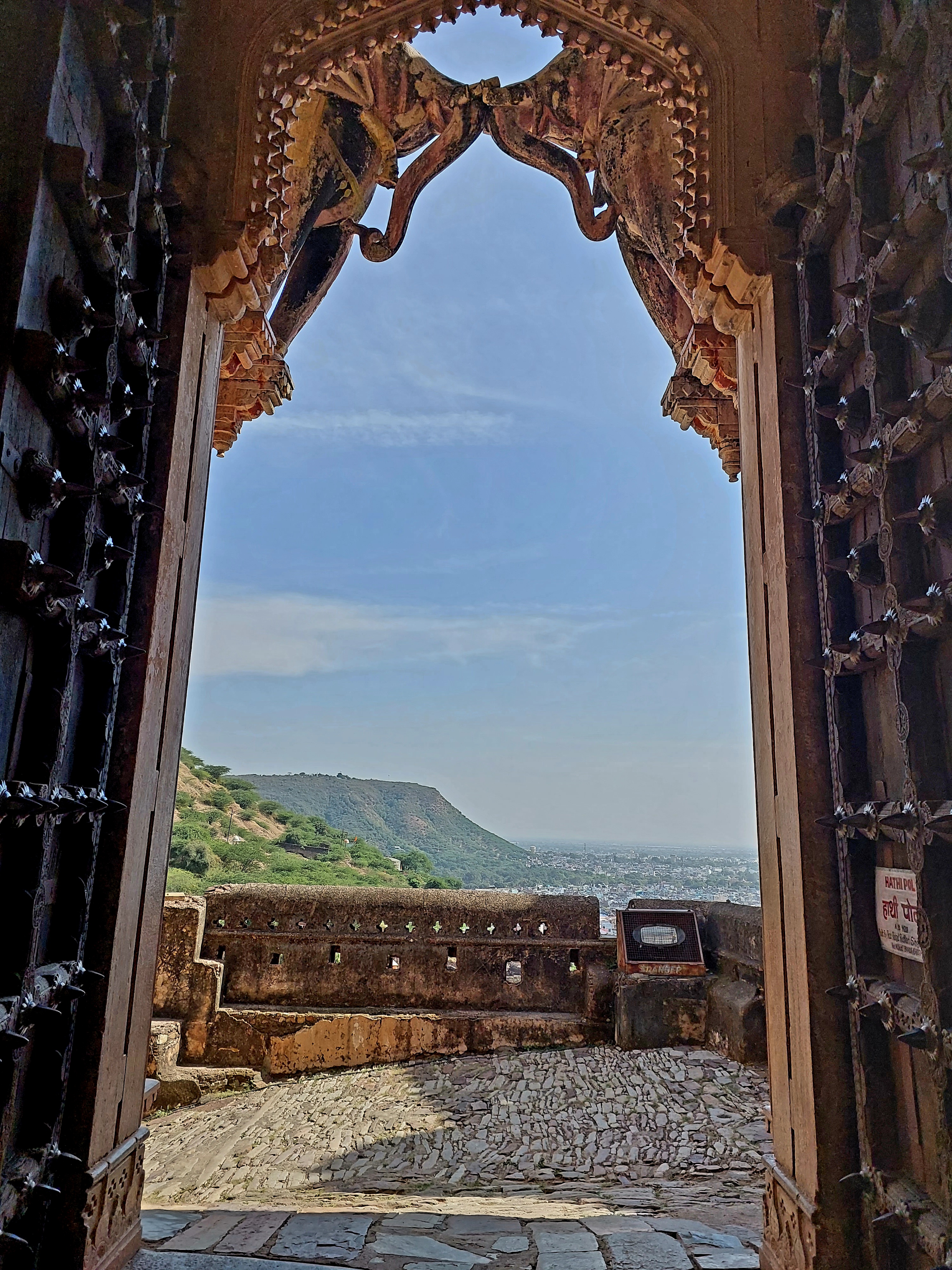
If you enter from the ramp area you will first come across the Elephant Gate or Haathi Pol
Enter the courtyard through Haathi Pol and explore
Diwan I Aam
Chattra Mahal
Hathyasal
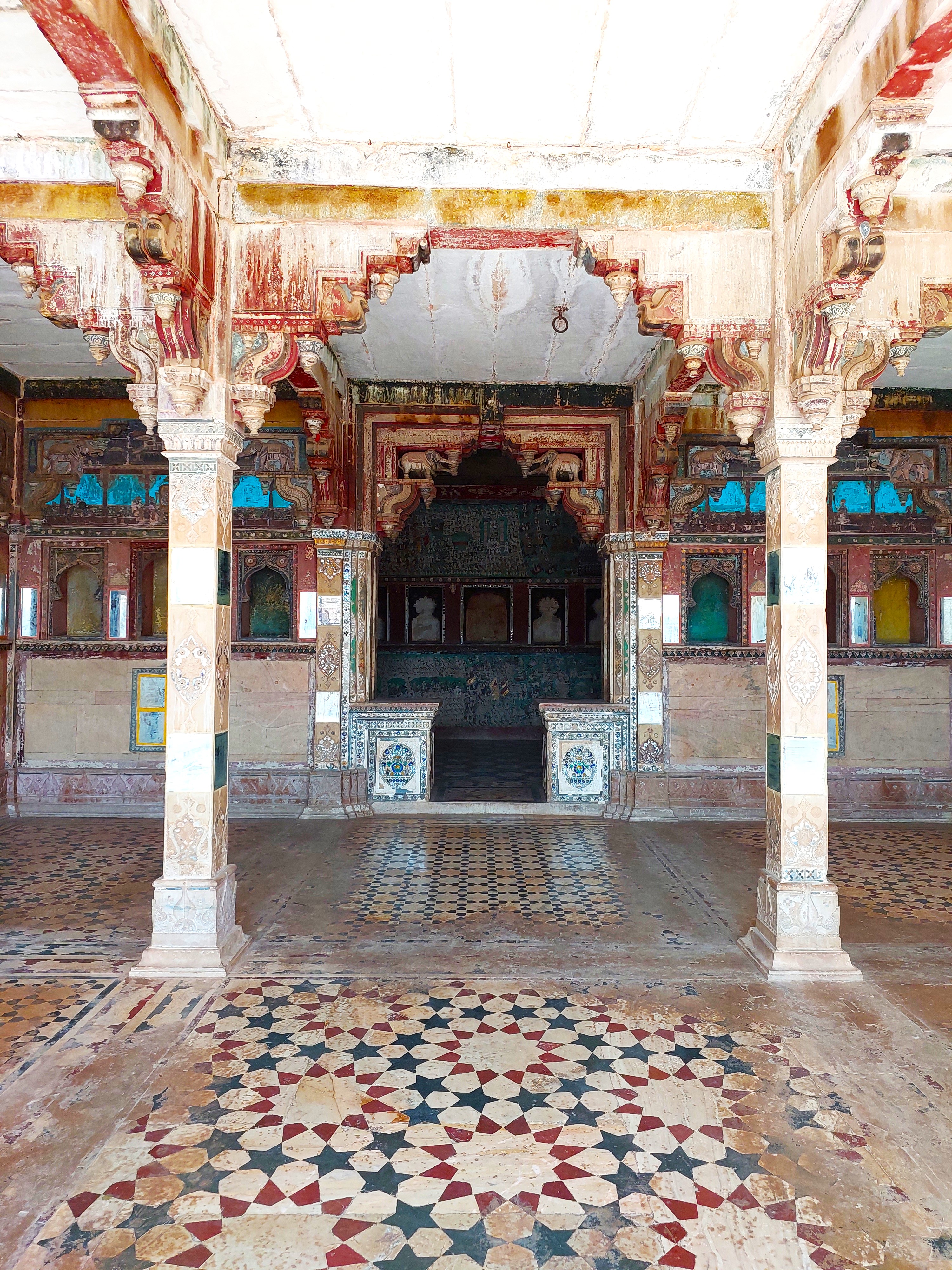
Phool Mahal
Badal Mahal
Ummed Mahal – ChitraShala
This is only a suggestion and you are free to explore as you desire.
Hathi Pol – The Elephant Gate
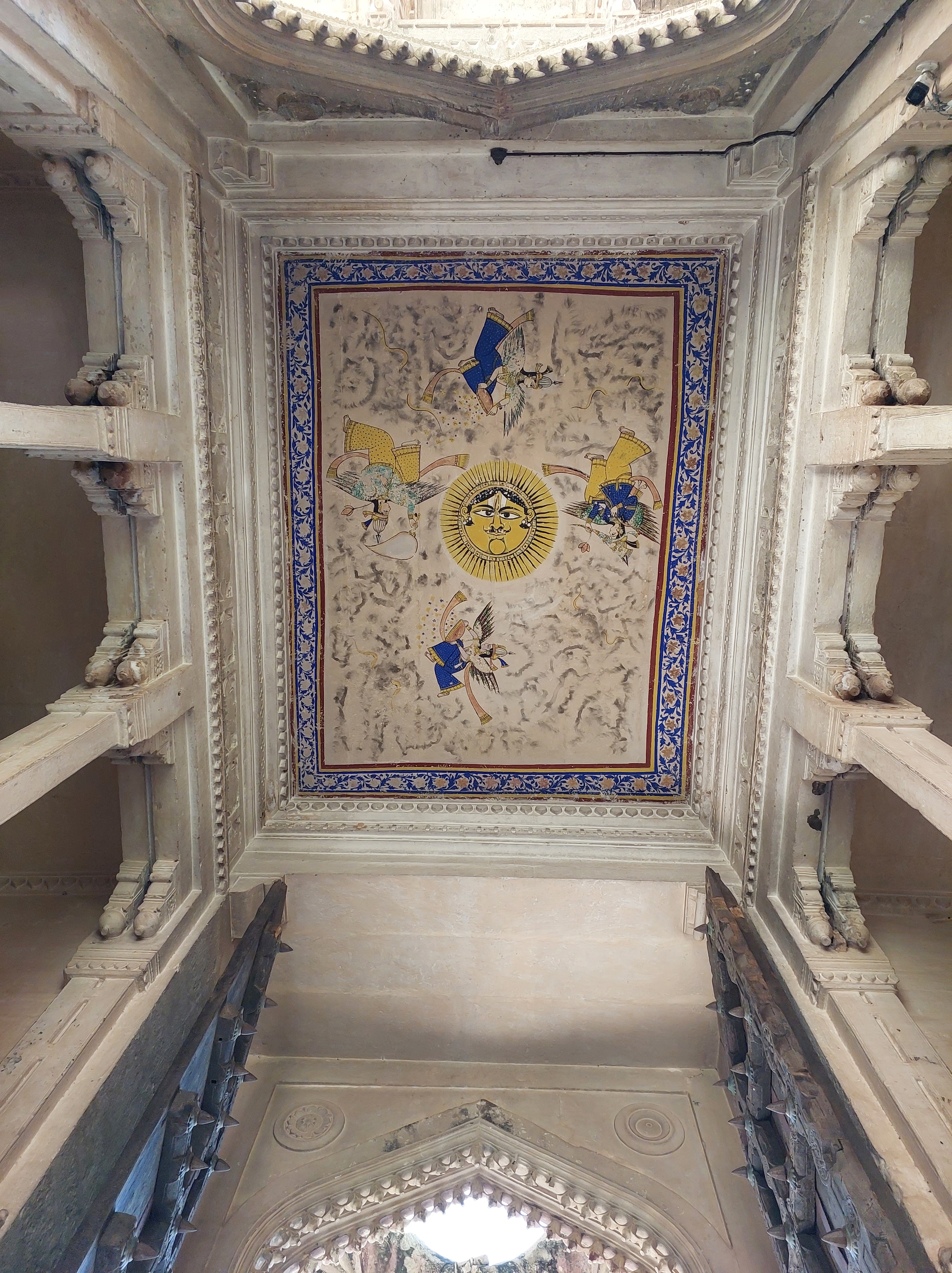
A steep ramp leading to Haathi Pol was built as a defense mechanism.
Elephants were used as the first line of attack; and the steep pathway would slow them down, allowing time for the palace to defend itself.
Haathi Pol is named so, due to the two elephants at the top. An inner courtyard leads to the palaces.
Diwan I Aam – The court for the public
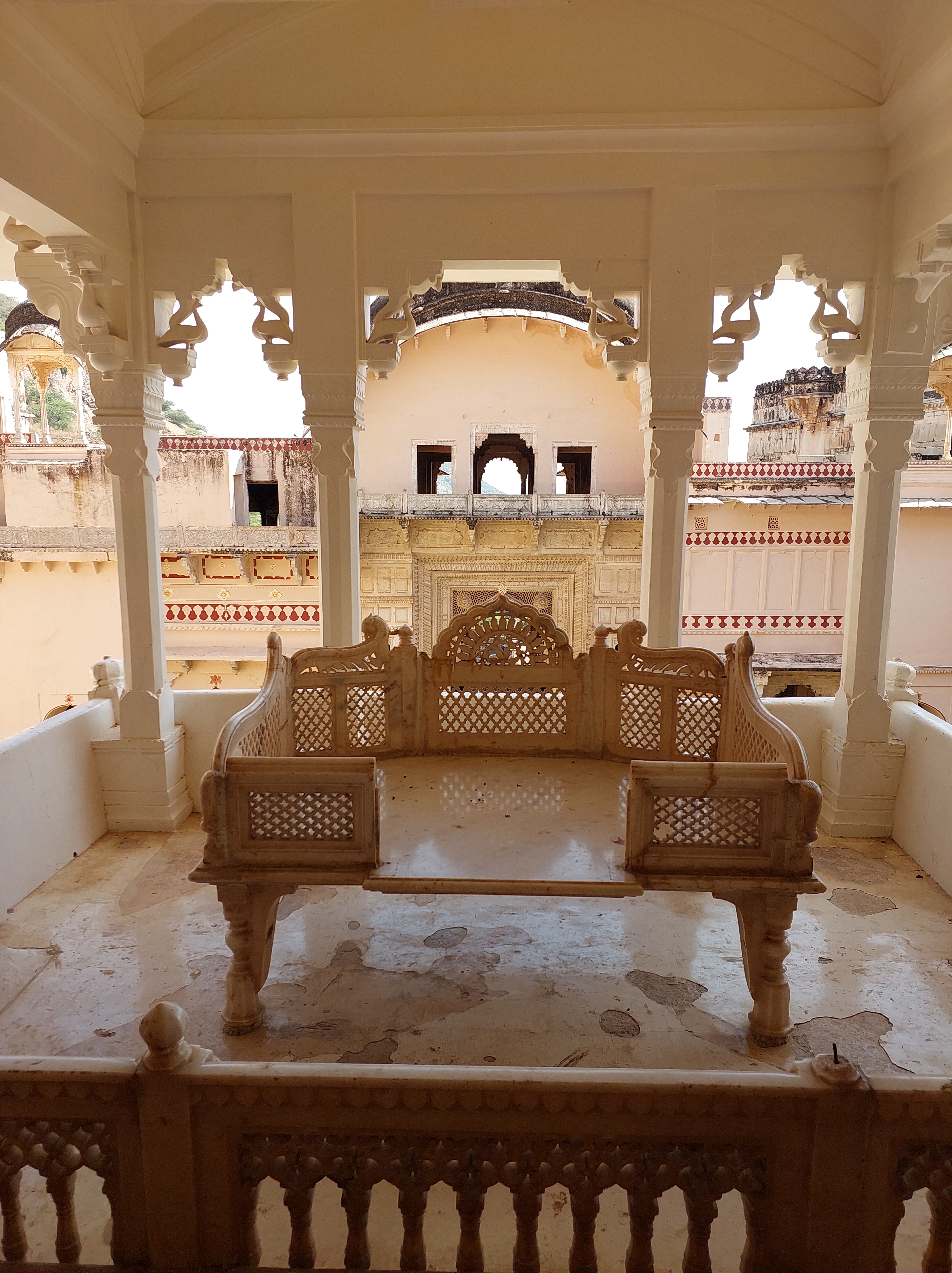
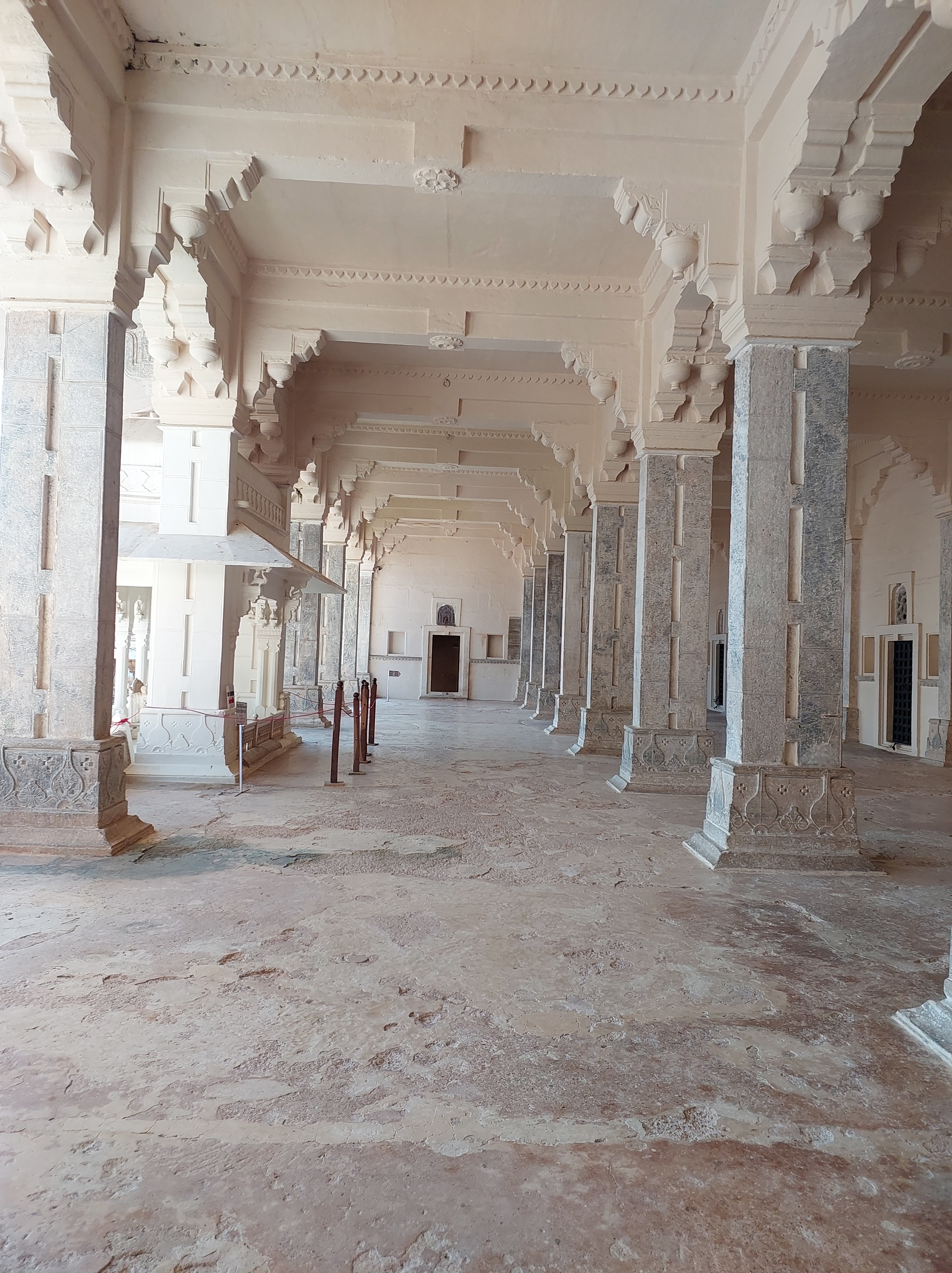
Located on the first floor, is the great hall also known as Ratan Daulat. A marble throne is at the center where the king of the time would preside over public gatherings.
Chhatra Mahal – The Rooftop Palace
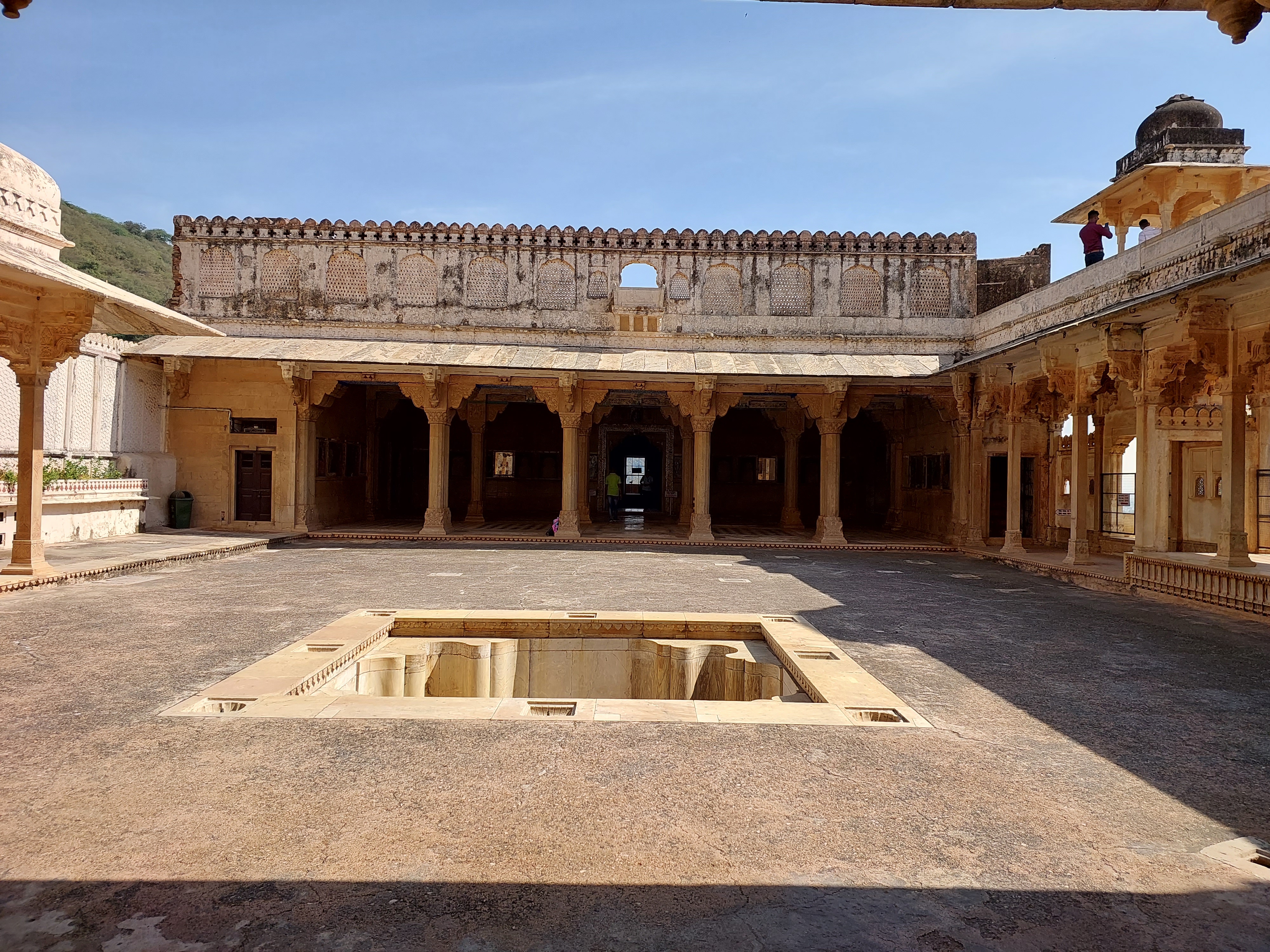
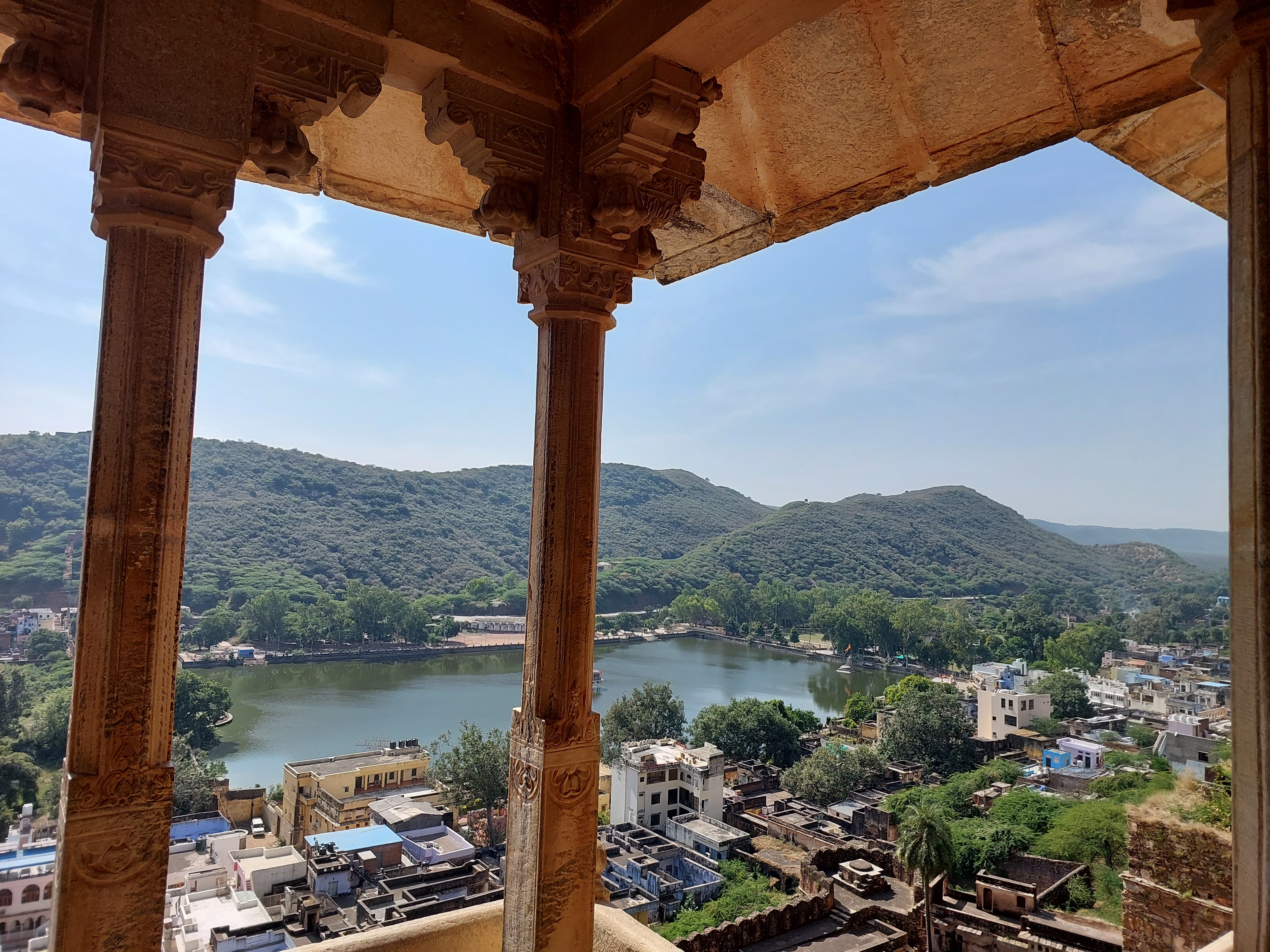
It is a terrace courtyard, featuring umbrella like structures, terraces supported by pillars and a view of the Nawal Sagar lake.
This could be an informal meeting area for dignitaries and guests.
Hathyasal – The Private Audience Hall

This is an indoor and outdoor seating area, opposite Chhatra Mahal. Close friends and eminent guests could have been entertained here.
An open terrace with several pillars, held up by elephants, is a fine example of aesthetics blended with functionality.
The Jali work on the windows and walls, could have been inspired from the Mughal architecture, which has similar jali patterns in its structures.
The creatively designed openings, allows for air circulation and natural cooling. A necessity to counter the hot and dry climate of Rajasthan.
Another use of the jalis, would be to segregate the women, who could discreetly watch the ongoings behind the them.
Besides creating an aura of mystery and allure, with the pretty women present behind these jalis, Rajasthani culture prefers gender separation at home and publicly.
This culture is prevalent, till today, although, in different degrees.
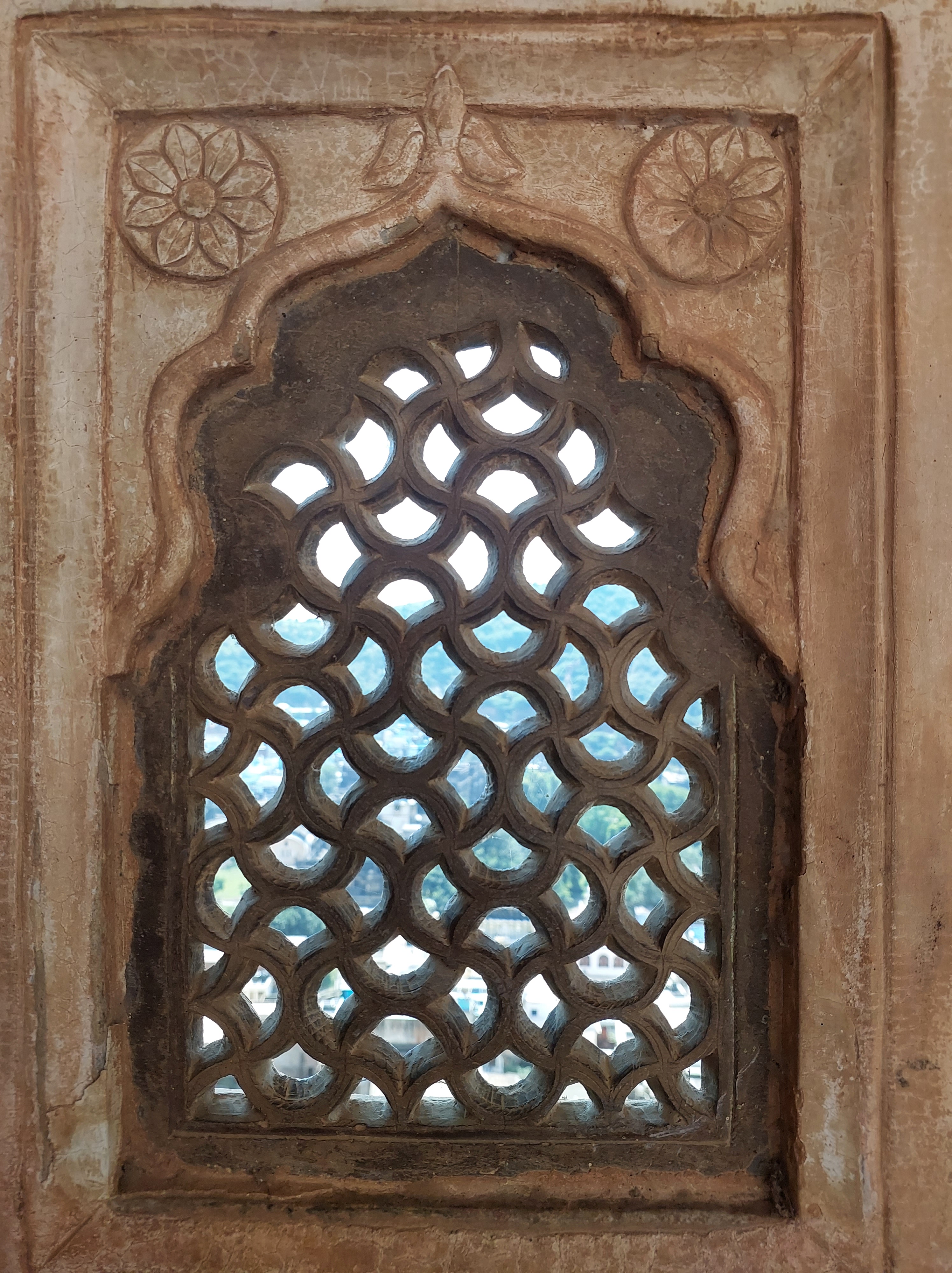
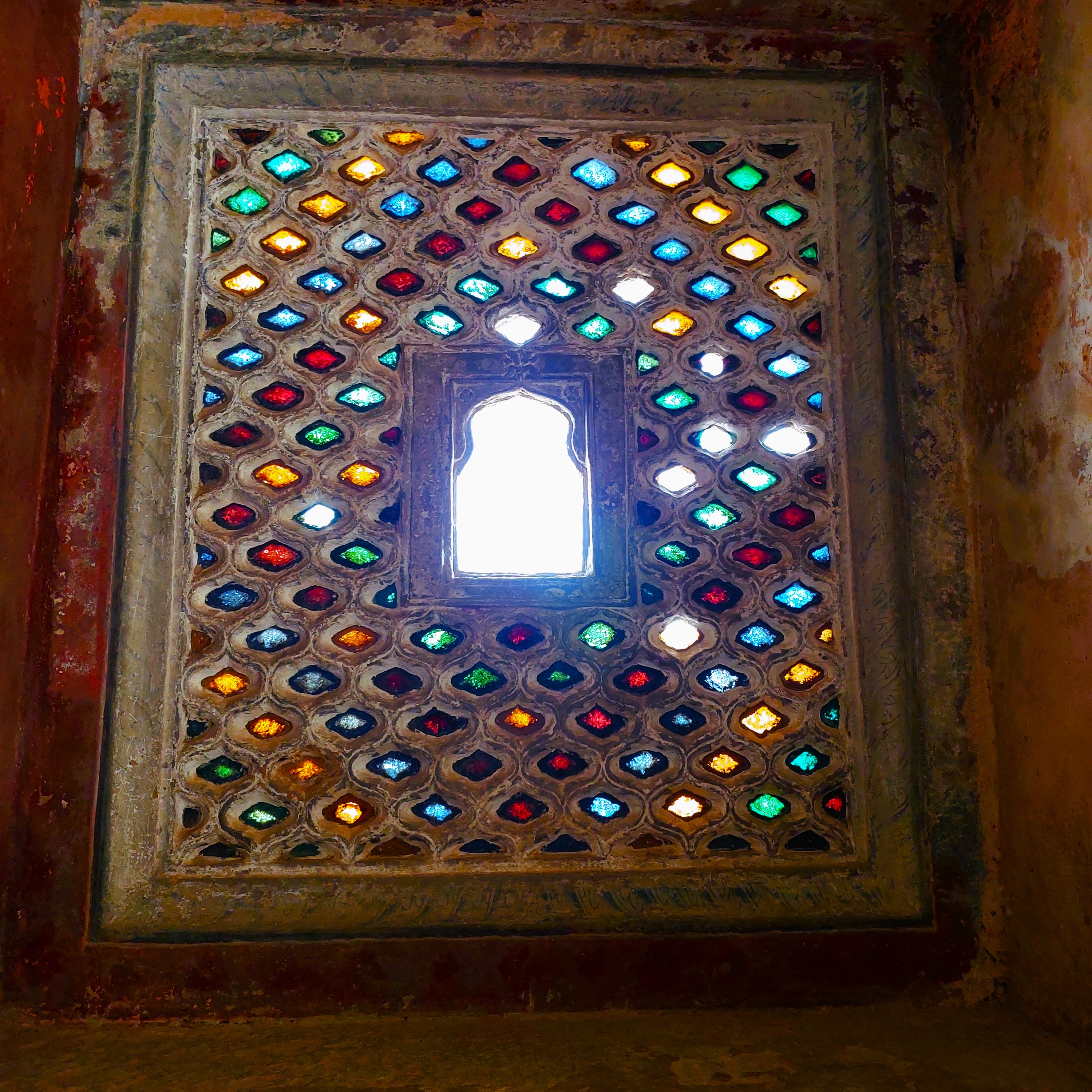
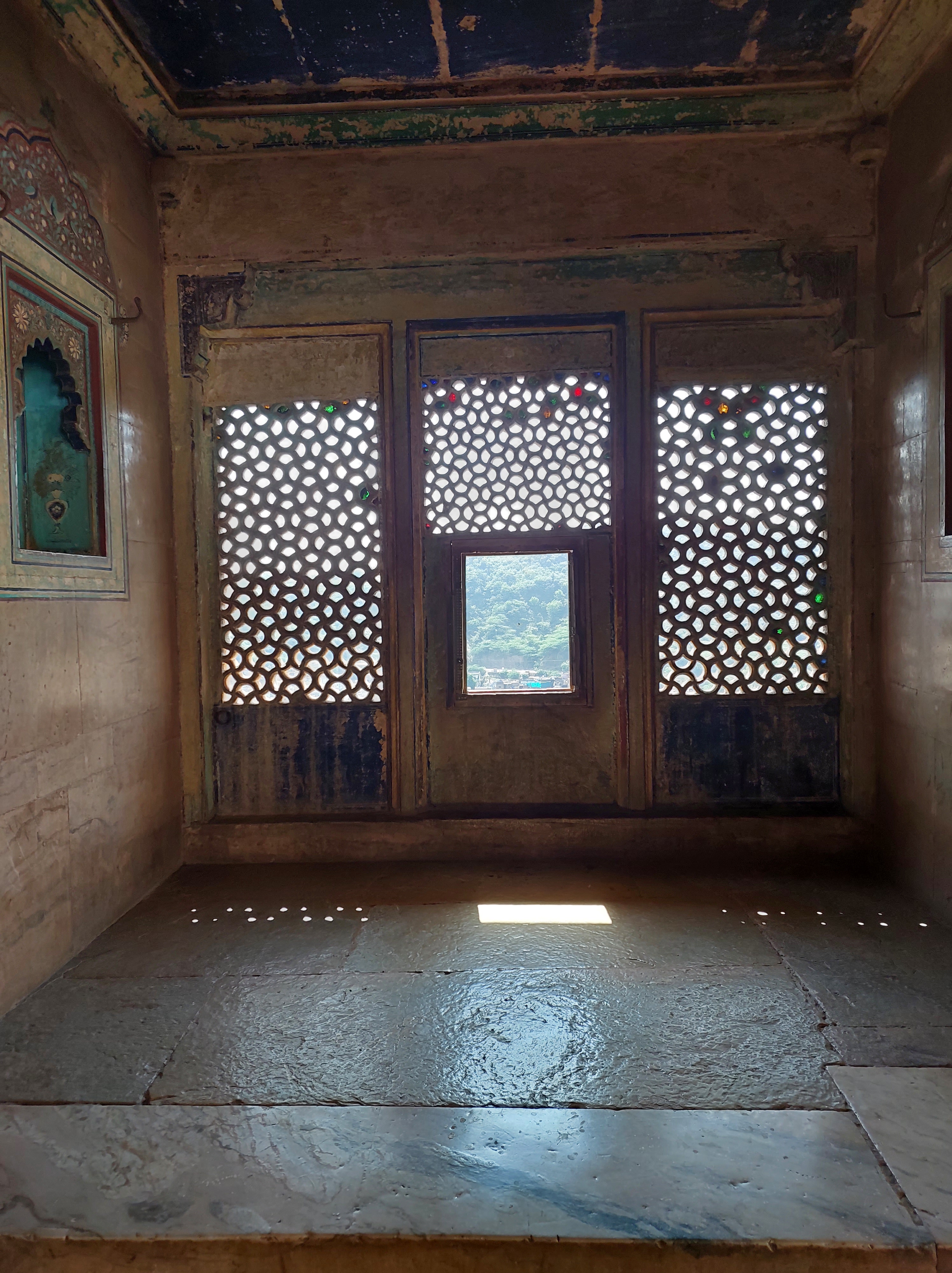
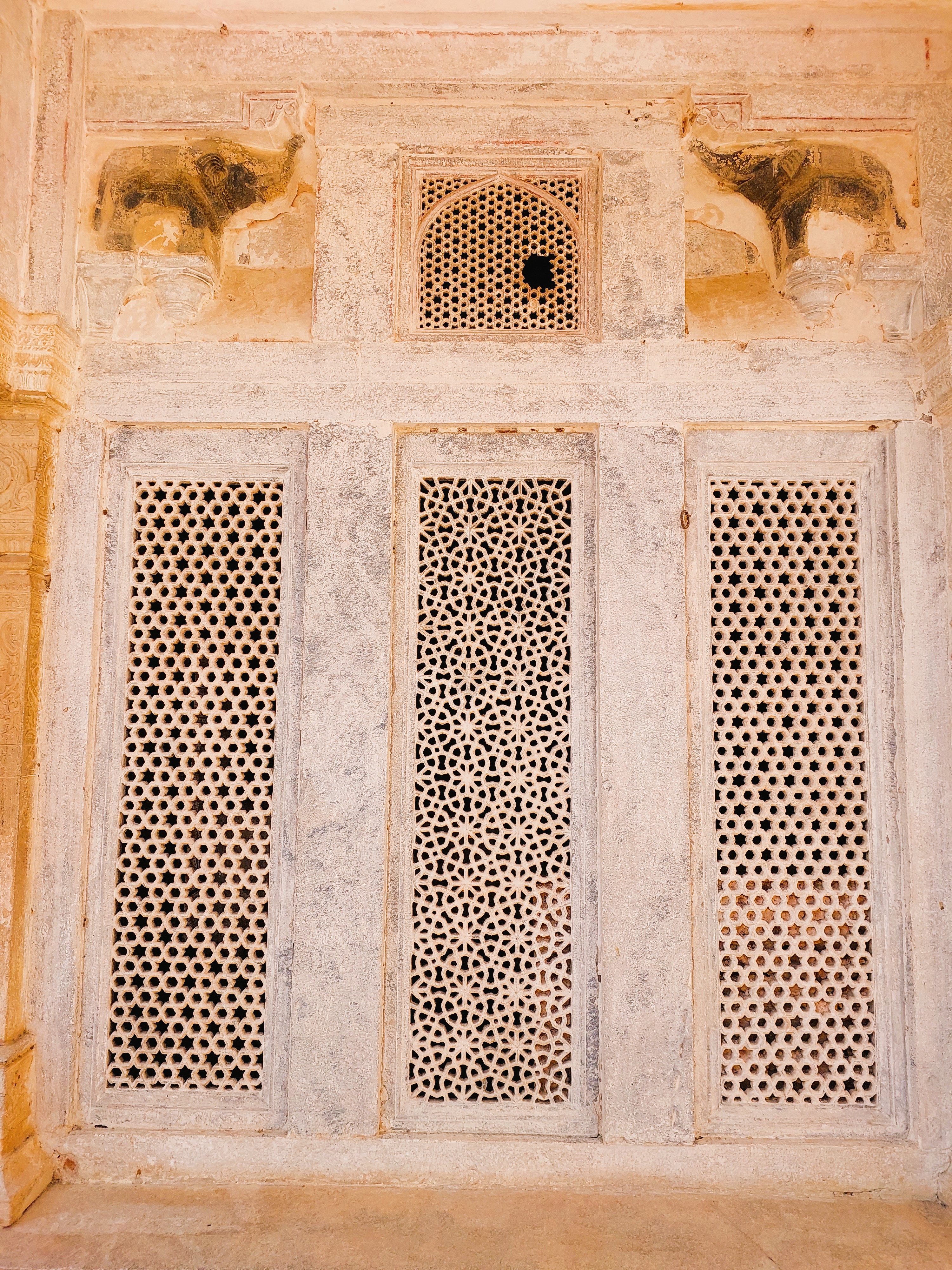
Some of the Jali windows, were decorative and had colored stones embedded in them.
I could imagine the sun rays, radiating a rainbow-like effect, through these stones. It would be an enchanting atmosphere, on the terrace, watching a holographic sunrise or sunset.
Phool Mahal – The Lotus Flower Palace
Mirror work woven on to colorful fabric, is widely worn by men and women in Rajasthan. Phool Mahal seems to be have been inspired from this fabric.
Badal Mahal and Chitrashala in Ummed Mahal are a separate post, due to the detailed description of the exquisite miniatures found in these rooms. Read more about them here….
Listen to Rajasthani folk music for an added experience.

 The Smiling Travellerr