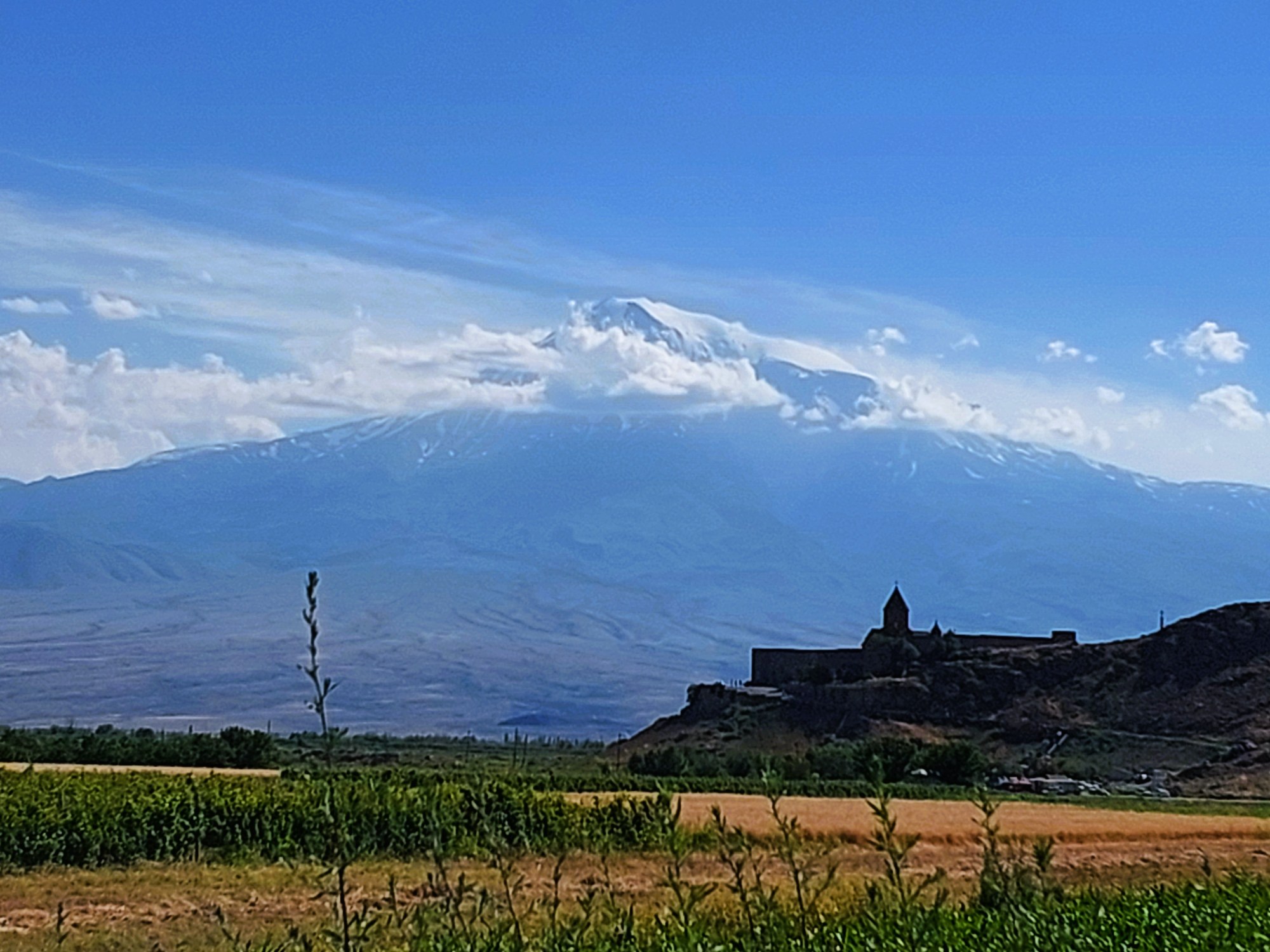
And the ark rested in the seventh month, on the seventeenth day of the month, upon the mountains of Ararat. – From the Bible verse Genesis 8:4
Mount Ararat dominates the skyline of Armenia, it’s presence is both physical and symbolic.
For Armenians, the mountain holds deep historical, cultural, and spiritual meaning. According to biblical tradition, it was here that Noah’s Ark came to rest after forty days of the great flood.
In that ancient story of destruction and renewal, many Armenians see the beginning of humanity’s rebirth on mount Ararat.
Ararat is a sacred icon of their heritage.
But the mountain that defines Armenia does not lie within its borders. Mount Ararat stands just across the frontier in modern-day Turkey.
Borders drawn on paper may be imaginary lines, but their repercussions are real—tears, fear, hate, bloodshed, and even death.
The Armenian Genocide of 1915–1916 and the turbulent politics of the early twentieth century reshaped the region. In treaties that sought peace through new borders, Mount Ararat ultimately fell within the territory of Turkey.
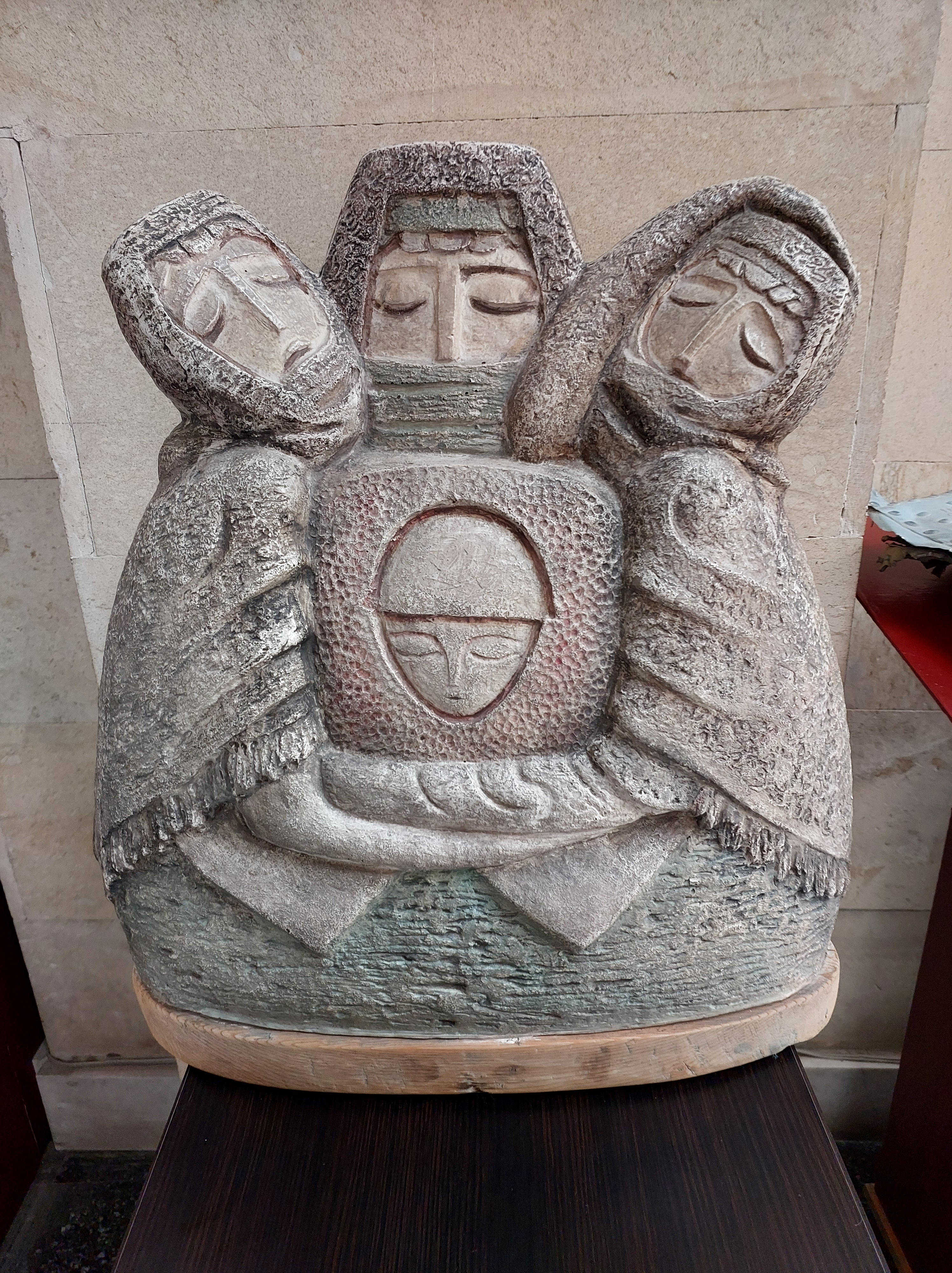
Ararat stands outside our borders, but never outside our hearts – Armenian Cultural Saying
Visible, magnificent, and unattainable, it remains a powerful symbol—both of belonging and of loss.
Ararat can be seen clearly from Yerevan, the Armenian capital.
My first glimpse came early one morning as I entered the hotel restaurant for breakfast. Sunlight streamed through the large windows. I looked up. The mountain appeared, framed perfectly in the glass. It was as though it had been placed there like a painting.
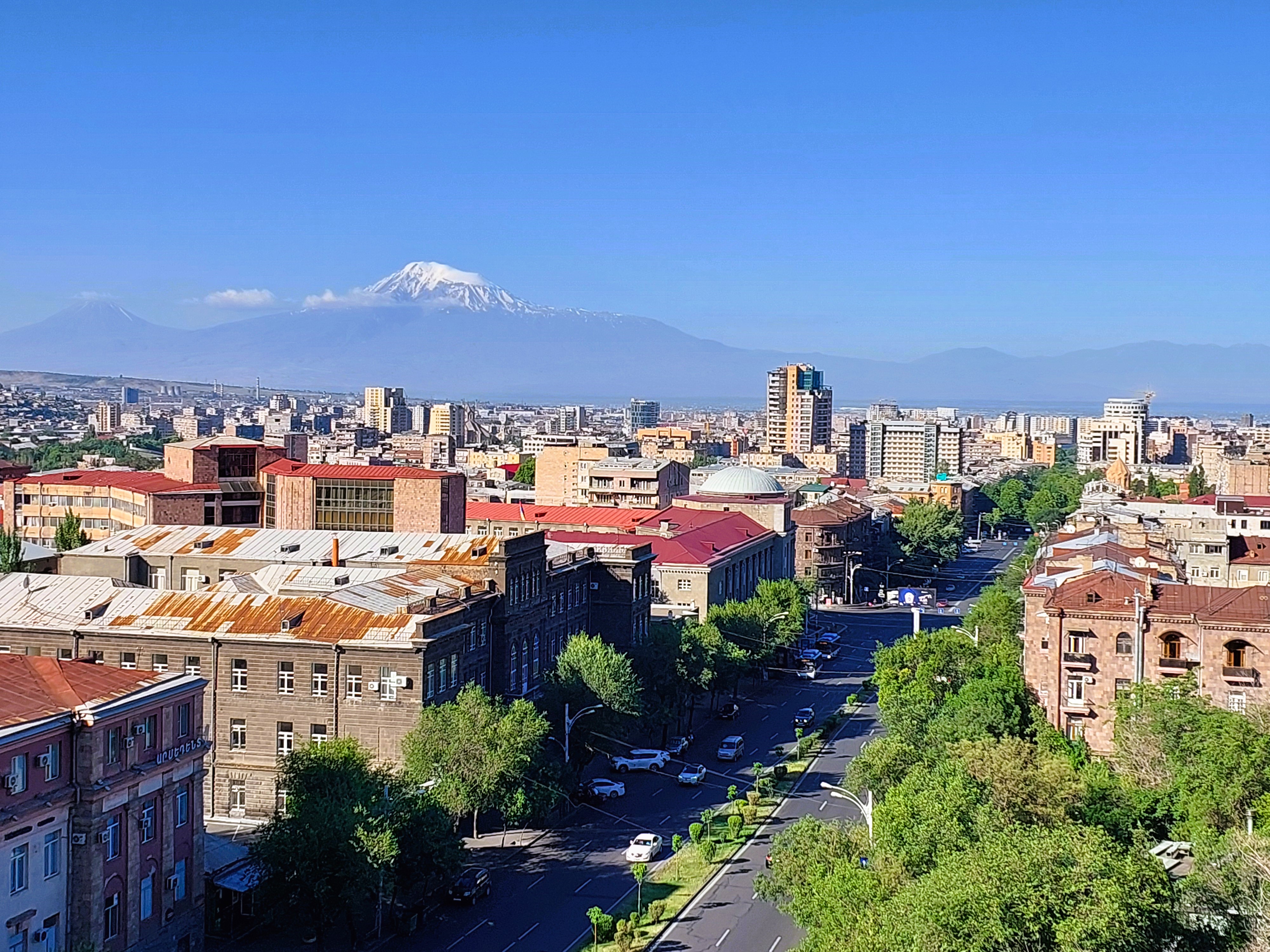
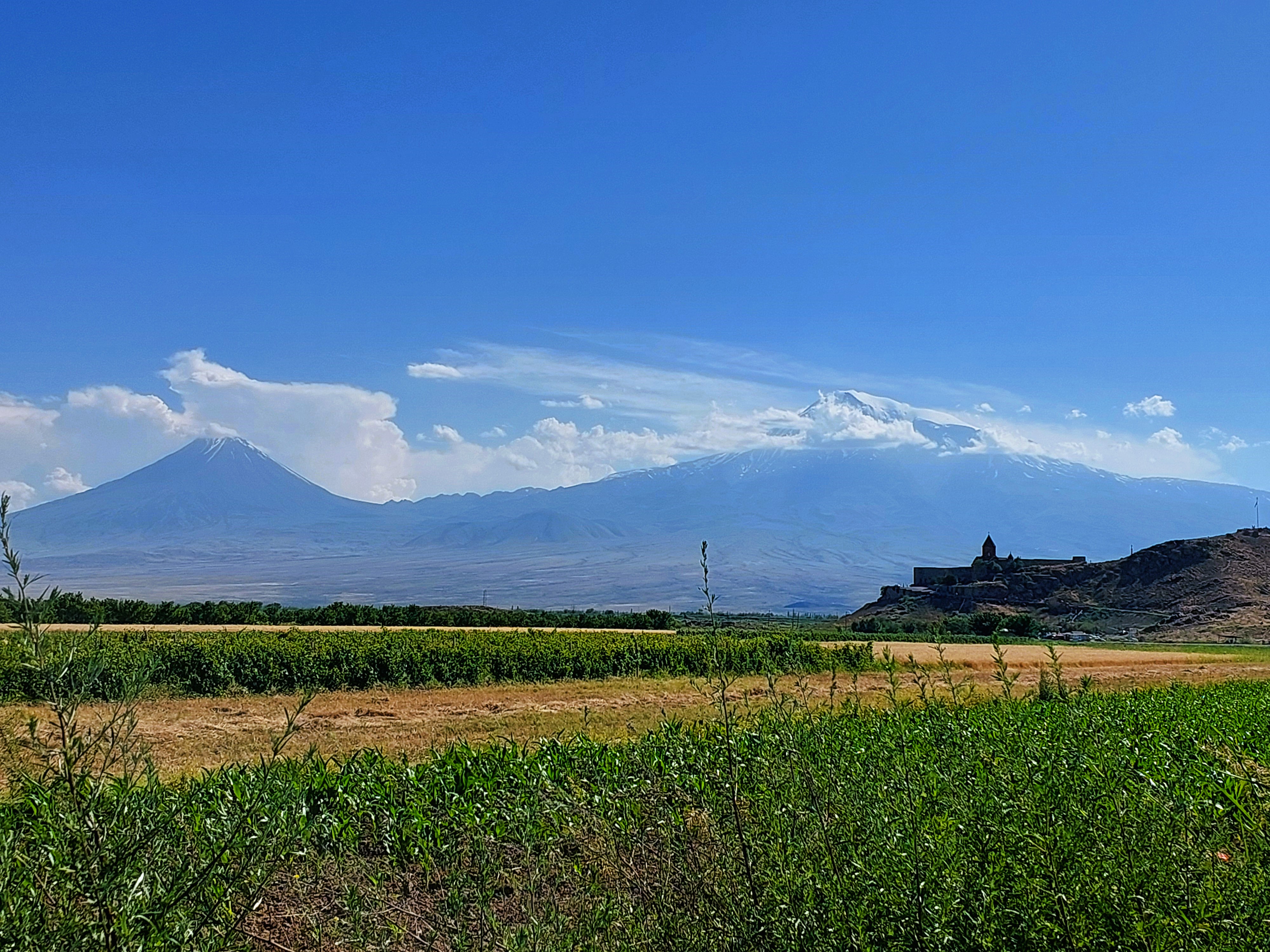
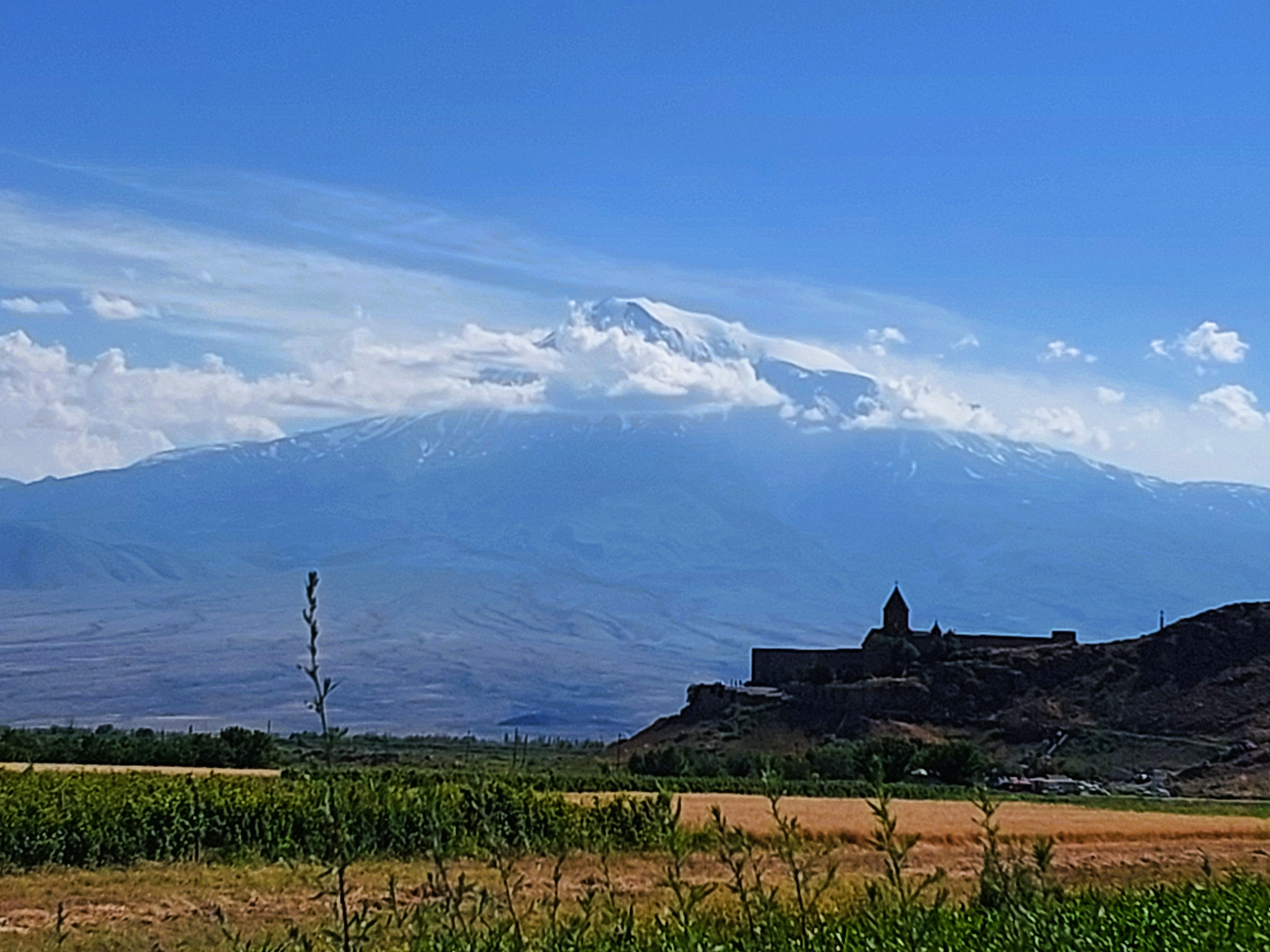
Two snow-capped peaks rose in the soft morning light—Greater Ararat and Little Ararat.
It felt almost surreal to see a mountain range emerging from the edge of a city skyline. The white summit hovered above the plains, calm and distant, yet always present.
From that moment on, Ararat revealed itself again and again throughout the city.
It appeared between buildings, at the end of streets, beyond rooftops. The wide Armenian plains stretched outward. Beyond them lay the silent, snow-covered mountains rising into the sky.
Later, as we drove along the national highway, Ararat seemed to follow us.
No matter where the road turned, the mountain returned to the horizon—steady, watchful, almost like a quiet companion to the journey.
One of the most dramatic views of Ararat is from the Khor Virap Monastery near the Armenia – Turkey border. Here the plains open wide, and the mountain rises suddenly in the distance, its twin peaks sharp against the vast sky.
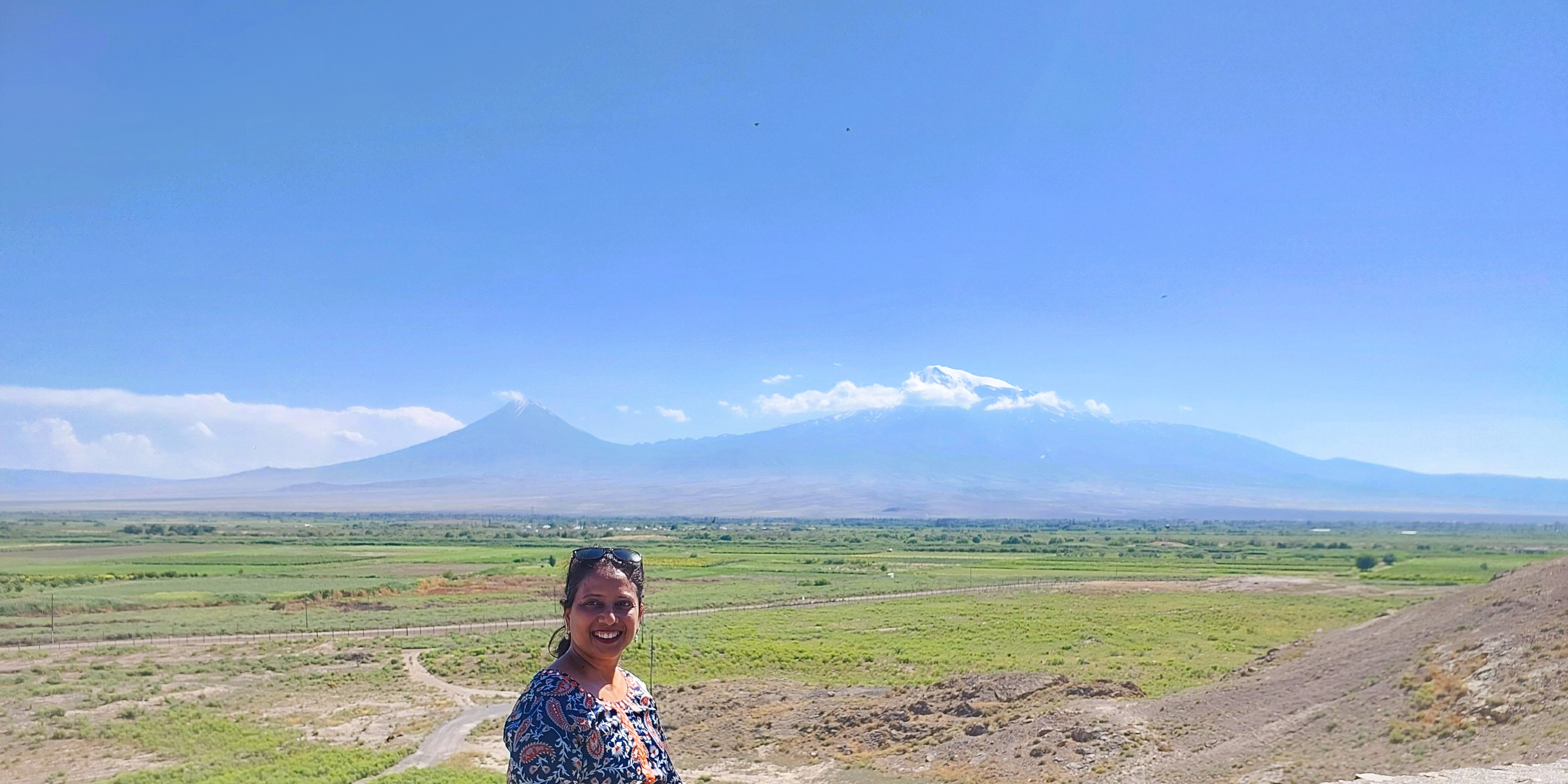
Life unfolded gently around the monastery that day.
A baptism ceremony was taking place in the courtyard. Nearby, a wedding celebration brought families together in quiet joy.
As an observer, these celebrations made me reflect on how life continues despite loss and sorrow.
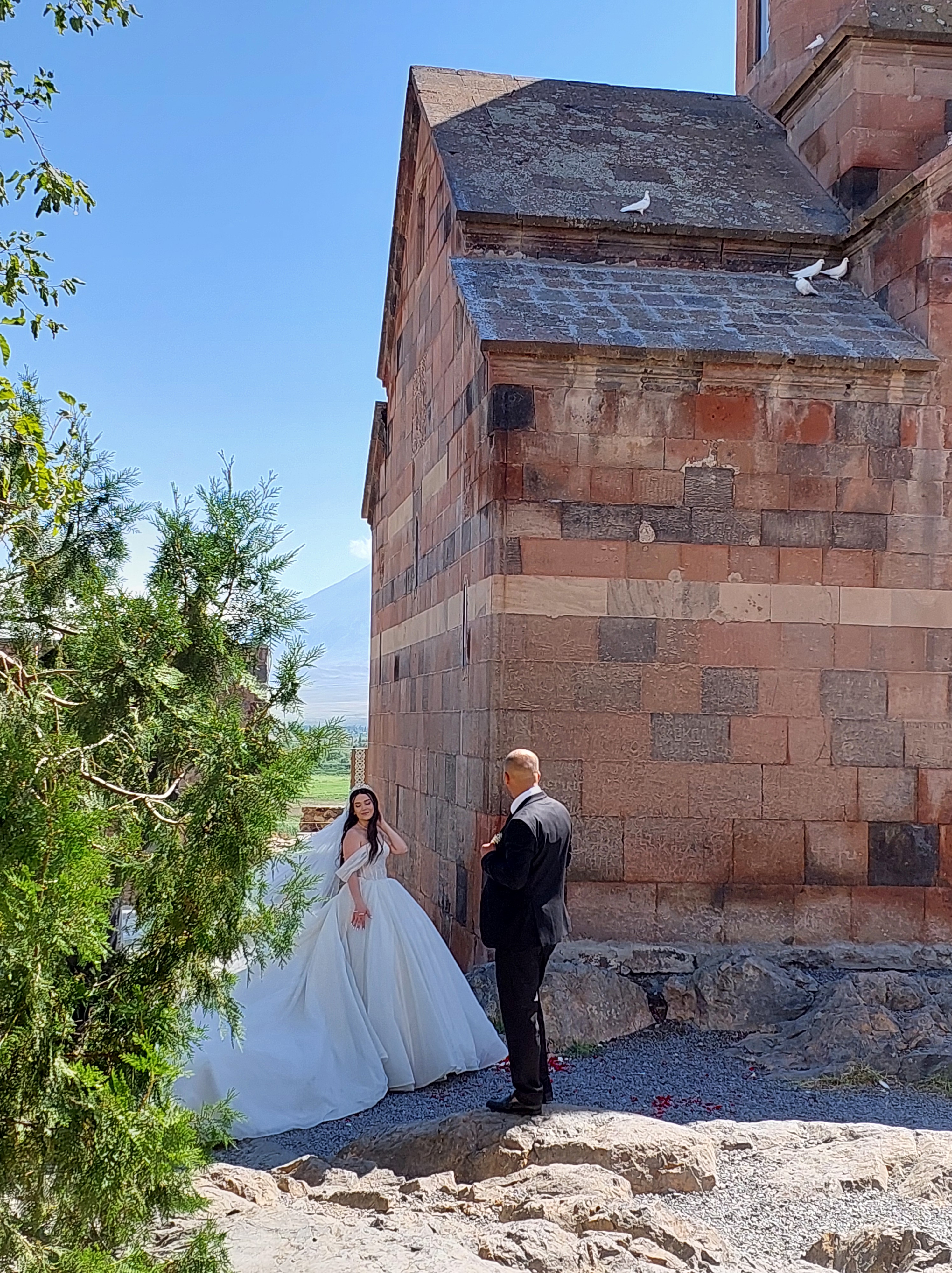
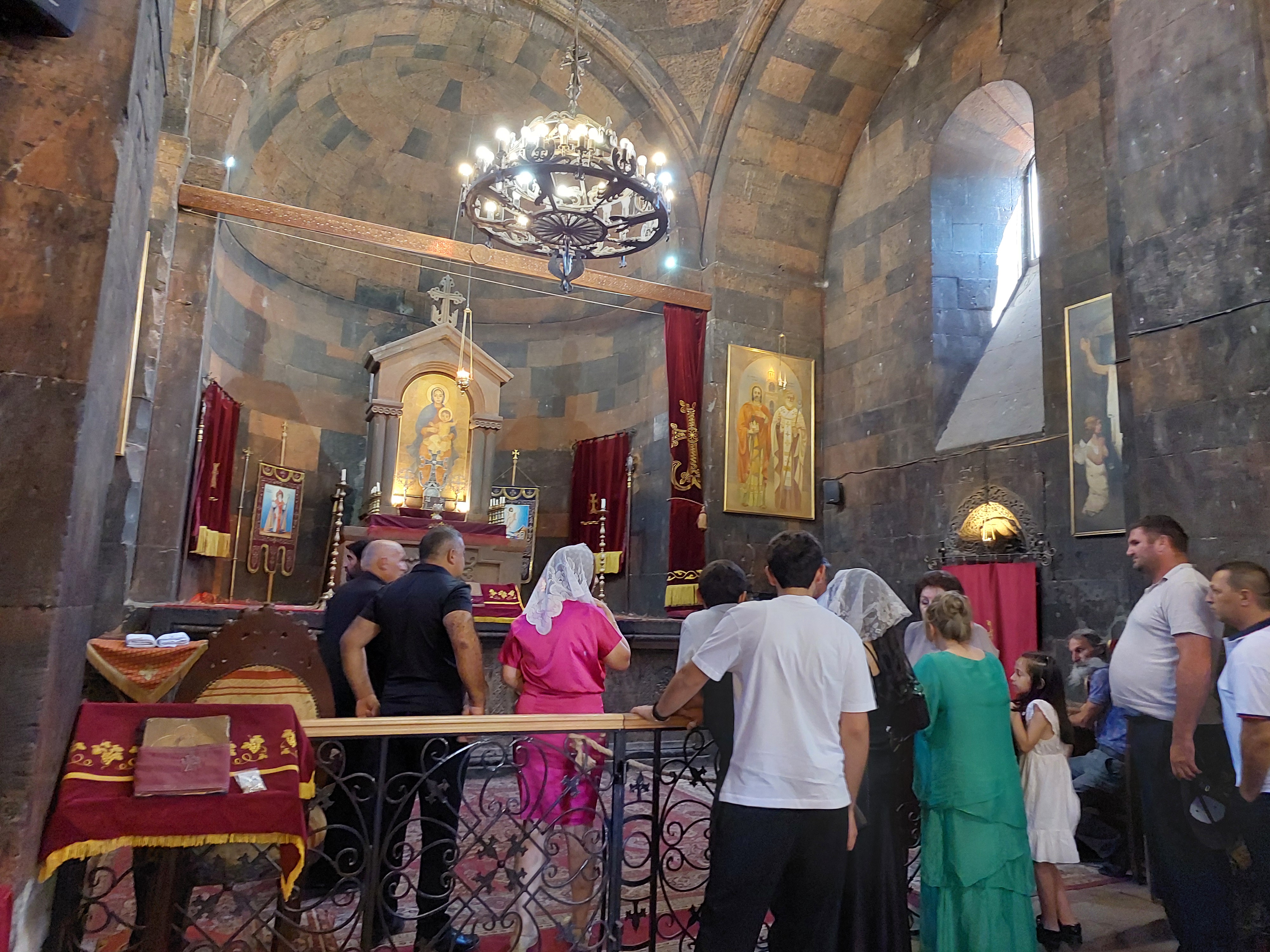
For our group, a flute player had been arranged to perform a short recital. The instrument is known as the duduk – an Armenian flute, made of apricot wood.
He played traditional Armenian folk melodies near the entrance of the monastery. The notes felt ancient, filled with melancholy and longing.
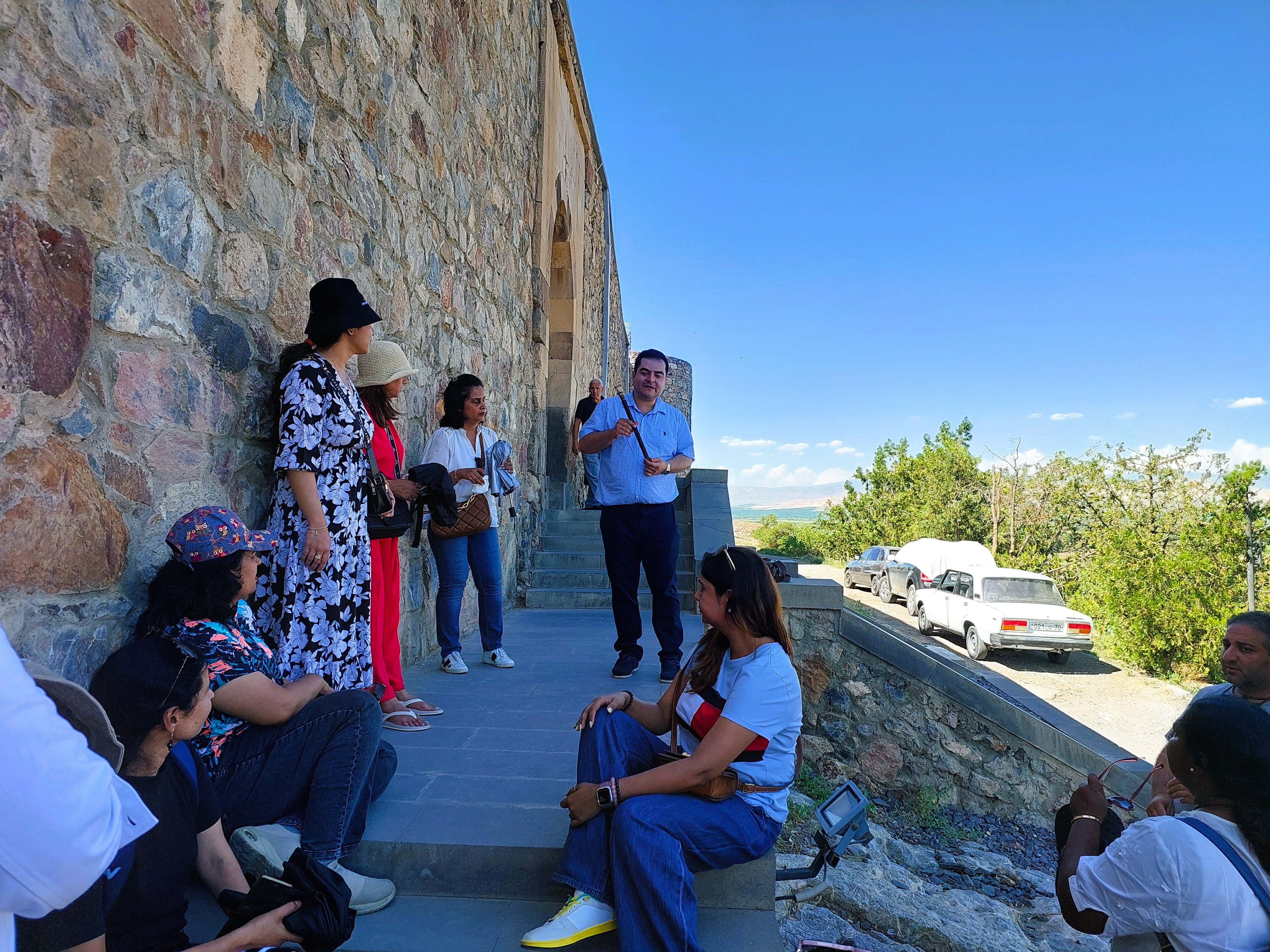
All of it unfolded beneath the gaze of the mountain.
The Armenian poet, Hovhannes Shiraz frequently used Mount Ararat to represent the “wound of Armenia,”.
For Armenians, Mount Ararat is far more than a landmark on the horizon. They look toward it with a quiet longing and painful memories.
Though it stands beyond their border, it remains deeply rooted in their history, their stories, and their sense of who they are.

 The Smiling Travellerr