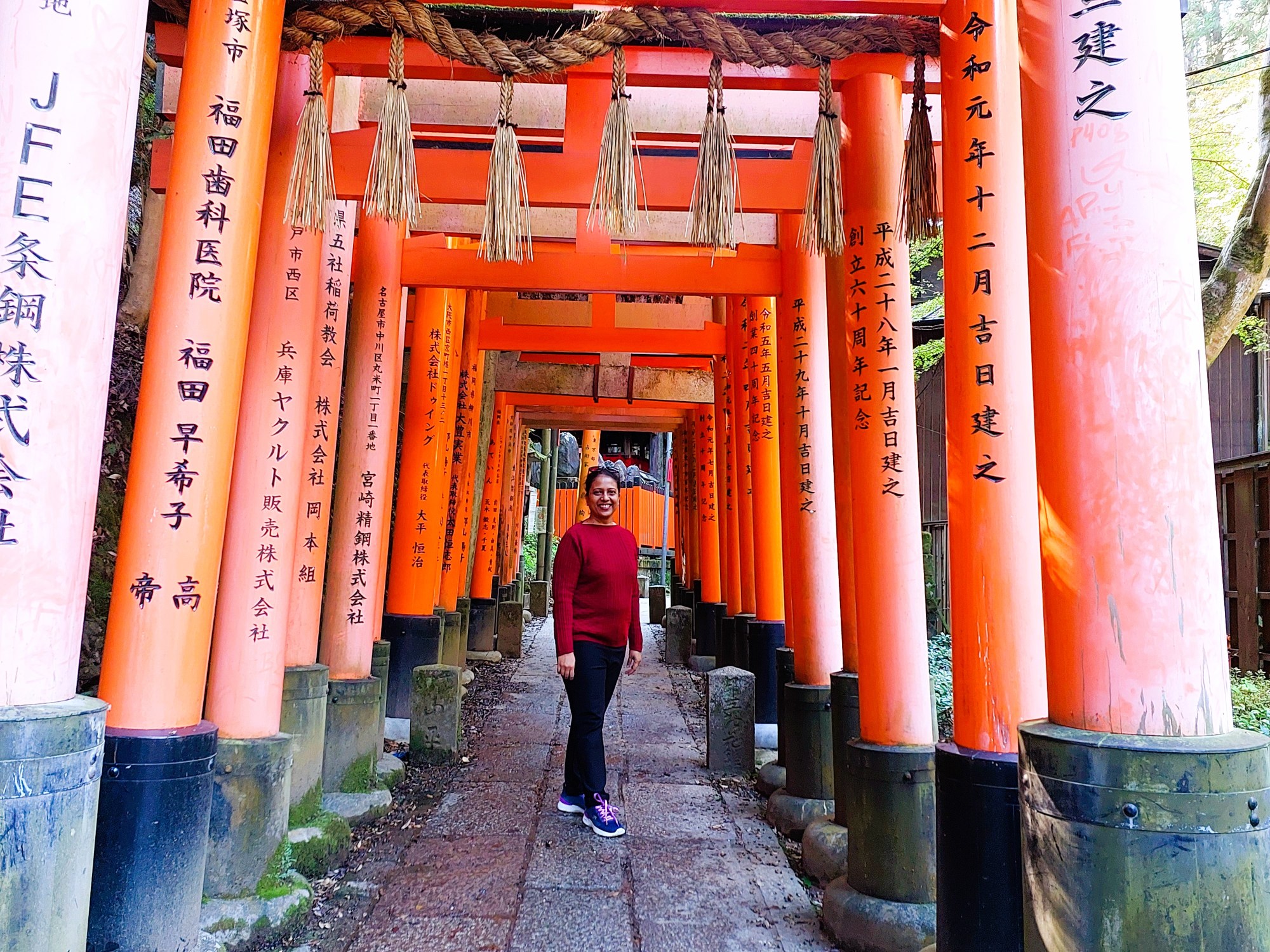
The red torii gates of Fushimi Inari Taisha are among Kyoto’s most iconic sights. Most visitors start at the grand entrance near the main shrine. They then follow the seemingly endless tunnels of vermilion gates up Mount Inari. It is beautiful — and often crowded.
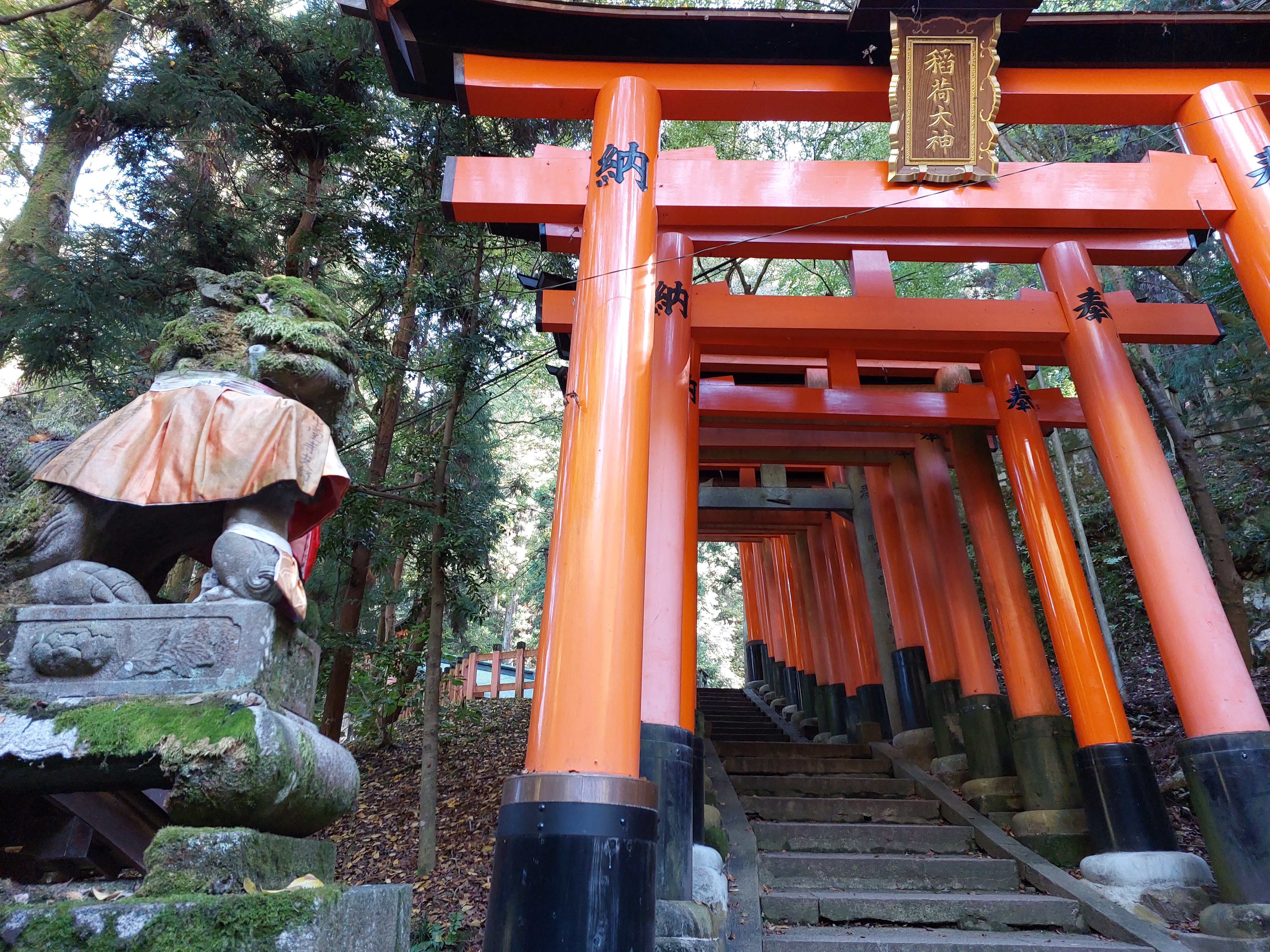
But I chose a different path.
I did not start at the base. Instead, I joined a small morning walk. This walk promised a quieter route. It offered a deeper look into the history and spiritual layers of this sacred mountain.
A Different Beginning
At 9am, the sunlight was soft and gentle — the kind that makes the morning feel full of possibility. We met near the FamilyMart by Tofukuji and began walking through narrow residential streets. It felt worlds away from the busy main entrance.
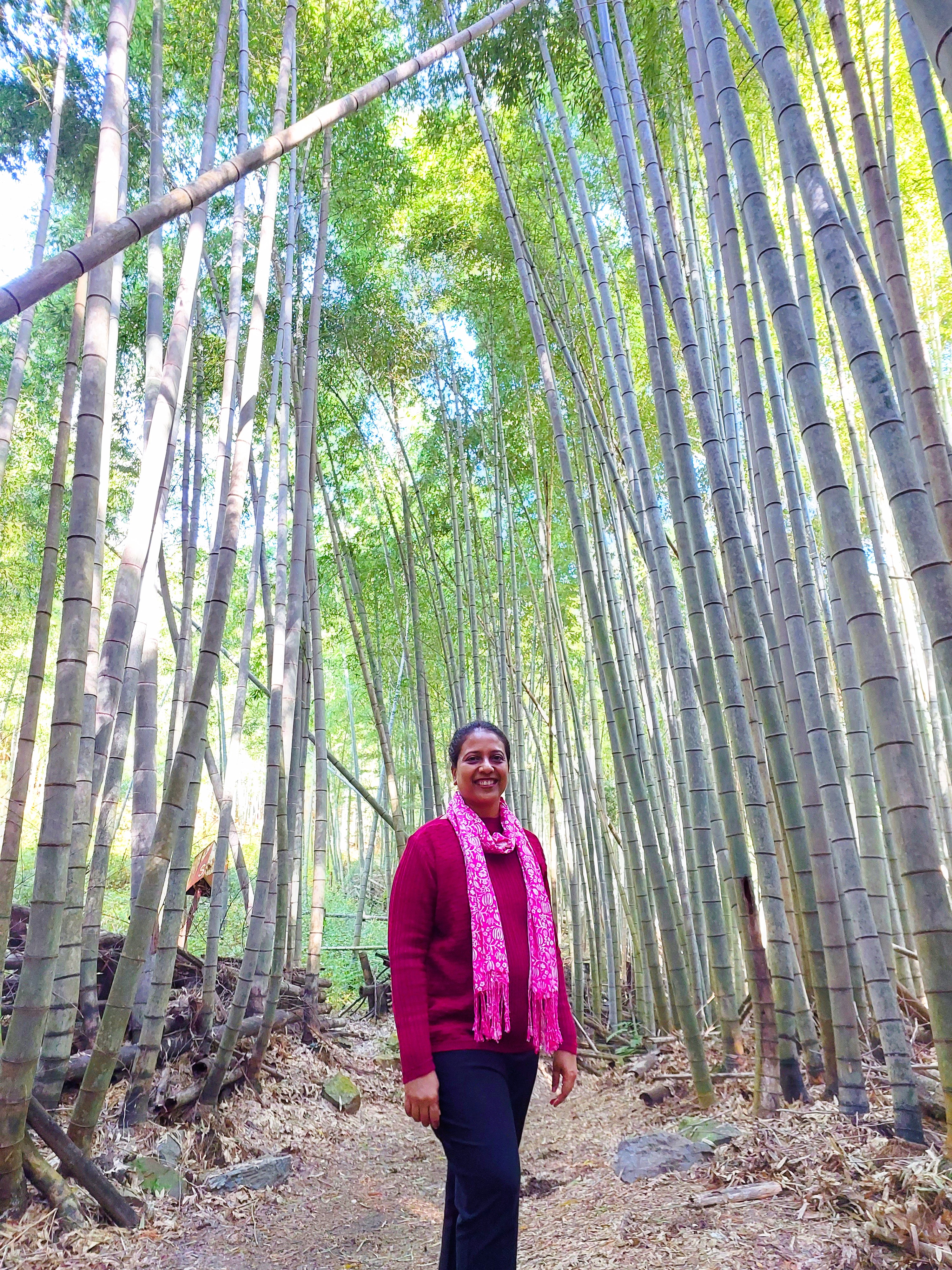
At the end of one quiet lane stood a vivid red torii gate — smaller, almost modest — marking the entrance to a bamboo-covered trail.
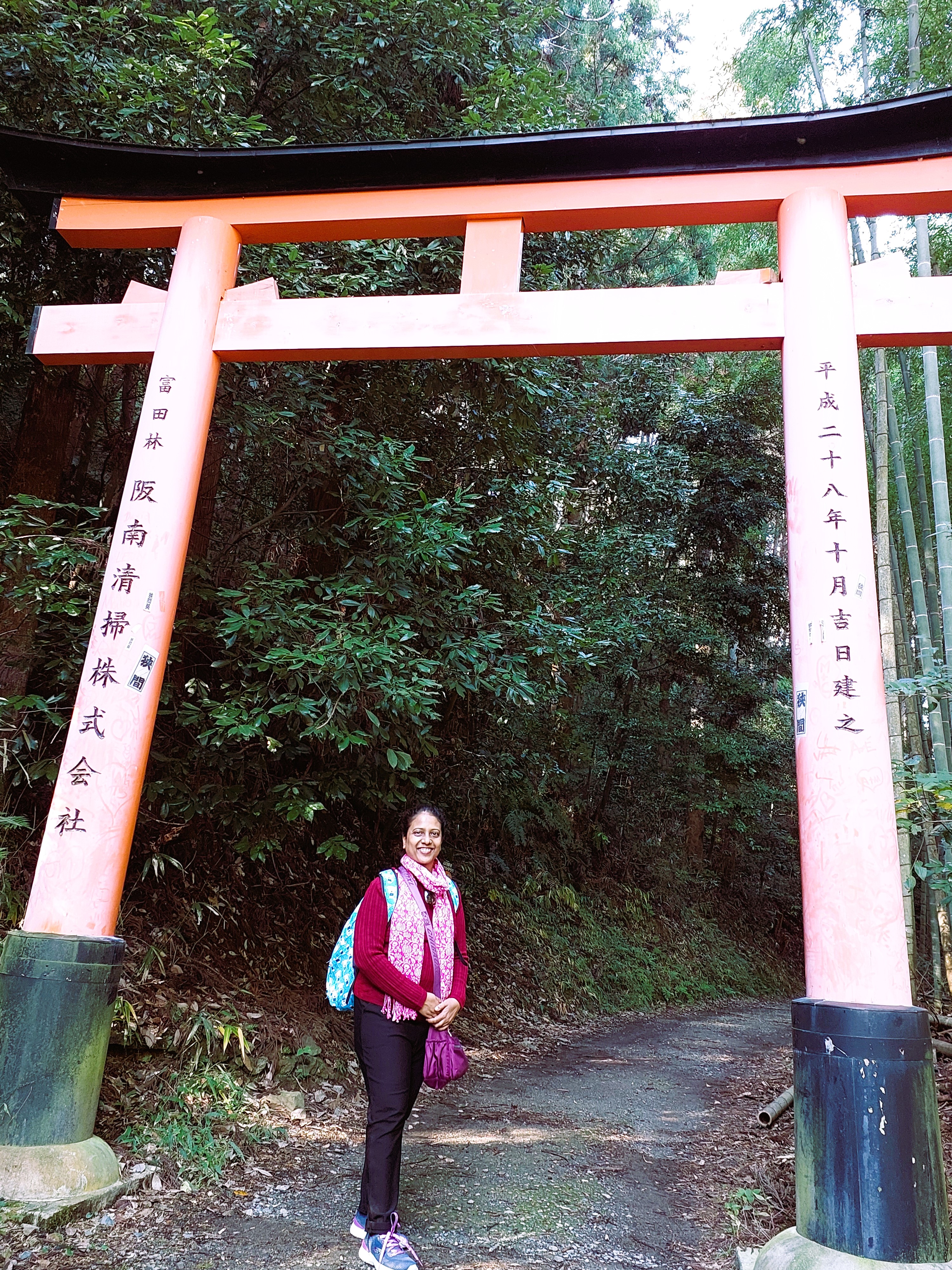
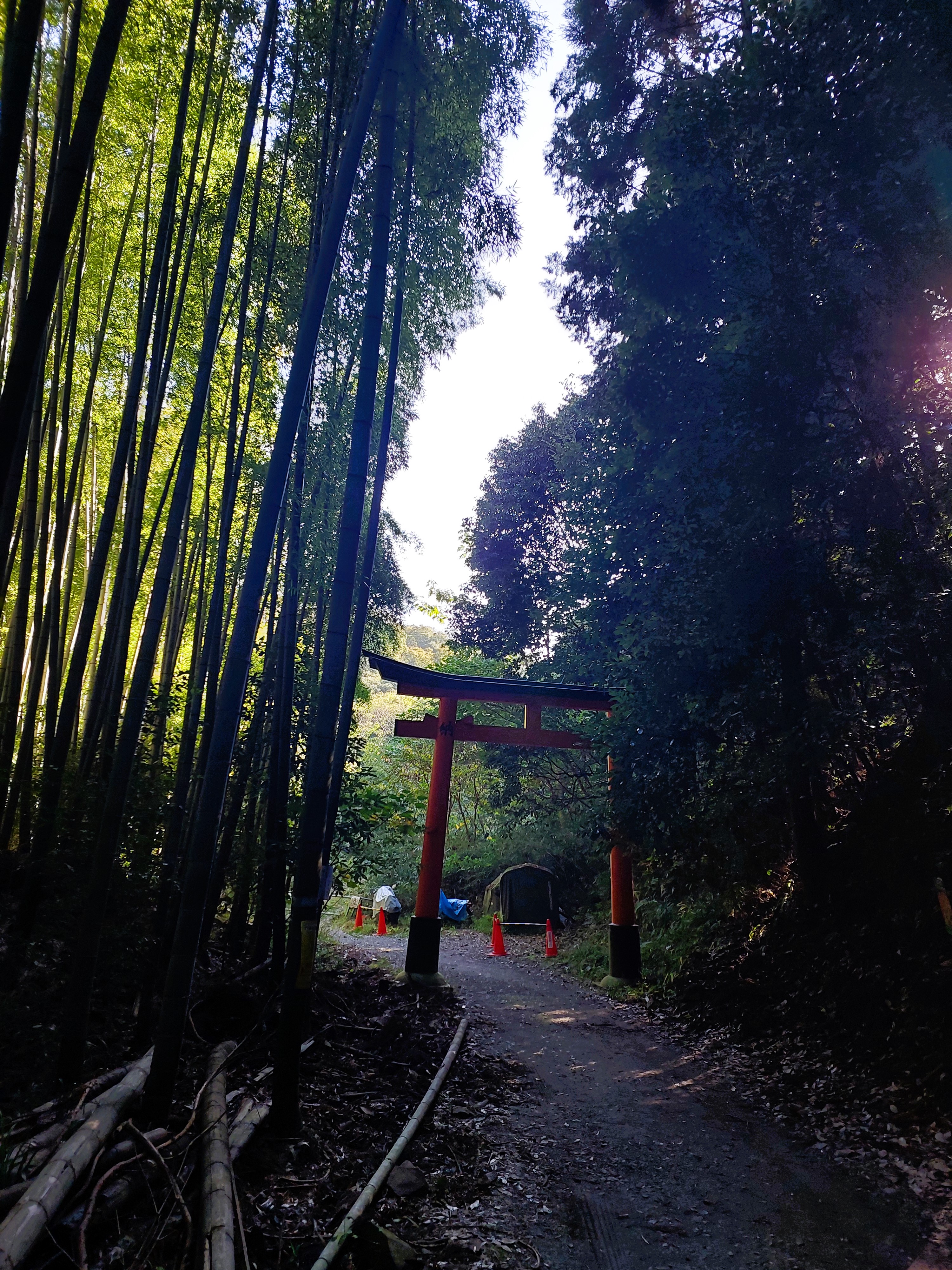
The climb began immediately.
The path was steep, narrow, and slightly muddy, carved directly into the hillside. Tall bamboo swayed above us, and with each step upward, the sounds of the city faded. The air grew cooler. Quieter. More sacred.
Shrines Hidden in the Forest
Fushimi Inari is dedicated to Inari, the Shinto deity of rice, prosperity, and business. Thousands of torii gates line the mountain. They are donations from individuals and companies. Each gate is inscribed with the donor’s name and date.
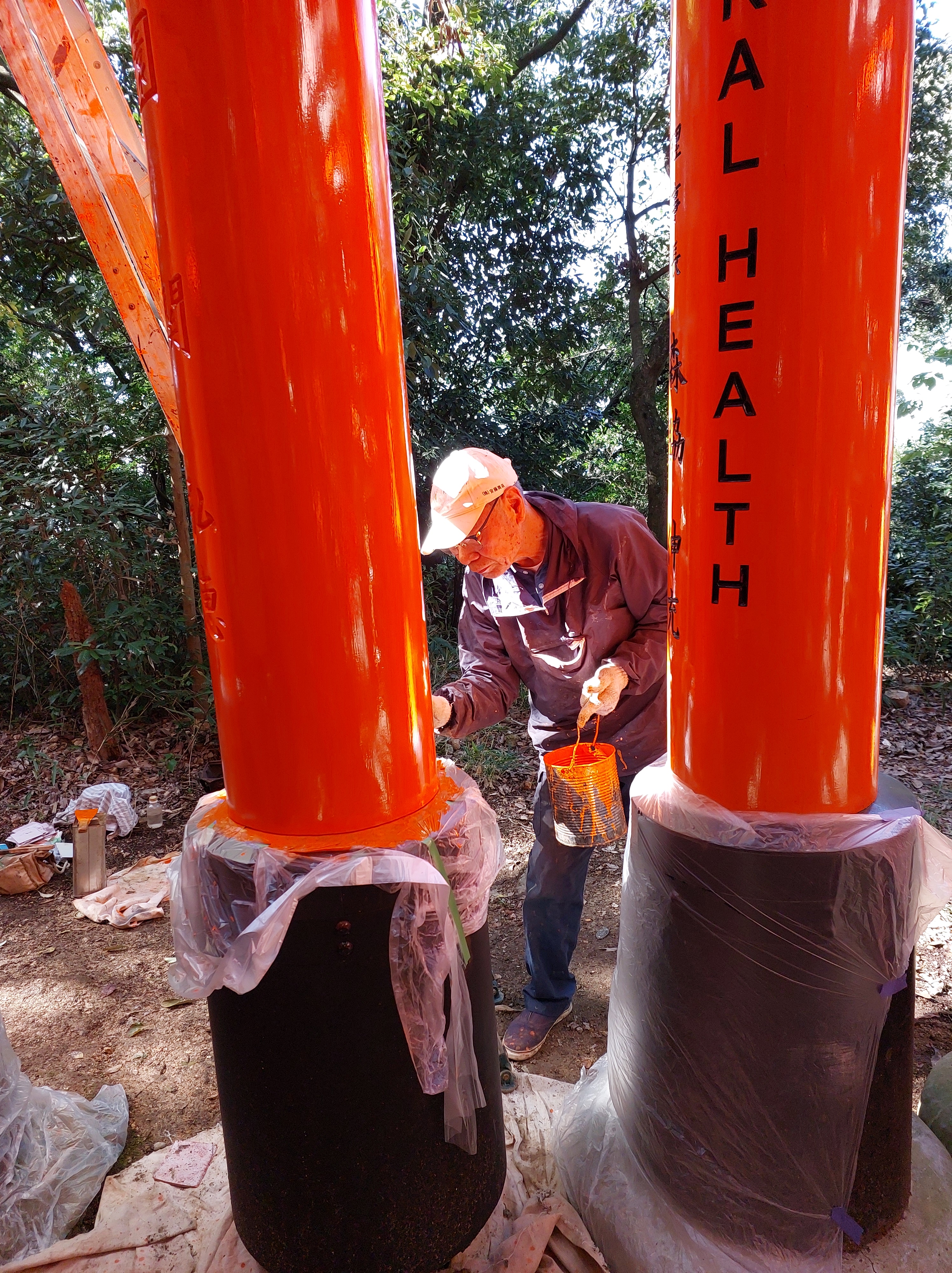
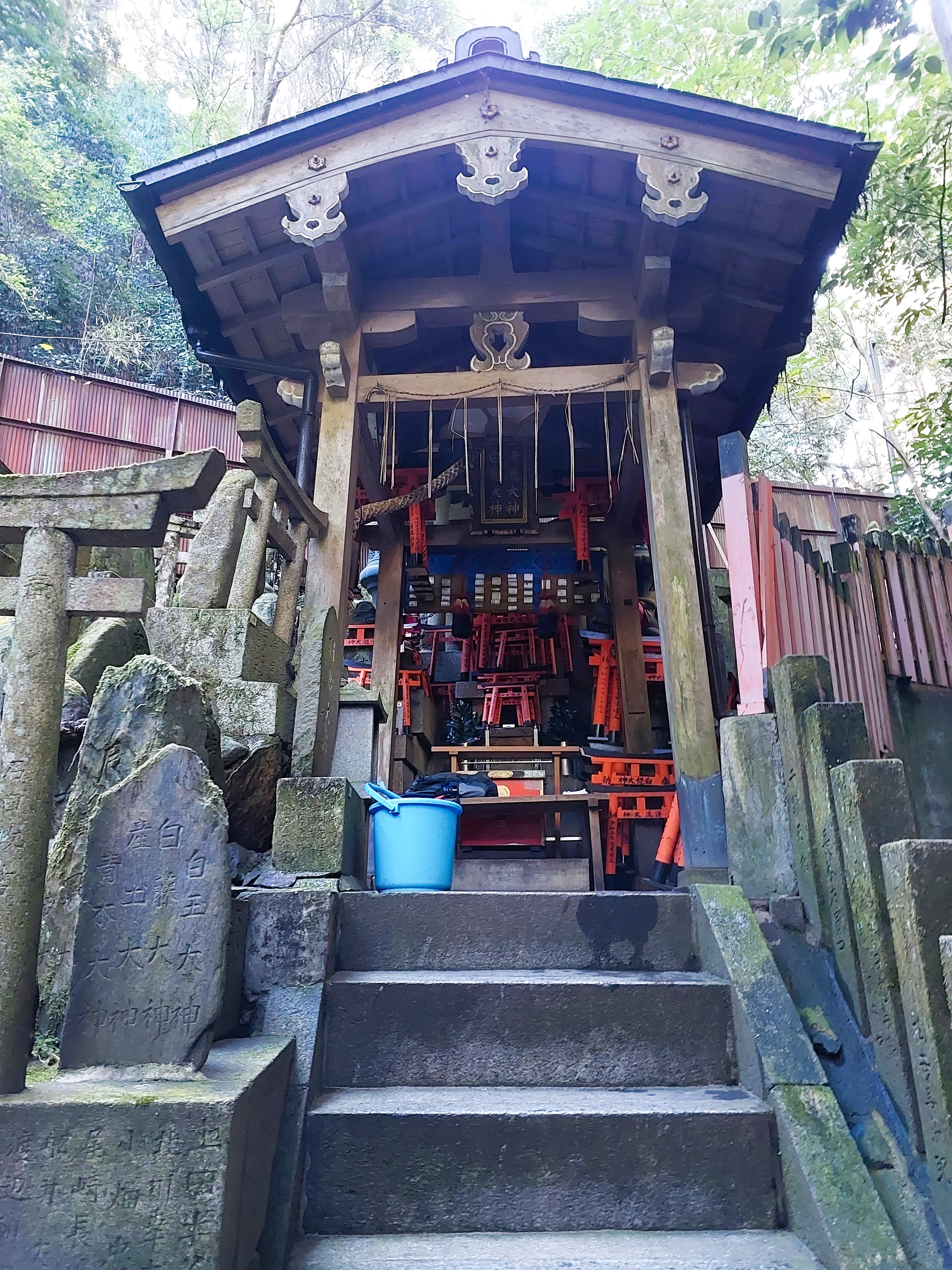
But beyond the famous gates, the mountain holds smaller shrines — intimate spaces many visitors never see.
The first we encountered was an ancient shrine tucked into the forest, where a small waterfall trickled beside moss-covered stone. The gentle sound of water blended with the rustling bamboo, creating a peaceful rhythm that felt timeless.
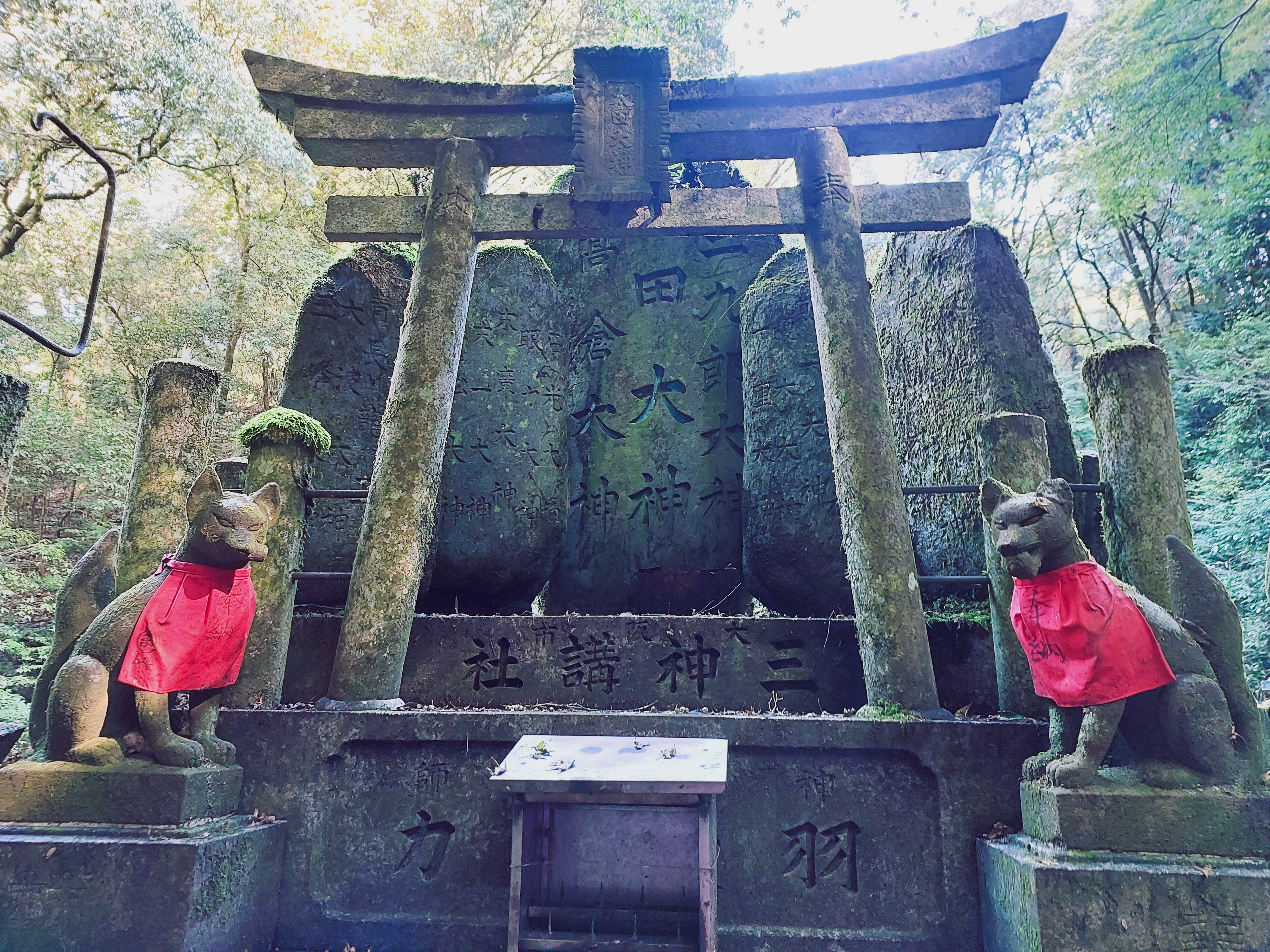
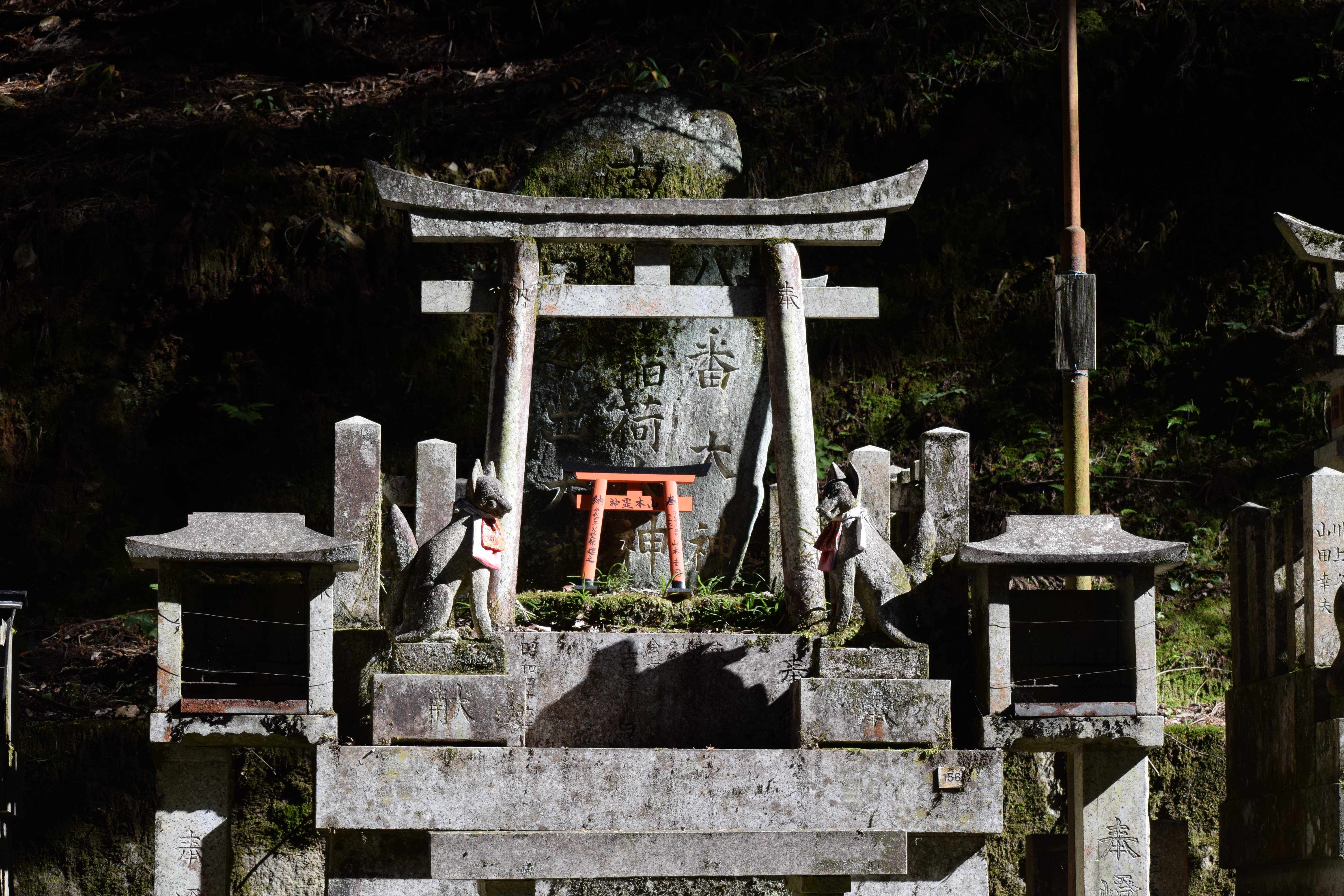
Further along, we arrived at a fox shrine. Stone foxes — messengers of Inari — stood watch with quiet intensity. Some held symbolic objects in their mouths: keys, rice sheaves, scrolls. Offerings had been carefully placed before them. The atmosphere felt sacred and slightly mysterious, like a secret guarded for centuries.
Reaching the Summit
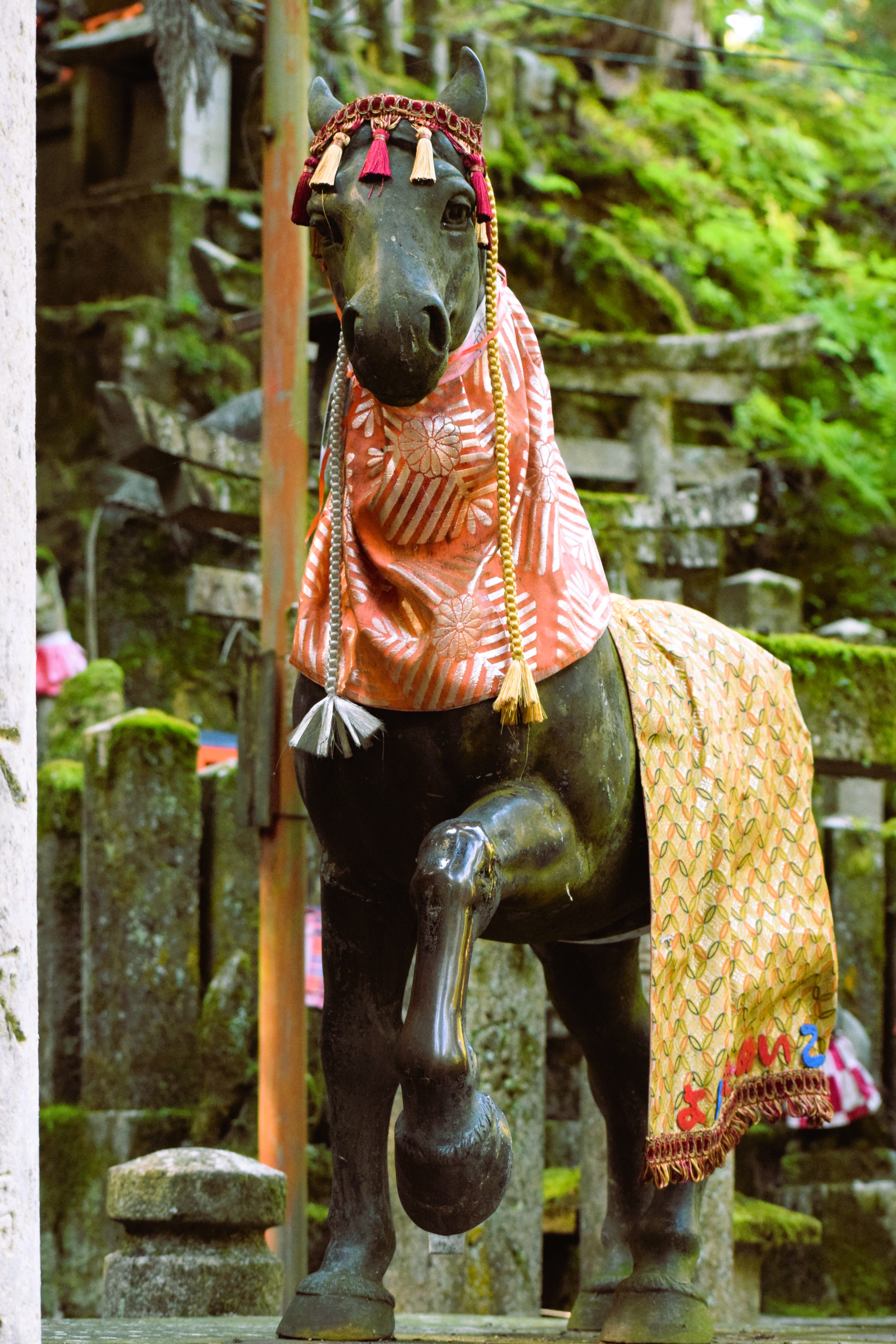
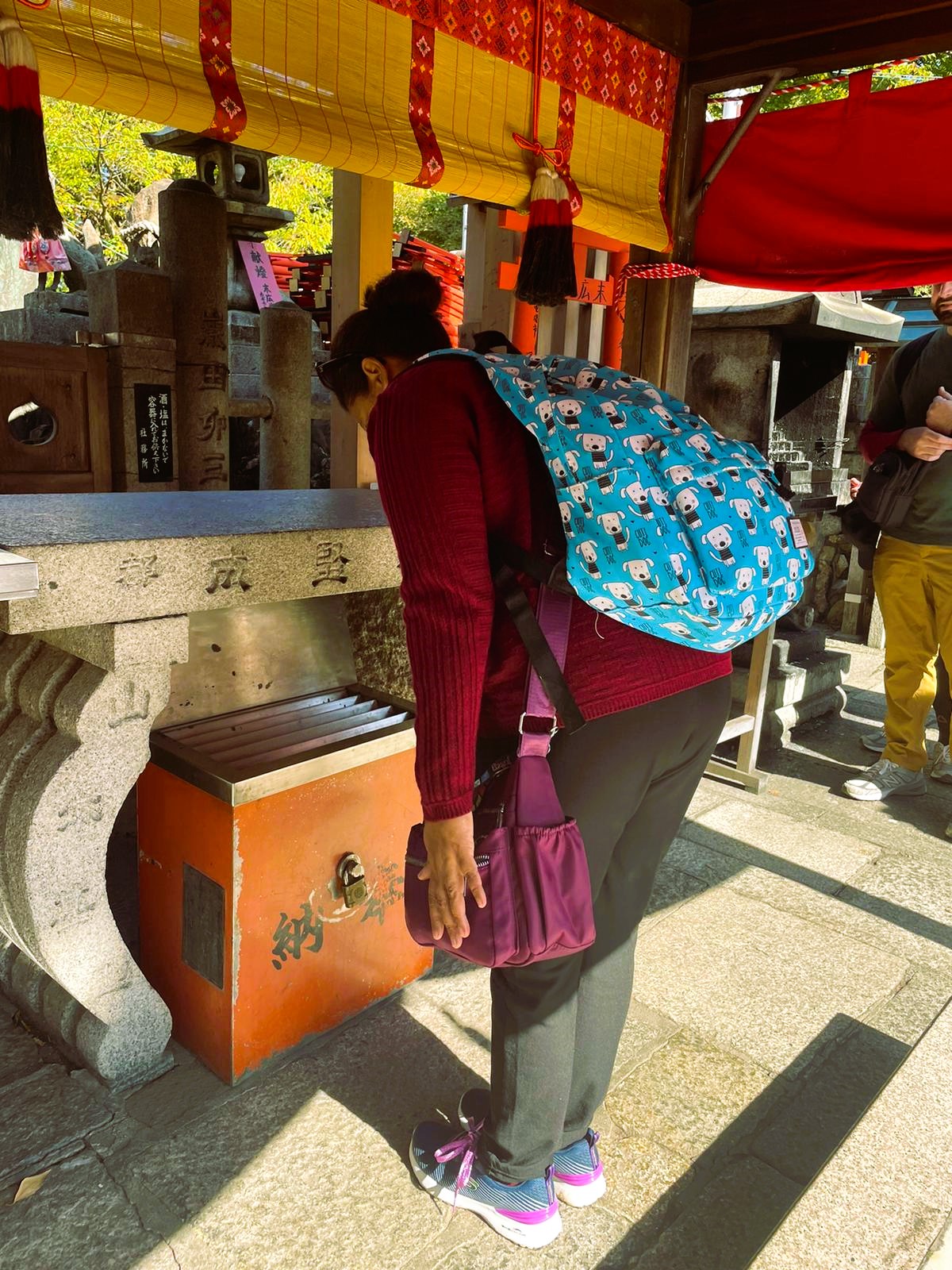
As we continued upward, we reached a shrine near the top. It featured a statue of a horse. The horse was silent and dignified, gazing out over the hillside. The climb had been steady, but never overwhelming. Instead, it felt meditative.
A little farther on, the trees opened to reveal a viewpoint.
Kyoto stretched out before us in a soft haze. Rooftops layered into the distance. Temple roofs were barely visible beneath an overcast sky. The city shimmered quietly below, and for a moment, everything felt still.
Descending Through the Torii Gates
From the summit, we began our descent — this time entering the iconic tunnels of red torii gates.
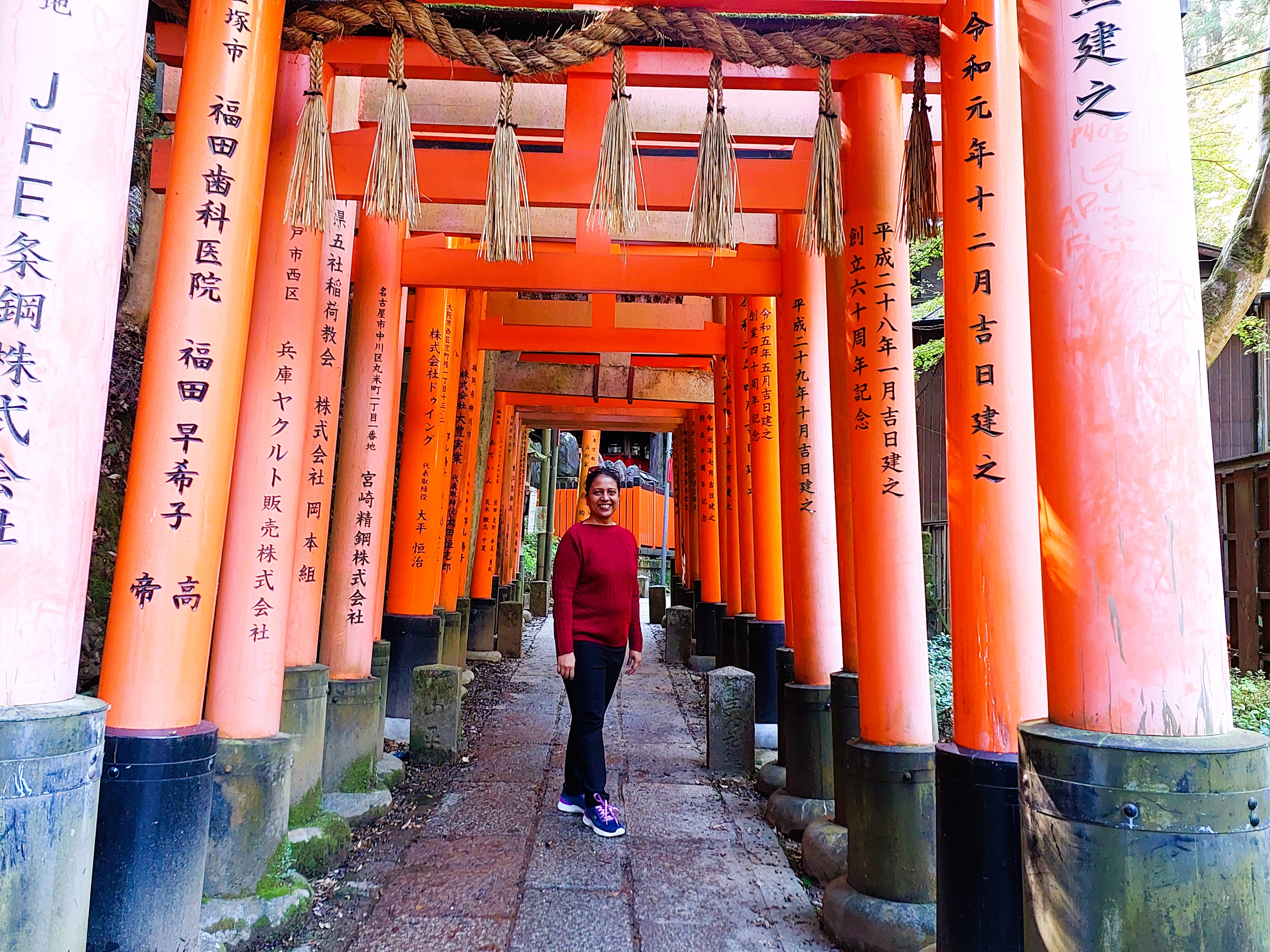
Walking downhill through them felt different from starting at the base. Each gate framed the path like a portal. The repetition of color and shadow created a rhythm, almost like walking through time itself.
We descended instead of ascending through the gates. This allowed us to encounter fewer crowds. We experienced them in near silence. This is something rare at one of Japan’s most visited shrines.
Eventually, we arrived at the grand main shrine at the base — where most journeys begin.
Ours was ending.
Final Thoughts
Exploring Fushimi Inari from a lesser-known trail transformed the experience entirely. It wasn’t just about photographing the famous gates. It became a layered walk through history, belief, and landscape.
If you visit Kyoto, consider going beyond the obvious route. The mountain holds more than what appears in postcards.
Sometimes, the quieter path tells the richer story.
Practical Tips for Visiting Fushimi Inari Taisha
If you are planning your own walk up Mount Inari in Kyoto, here are a few helpful things to know:
How Long It Takes
- Full mountain loop: 2–3 hours at a relaxed pace
- To the main viewpoint (Yotsutsuji intersection): About 45–60 minutes
- Hidden trails / alternative routes: Allow 3 hours if exploring smaller shrines and forest paths
The shrine grounds are open 24 hours, so you can tailor your visit to avoid peak crowds.
What to Wear
- Comfortable walking shoes — the trails can be steep, uneven, and muddy, especially after rain.
- Light layers — the base may feel warm, but the forested sections are noticeably cooler.
- Water — vending machines are available along the main path, but not on quieter side trails.
If you’re taking a less-traveled route, proper footwear makes a big difference.
Best Time to Go
- Early morning (before 8–9am): Quiet, soft light, fewer tour groups.
- Late evening: The lanterns glow and the atmosphere becomes almost mystical.
- Avoid mid-day (10am–3pm): This is when tour buses arrive and the lower gates become crowded.
Spring and autumn offer the most comfortable weather. Summer can be humid, and the climb feels significantly harder in the heat.

 The Smiling Travellerr