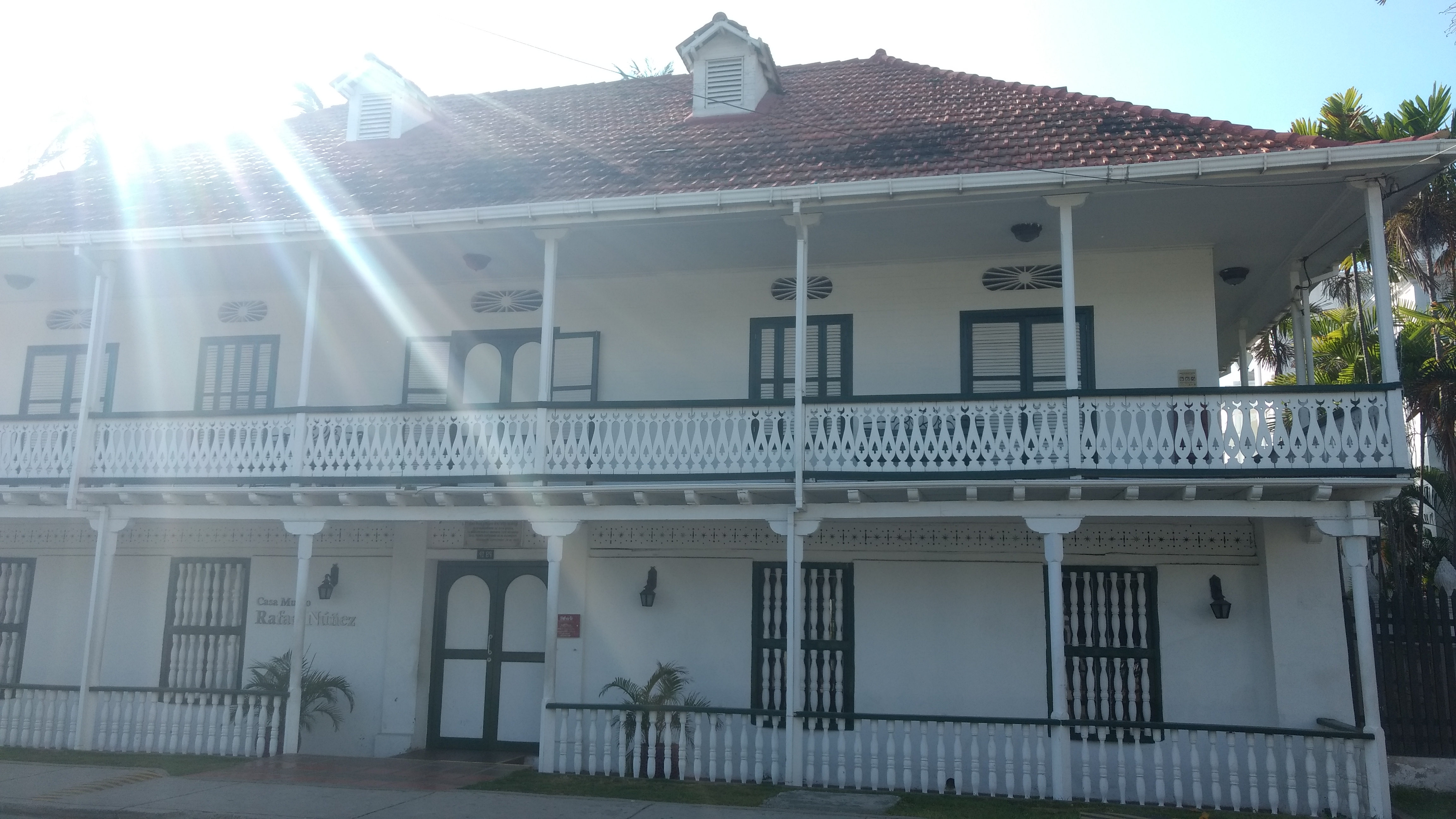
The house revealed itself slowly, standing behind a wrought-iron gate tangled in cascades of bougainvillea, its presence softened by time and shade.
Tall palm trees kept watch, their fronds swaying lazily above terracotta roof tiles that shimmered under the Caribbean sun.
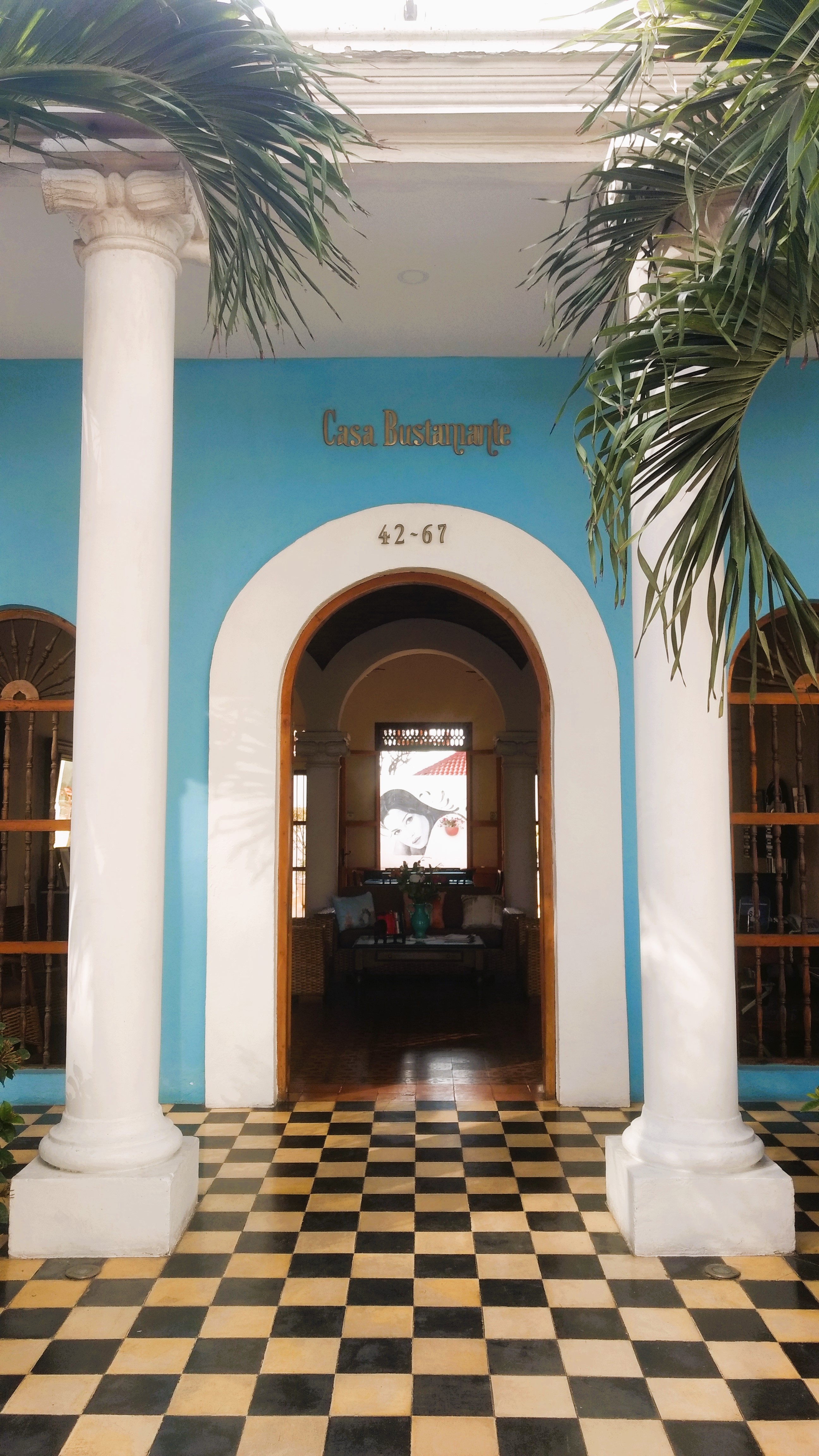
The brightly painted walls and patterned tiles seemed to glow, as if the house were holding on to a memory of color, announcing even before entry that this was no ordinary place to stay.
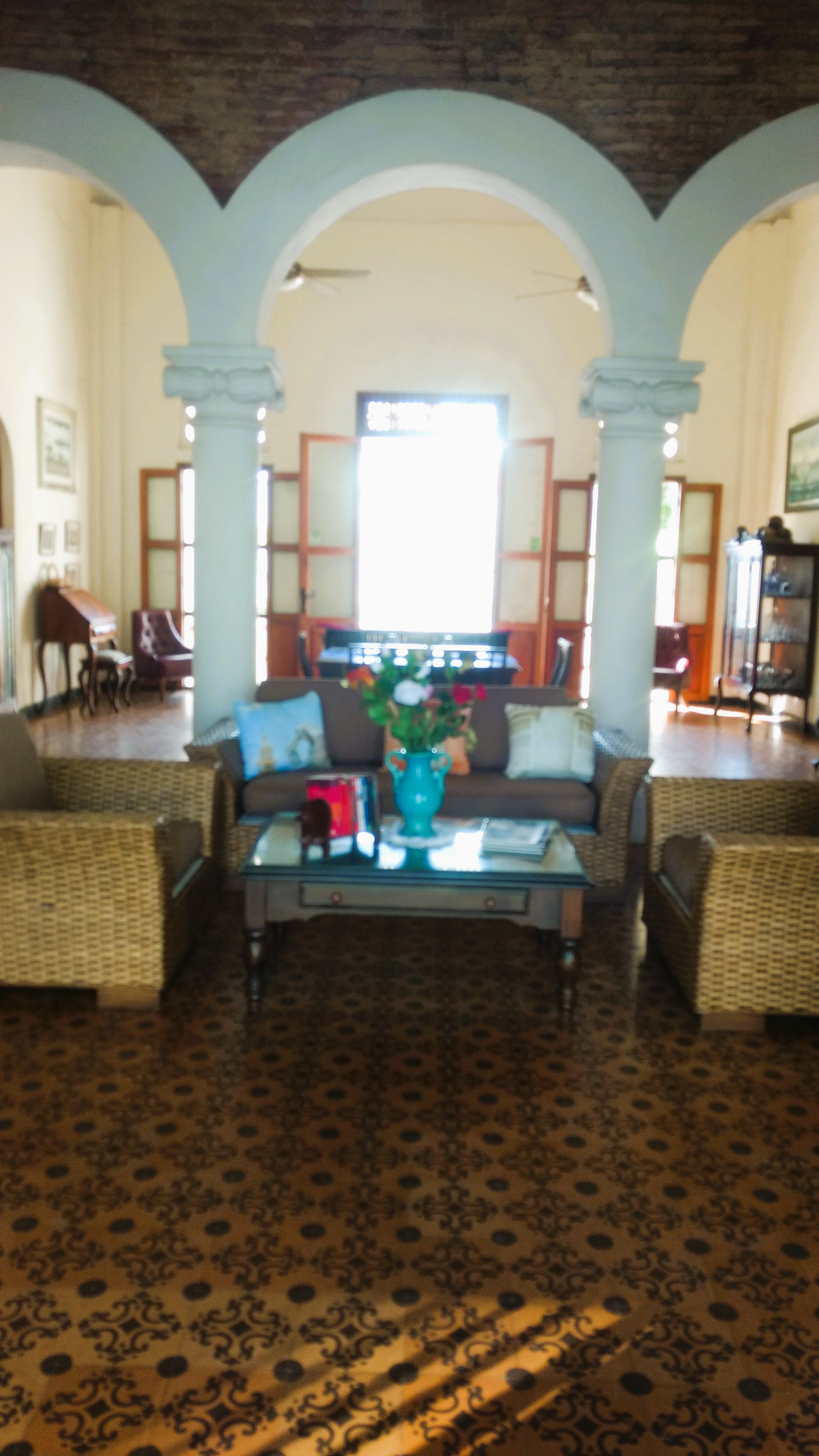
Inside, the air changed. Thick whitewashed walls absorbed the heat, creating a cool, hushed interior.
Wooden beams stretched across lofty ceilings, their dark grain etched with age, while hand-carved doors opened onto shaded verandas strung with hammocks that swayed almost imperceptibly, moved by the breath of passing air.
In 2017, I came to Cartagena, Colombia, for a brief weekend.
I chose to stay in a lovingly restored family house near the Old Town, drawn by a curiosity to experience a way of living shaped by the country’s colonial past.
Casa Bustamante, is a Republican-style house built in 1913.
Lovingly restored and now a boutique hotel, it has retained the dignity of its original design, as though reluctant to let go of its past.
Cartagena is deeply urban now, but it carries its history openly.
Beyond the city, in the countryside of the Bolívar Department, hacienda-style villas still stand as quiet witnesses to another era.
Their architecture—Spanish in form, Caribbean in spirit—speaks of power, leisure, and a life lived at a deliberate pace.
Many of its grand houses have been reborn as boutique hotels, museums, and cultural spaces—structures that once belonged to the elite and now offer their stories to those willing to linger.
I checked in early and allowed the morning to unfold slowly.
The house encouraged unhurried movement. Birds called from somewhere beyond the walls, their songs drifting through the open spaces. Sunlight slid across the patterned tiles, tracing shapes that shifted as the day progressed.
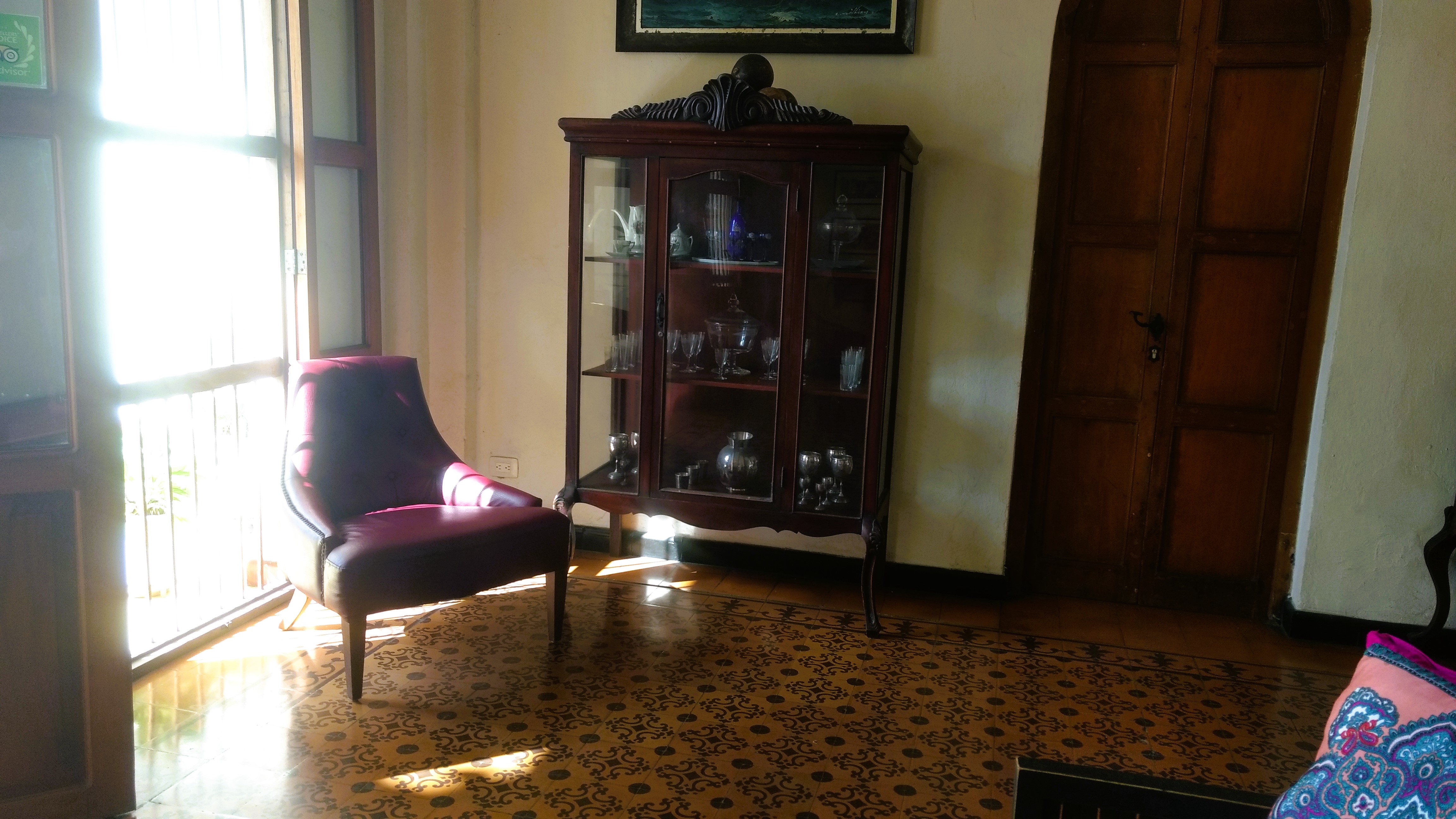
I found myself pausing often, wondering about the teak and oak furniture—what conversations had unfolded around them, what footsteps they had quietly endured.
My room was a study in white: walls, linens, even the bathroom dissolved into a single, calming palette. The simplicity felt intentional, offering relief from the outside world.
A small sit-out opened toward the garden, but the Caribbean humidity pressed close, urging me back into the cool interior.
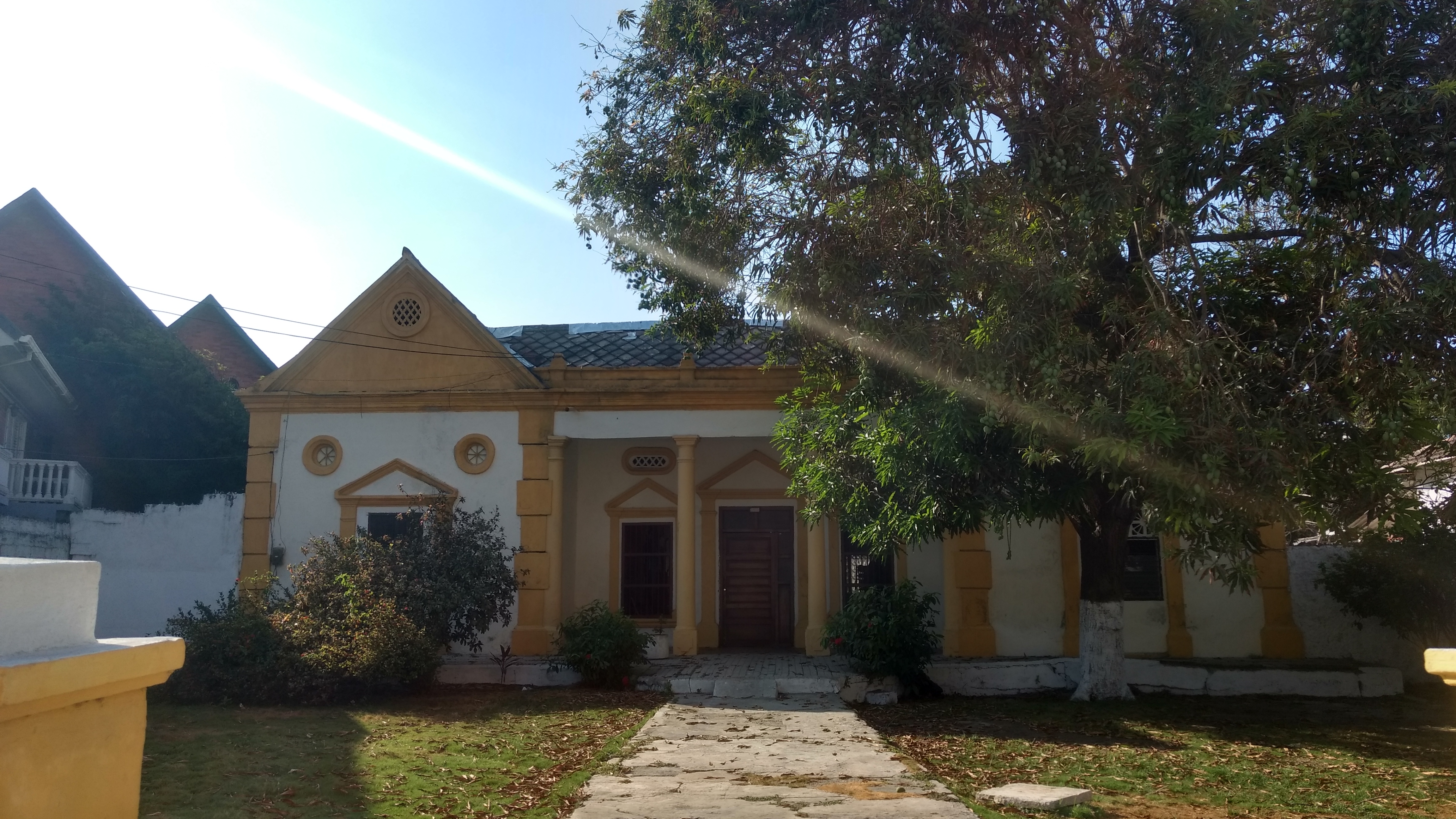
Just beyond, a modest backyard garden waited. A mango tree, heavy with unripe fruit, leaned toward a small pool, its reflection wavering gently in the water. It felt like a private corner of the house, removed from time.
Later, I retreated to the living area and lingered there.
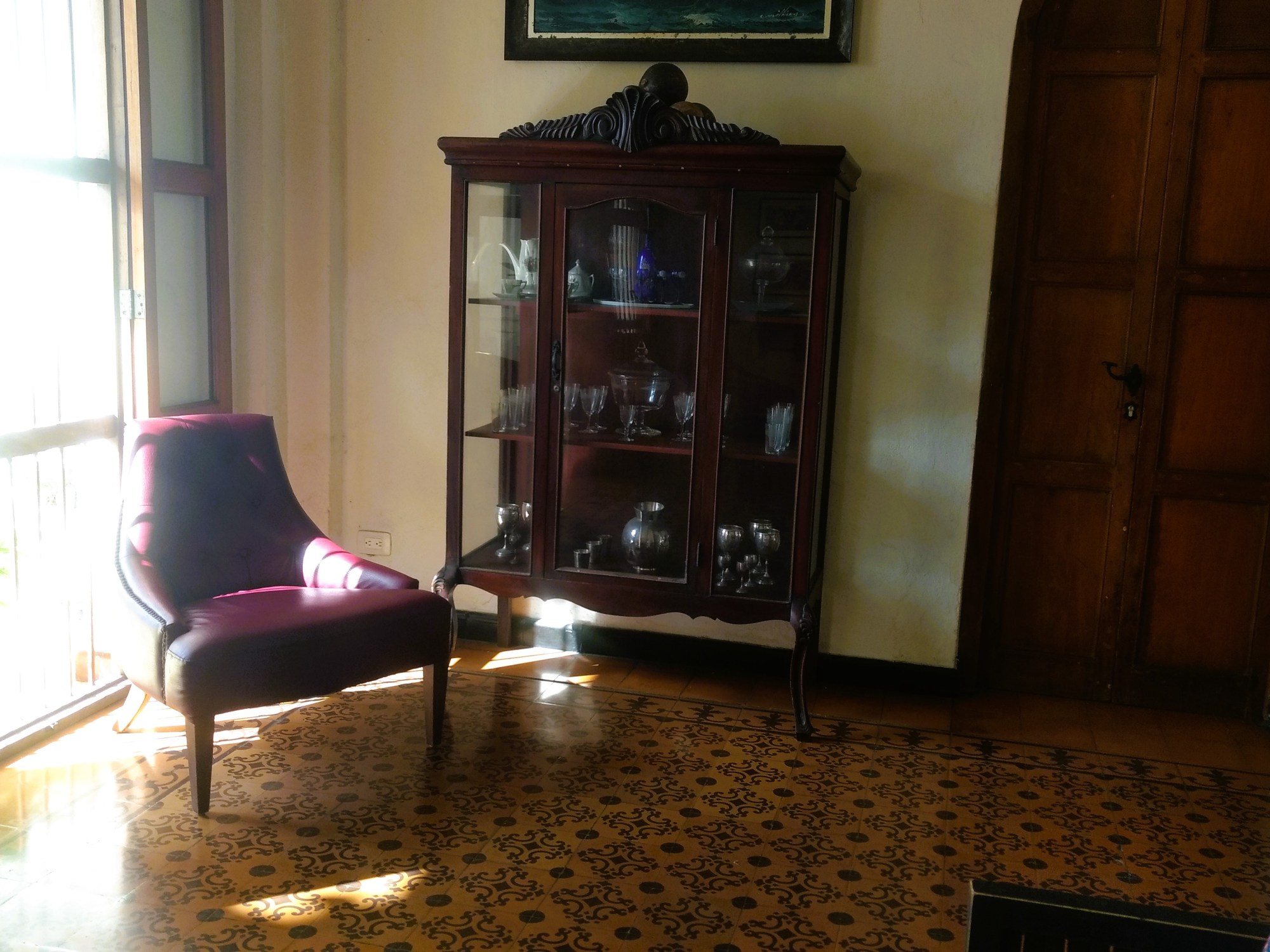
Sepia-toned photographs lined the walls, their subjects staring back from another century. I admired the crockery, the worn elegance of the furniture, the way nothing seemed hurried or out of place.
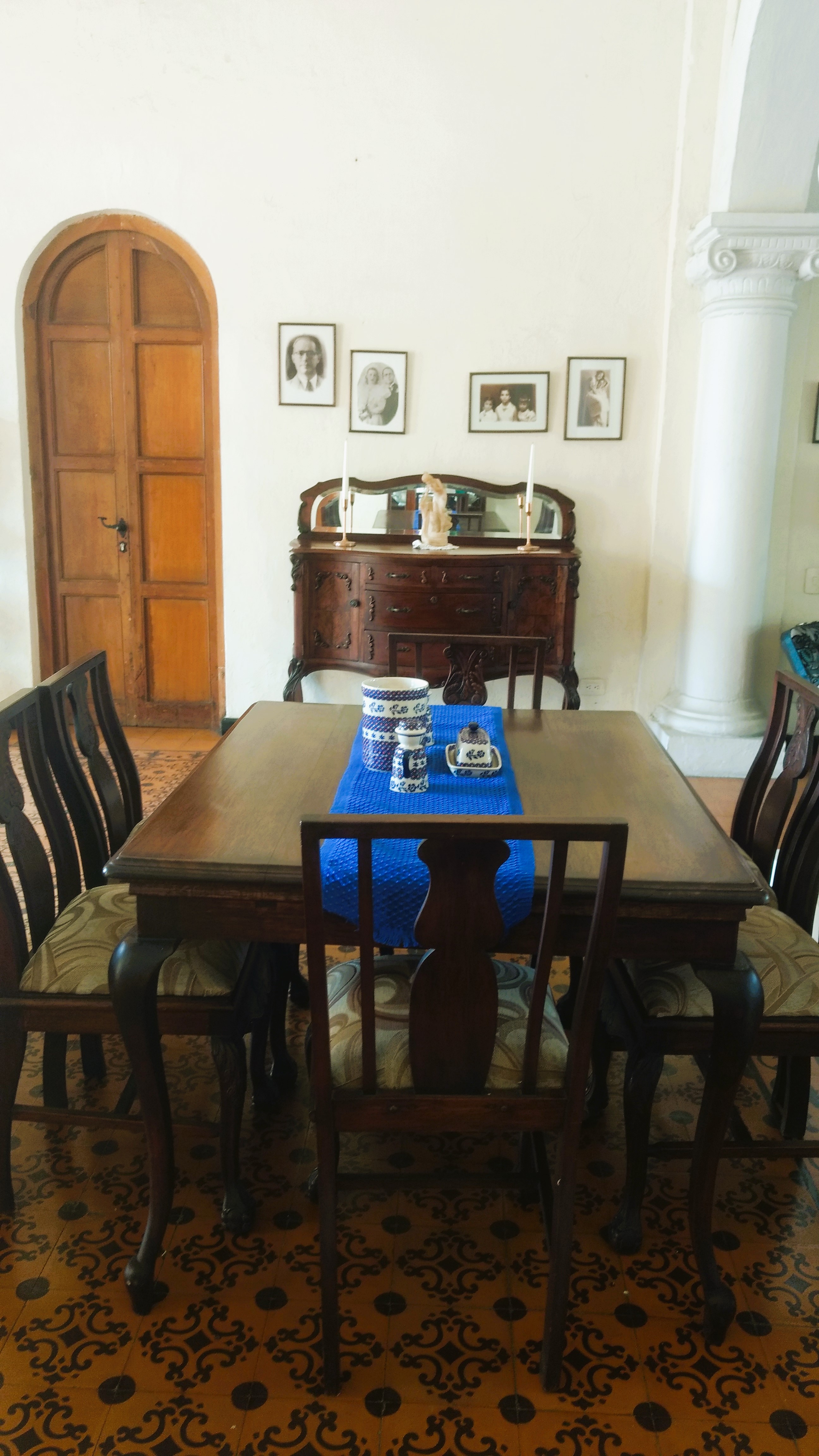
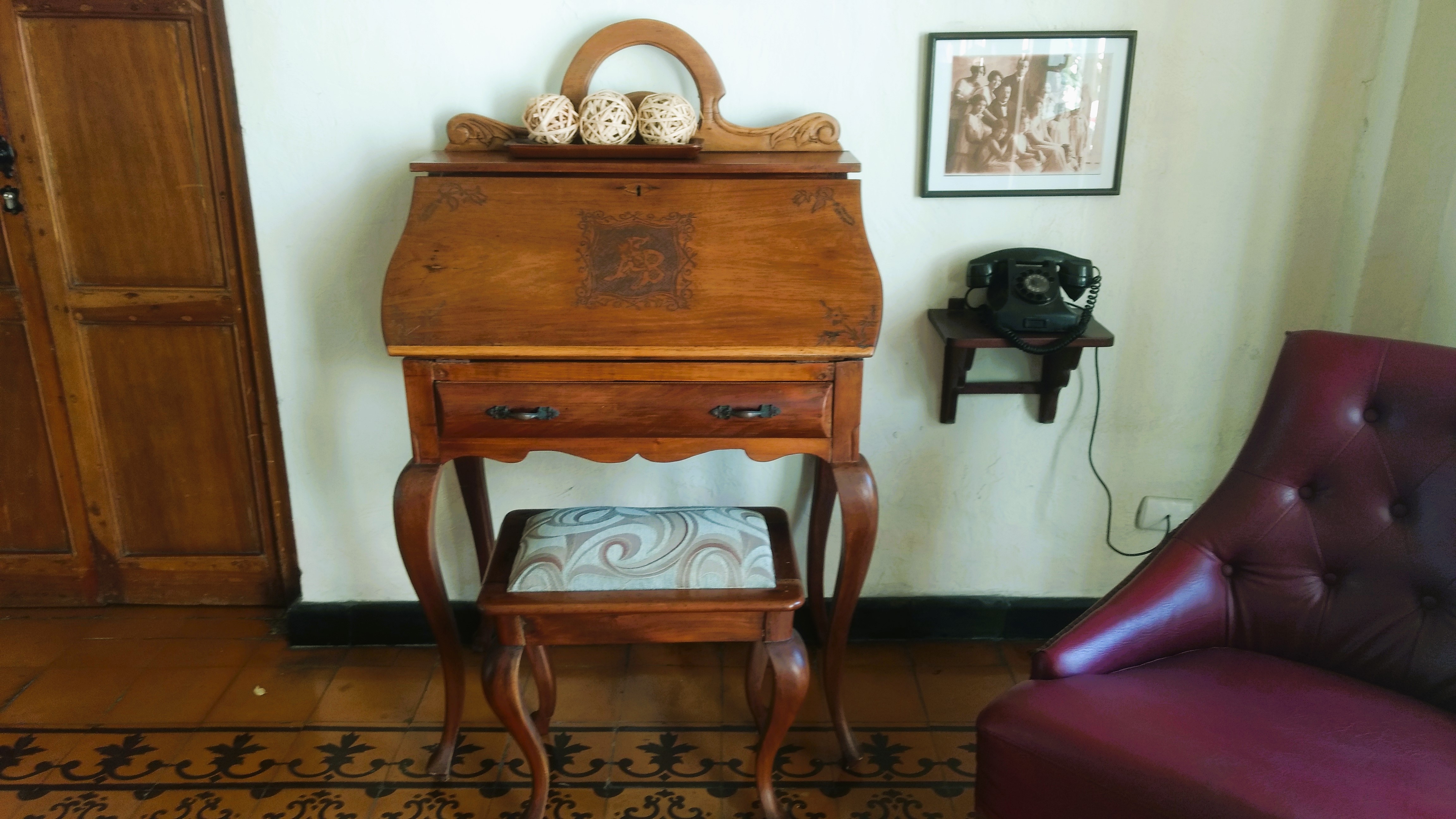
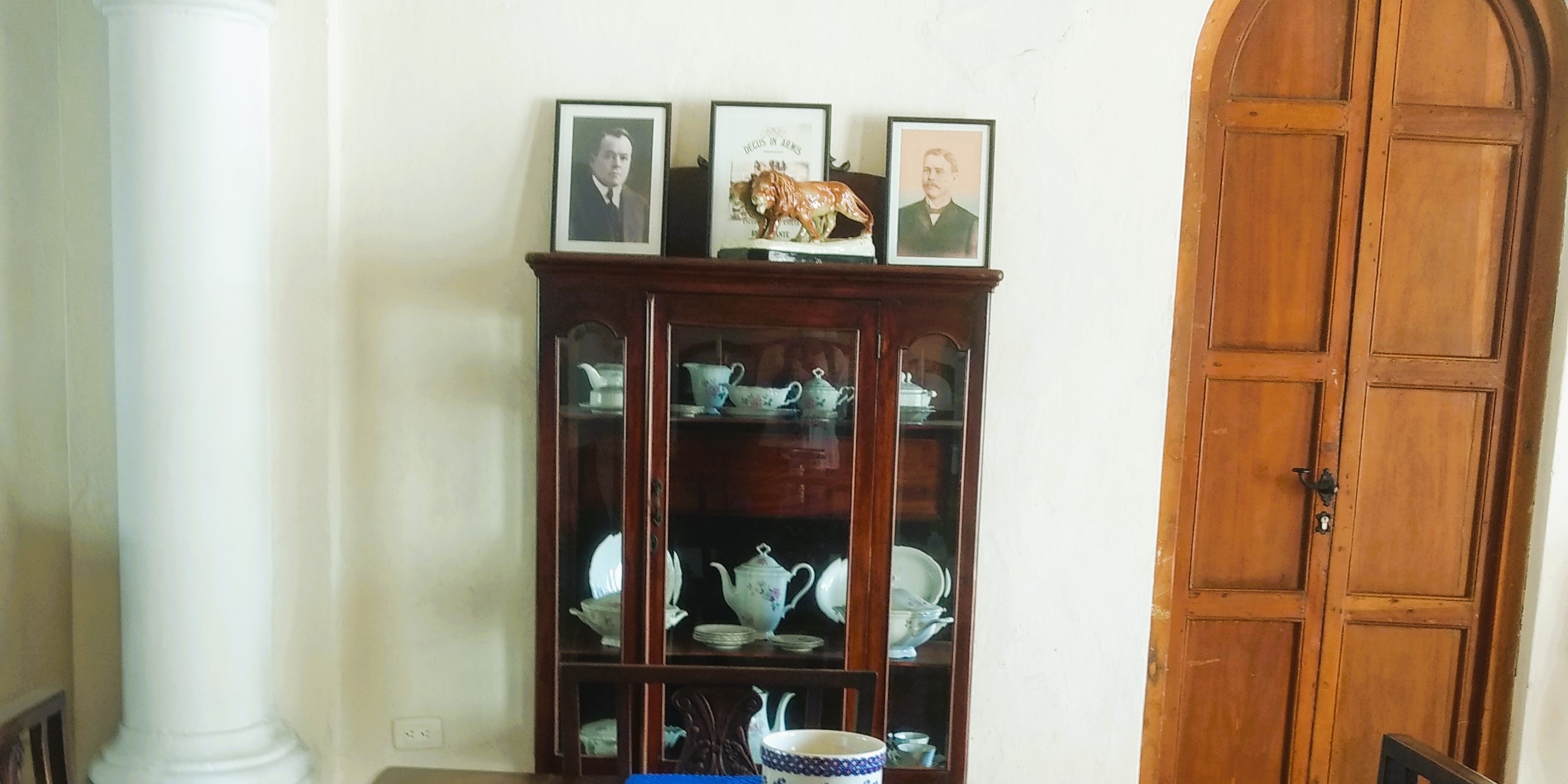
Standing barefoot on the cool patterned tiles, I felt the house’s history. It’s architecture was something not merely observed, but deeply experienced.

 The Smiling Travellerr