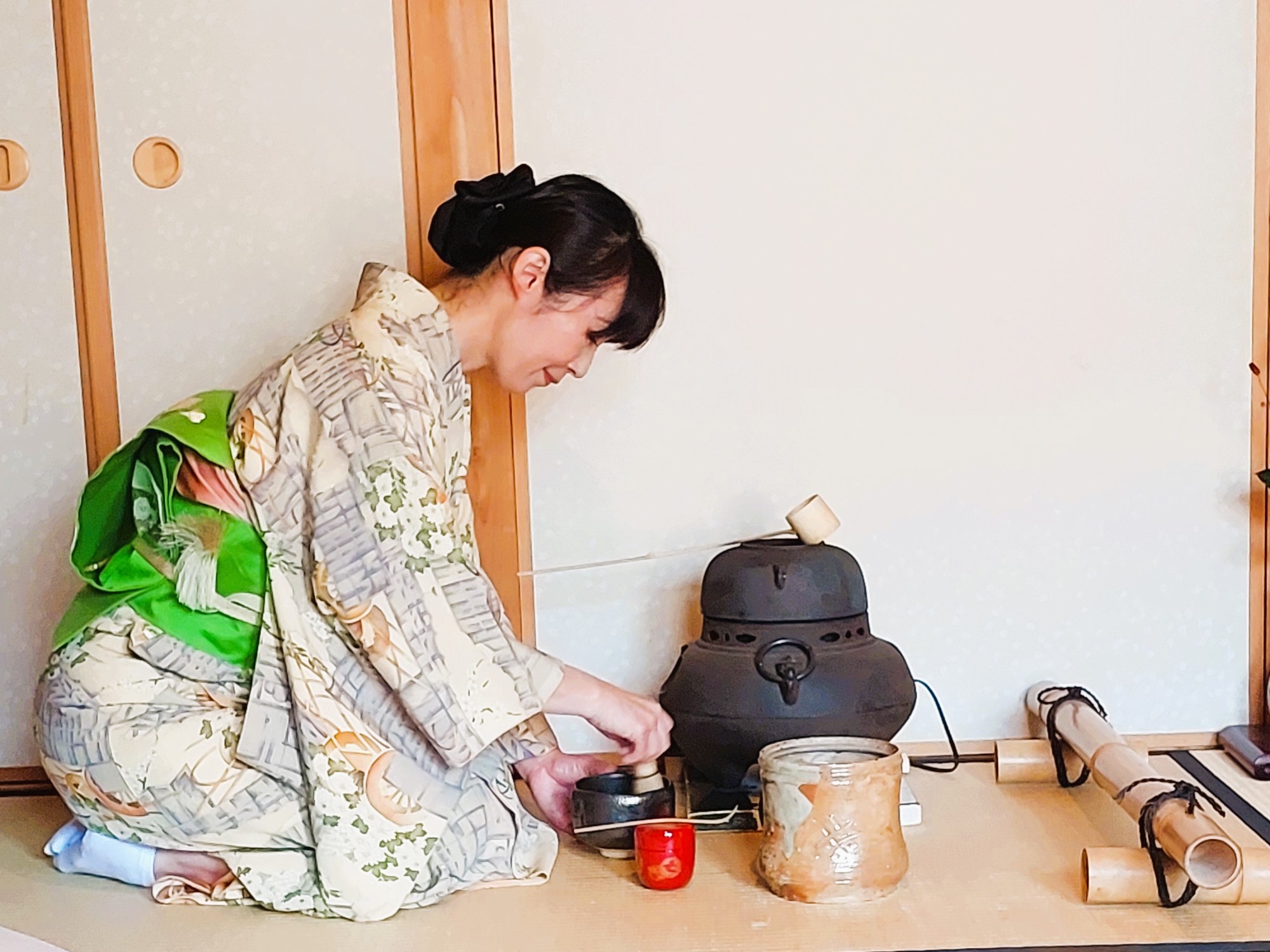
There are several tea houses in Japan where one can experience the traditional tea ceremony. During my visit to Kyoto, I signed up for a session at Camellia Tea House, a serene space known for introducing travelers to the cultural heart of Japanese tea traditions.
We were ushered into a quiet room where bamboo mats were neatly spread across the floor. The atmosphere was calm, almost meditative. As we waited for the tea master to arrive, my eyes wandered toward the carefully arranged tea utensils at the front of the room.
A blackened copper pot of simmering water sat above a gentle flame. A bamboo ladle lay beside it. A red lacquered box—perhaps containing the powdered tea—was placed nearby, along with a slender bamboo whisk (chasen). The simple yet intentional arrangement of these objects already hinted at the deep reverence this ceremony demanded.

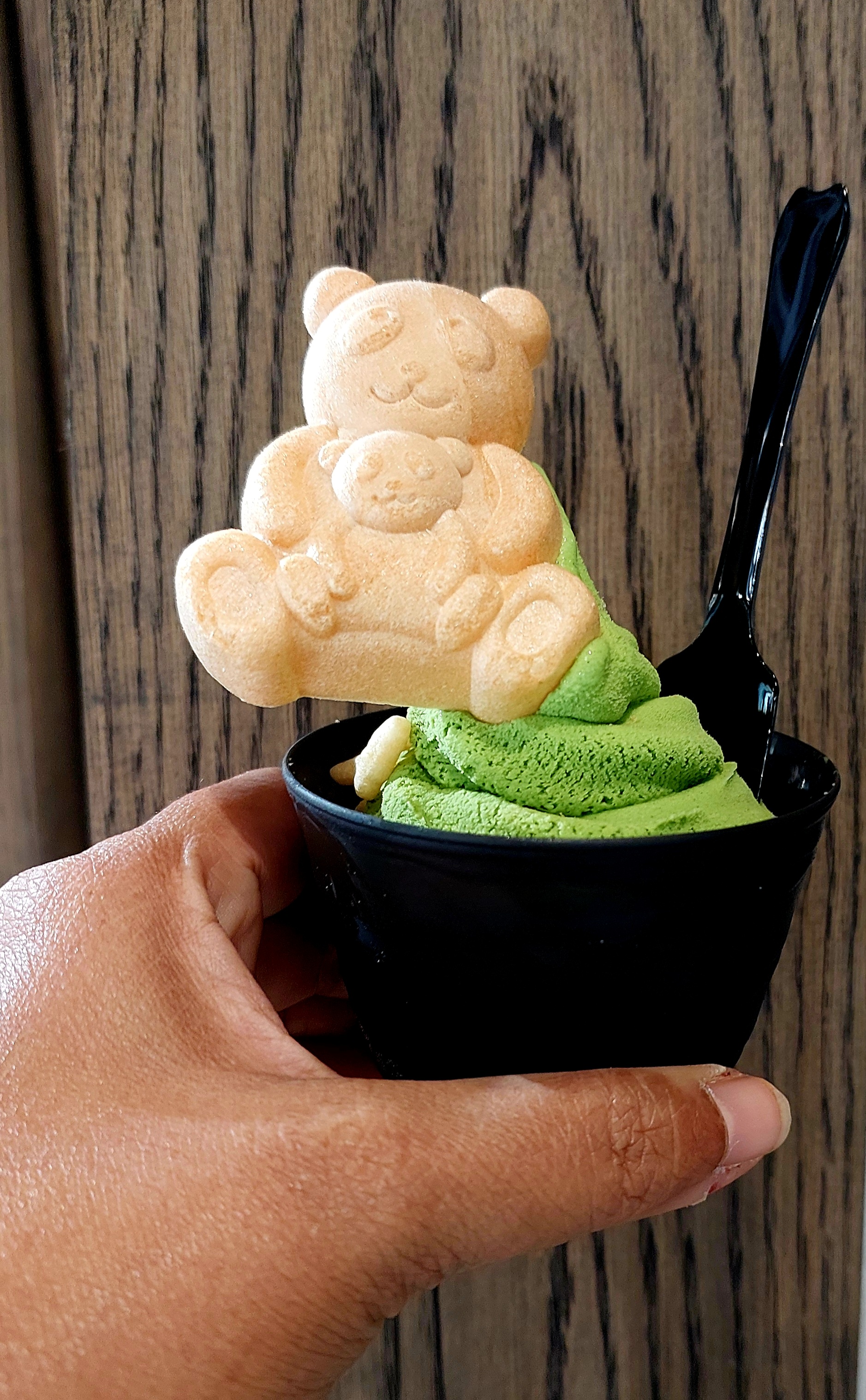
Soon, a lady entered, dressed in a traditional kimono and carrying a warm, graceful smile. She introduced herself and invited each of us to do the same. We were a diverse group. We were travelers from around the world. Some were already matcha enthusiasts. Others, like me, were experiencing it for the first time. I had tried matcha ice cream back in Tokyo, but I had intentionally saved my first true matcha tasting for this ceremony.
With elegance, she knelt down in the formal seiza position, bowed deeply, and began the ceremony.
More Than a Drink
She spoke about the origins of matcha, which has been consumed ceremonially in Japan since the 12th Century. Japanese matcha is known for its deep green color and rich, earthy flavor. It’s not everyone’s cup of tea—quite literally. I’d heard many describe it as an acquired taste, and I was curious to see how I’d react.
But more than the flavor, she emphasized the philosophy behind the tea ceremony—a deliberate act of slowing down, appreciating the moment, and honoring those with whom you share it. It is both an art form and a spiritual practice.
She began by ladling hot water into a tea bowl to cleanse and warm it. Then, the whisk was briefly submerged in hot water as well—a preparation to soften its bristles and cleanse it ceremonially.
Opening the red box, she scooped a small amount of the bright green matcha powder into the bowl. More hot water was gently poured in. With rhythmic W-shaped motions, she whisked the tea until it turned frothy—a sign that it was ready to serve.

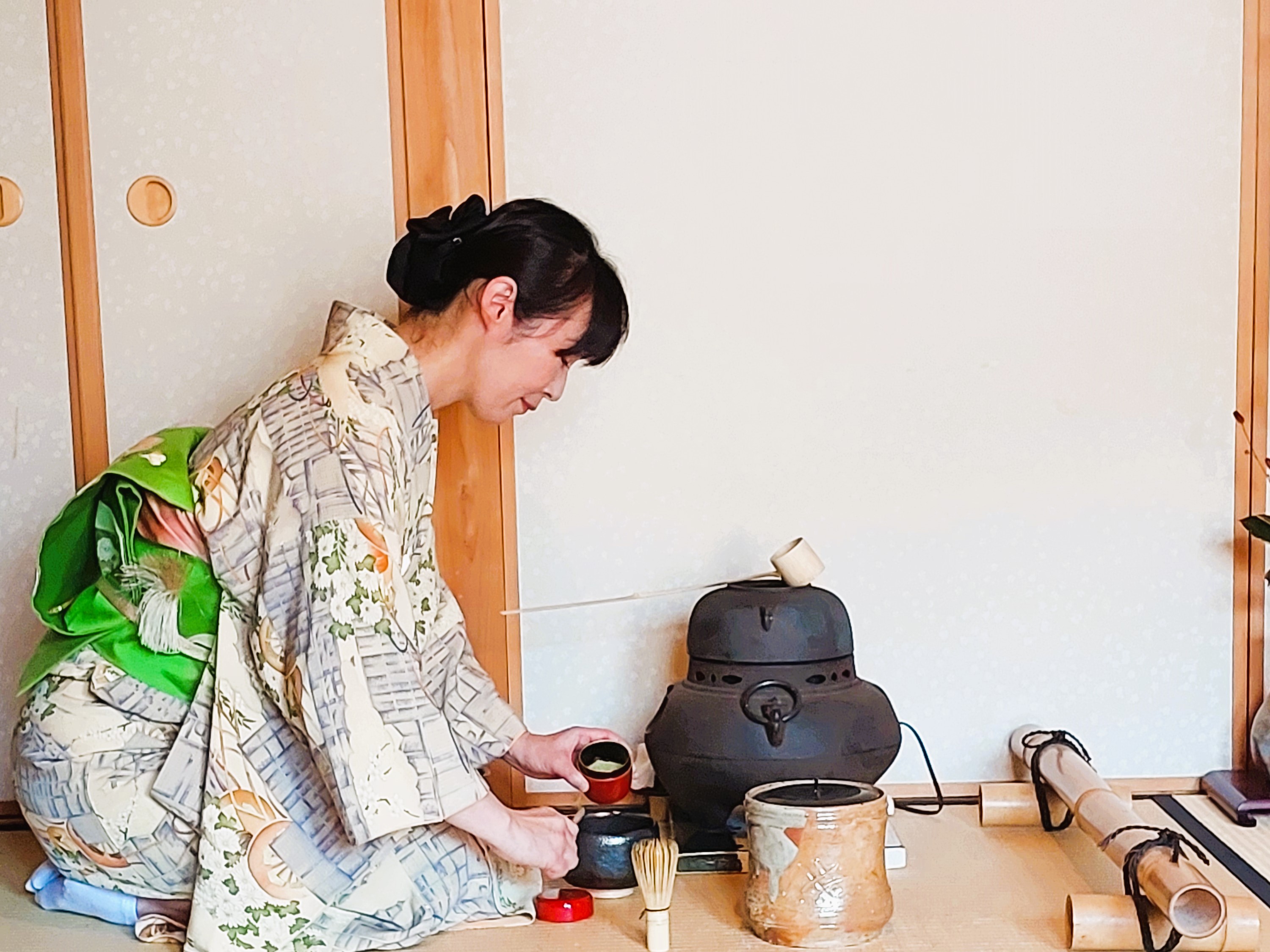
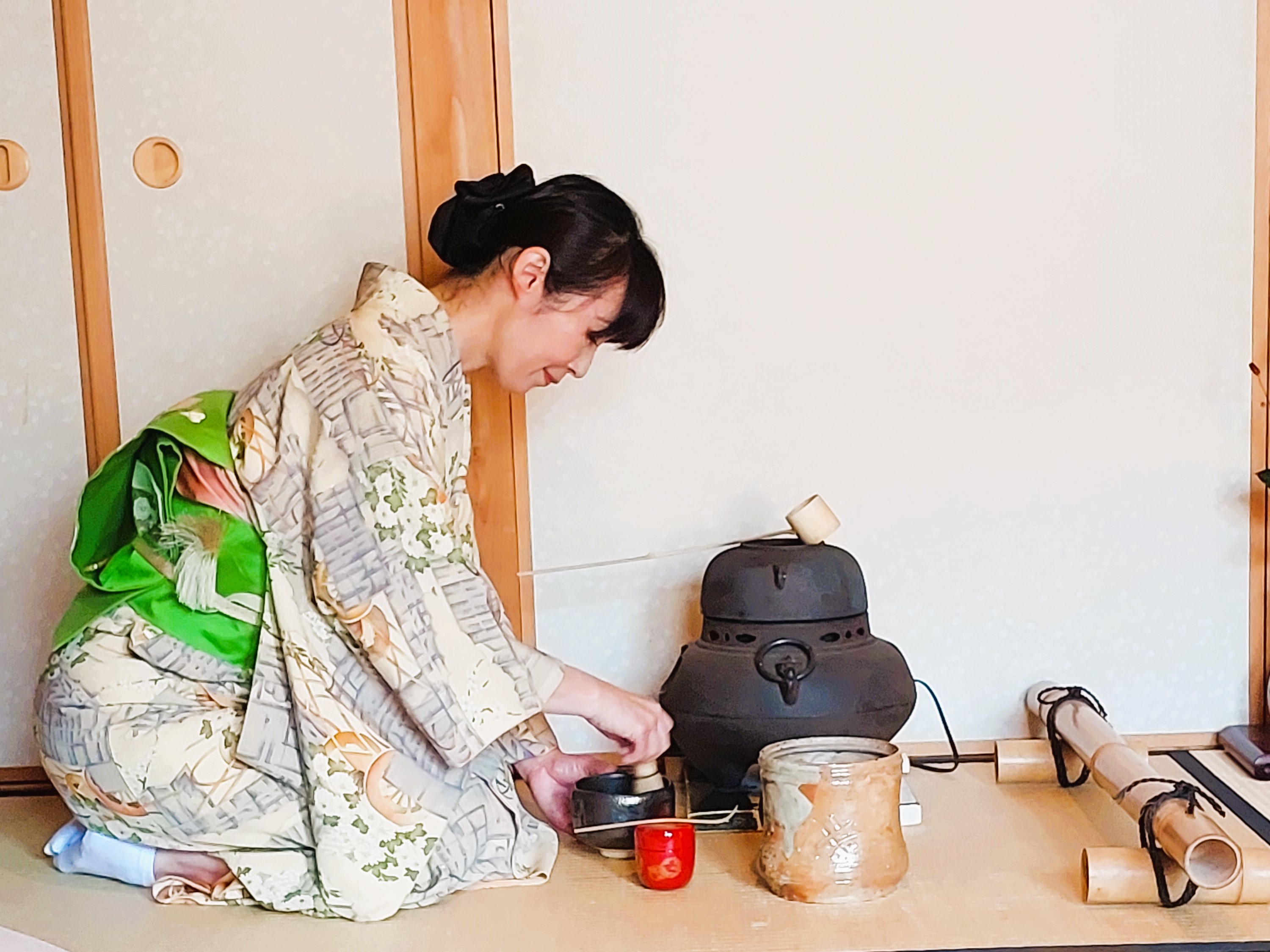
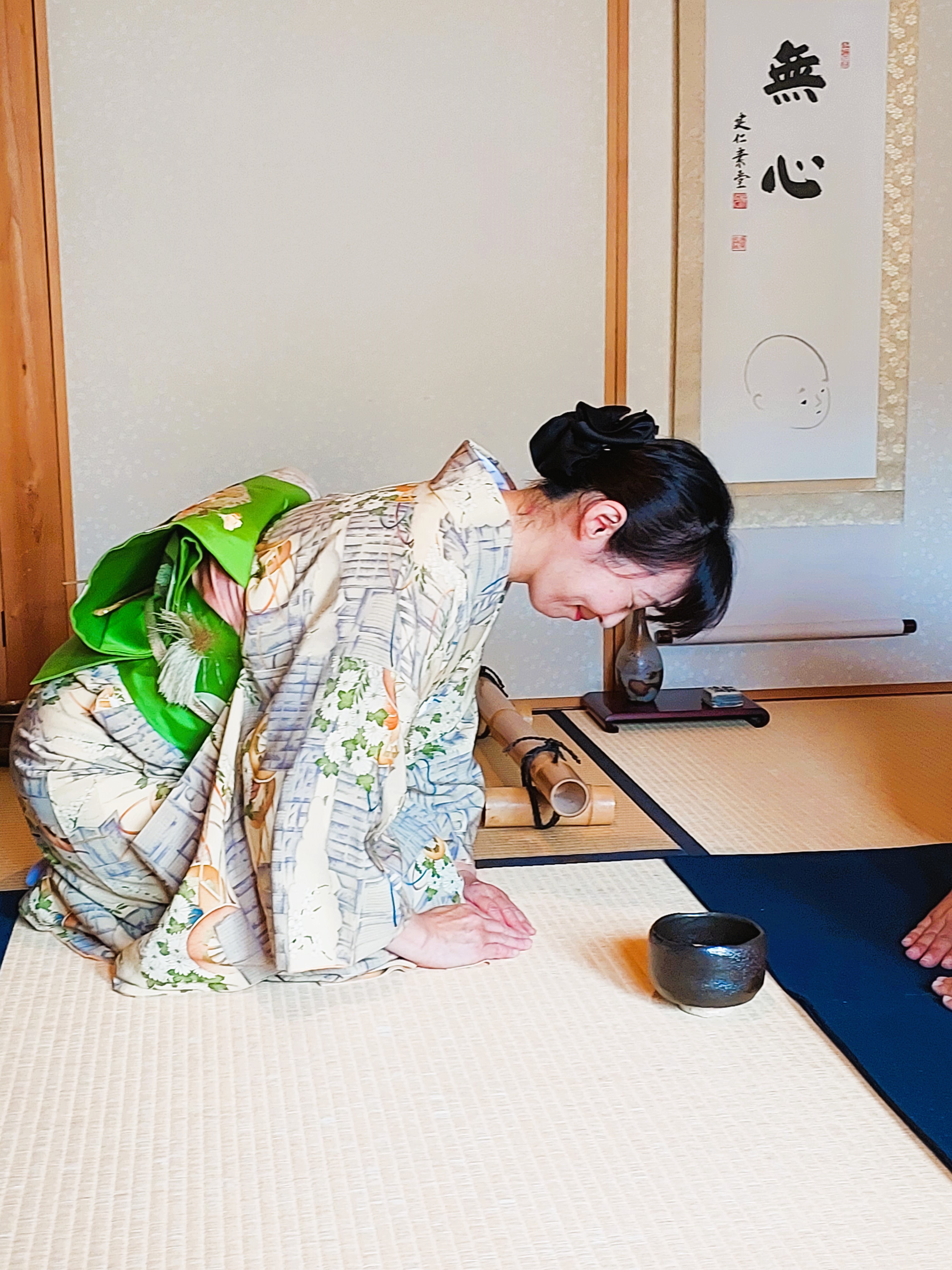
She approached one of the guests, bowed deeply, and offered the bowl. He received it with both hands and a deep bow in return. A moment of stillness lingered between them. Then, it was our turn.
Whisking the Moment
Each of us received a bowl and a bamboo whisk. The tea master came around and dropped matcha into our bowls. A kettle was passed, and we each poured hot water in carefully, just as we had observed.
I was a bit self-conscious with my whisking, unsure if I was doing it right. But I let the rhythm guide me, gently whisking in those familiar W shapes. Eventually, the tea became frothy—my first bowl of self-prepared matcha.
Before drinking, we were asked to rotate the bowl to face its most beautiful side outward. In Japanese culture, this gesture symbolizes offering the best version of oneself to the world. Holding the bowl with both hands, I took my first sip.
The matcha tasted like earthy grass kissed by morning dew on a sunlit day. It was light, slightly bitter, yet refreshing. It lingered on my tongue with an airy freshness that surprised me.
We were also served a small portion of yuzu jelly, a delicate, citrusy sweet that complemented the tea beautifully.

Beyond the Aesthetic
And so, my matcha story comes to an end.
Matcha, I’ve realized, may not be for me. It’s an acquired taste, and perhaps not one I’ll seek out again. But the purpose of the ceremony wasn’t simply to enjoy a drink—it was to slow down, to acknowledge each other’s presence, to appreciate the tea, and most importantly, to be fully present.
Today, matcha has become an aesthetic craze—plastered across Instagram in the form of green lattes, desserts, and skincare products. But those modern interpretations rarely carry the stillness and intention I experienced during the tea ceremony in Kyoto.
Still, to each their own.

 The Smiling Travellerr