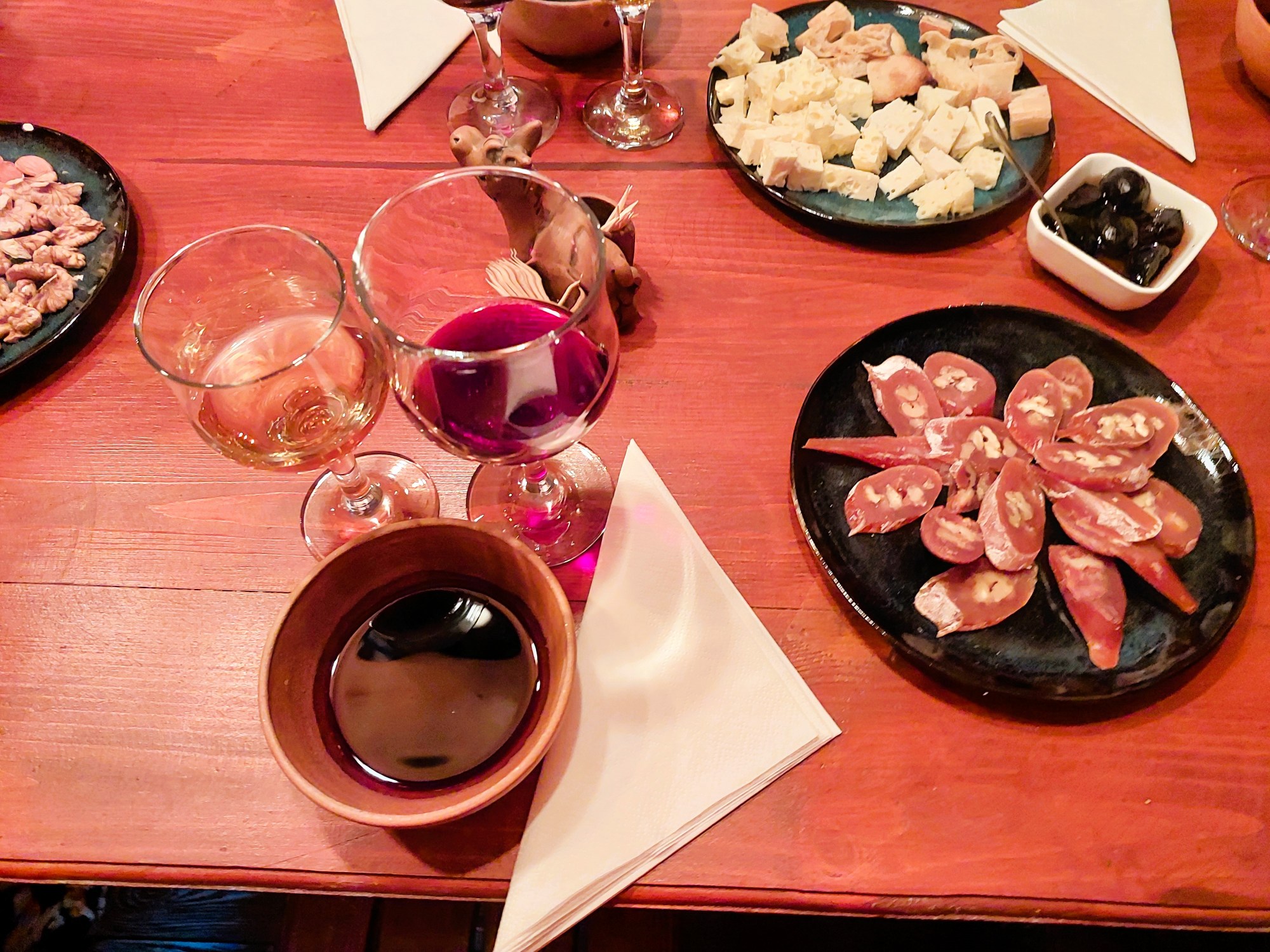
The country of Georgia, nestled in the Caucasus mountains, was at the crossroads of the ancient silk route. It was and still is the gateway to Europe and Asia. Several countries and kingdoms have been at war with them and all of these historical events have had an influence on their culture and traditions.
In-spite of its history, the fearless Georgians have remained faithful to two things – Christianity, practiced since the 4th century AD and wine produced since 8000 BC.
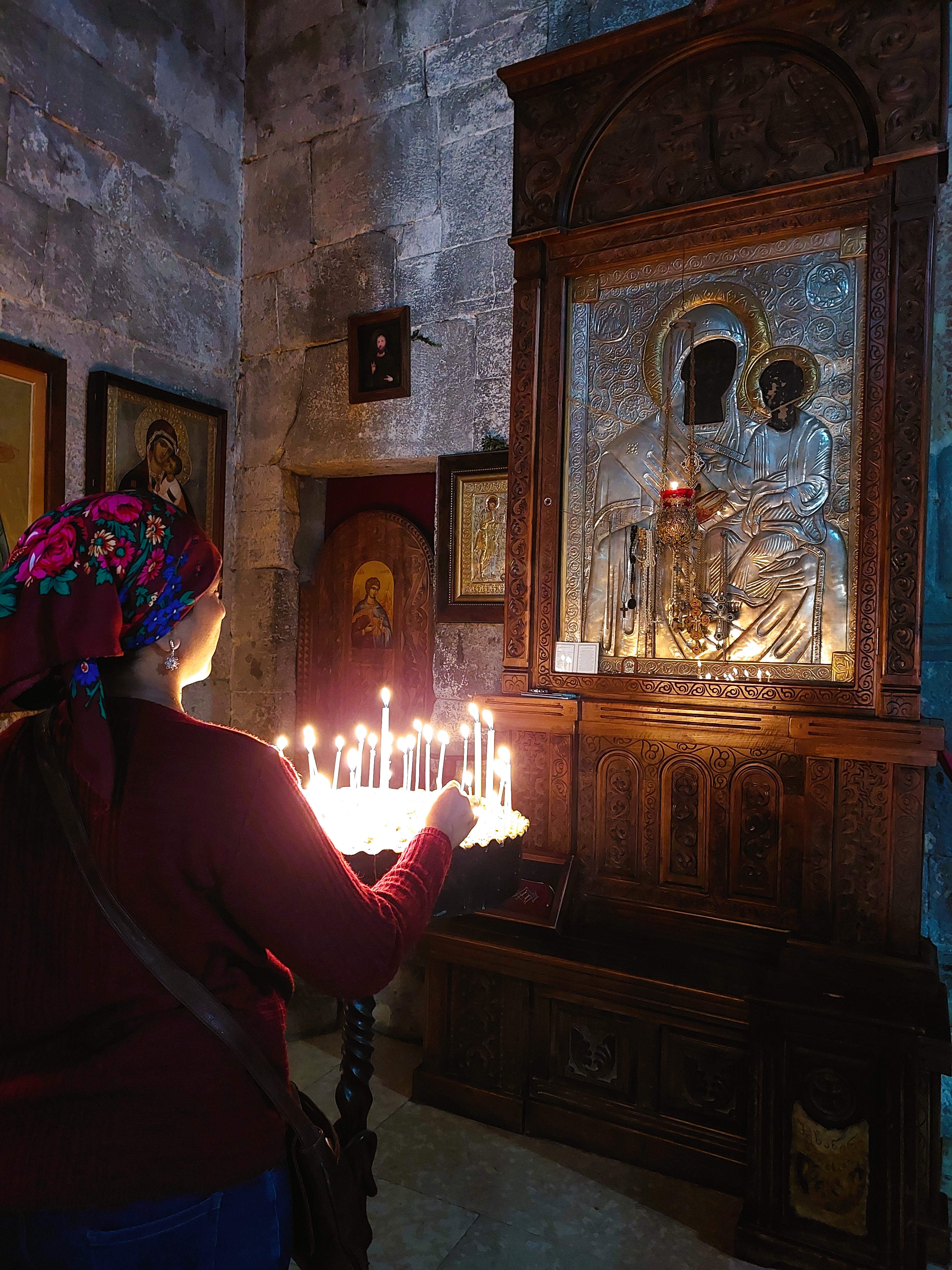
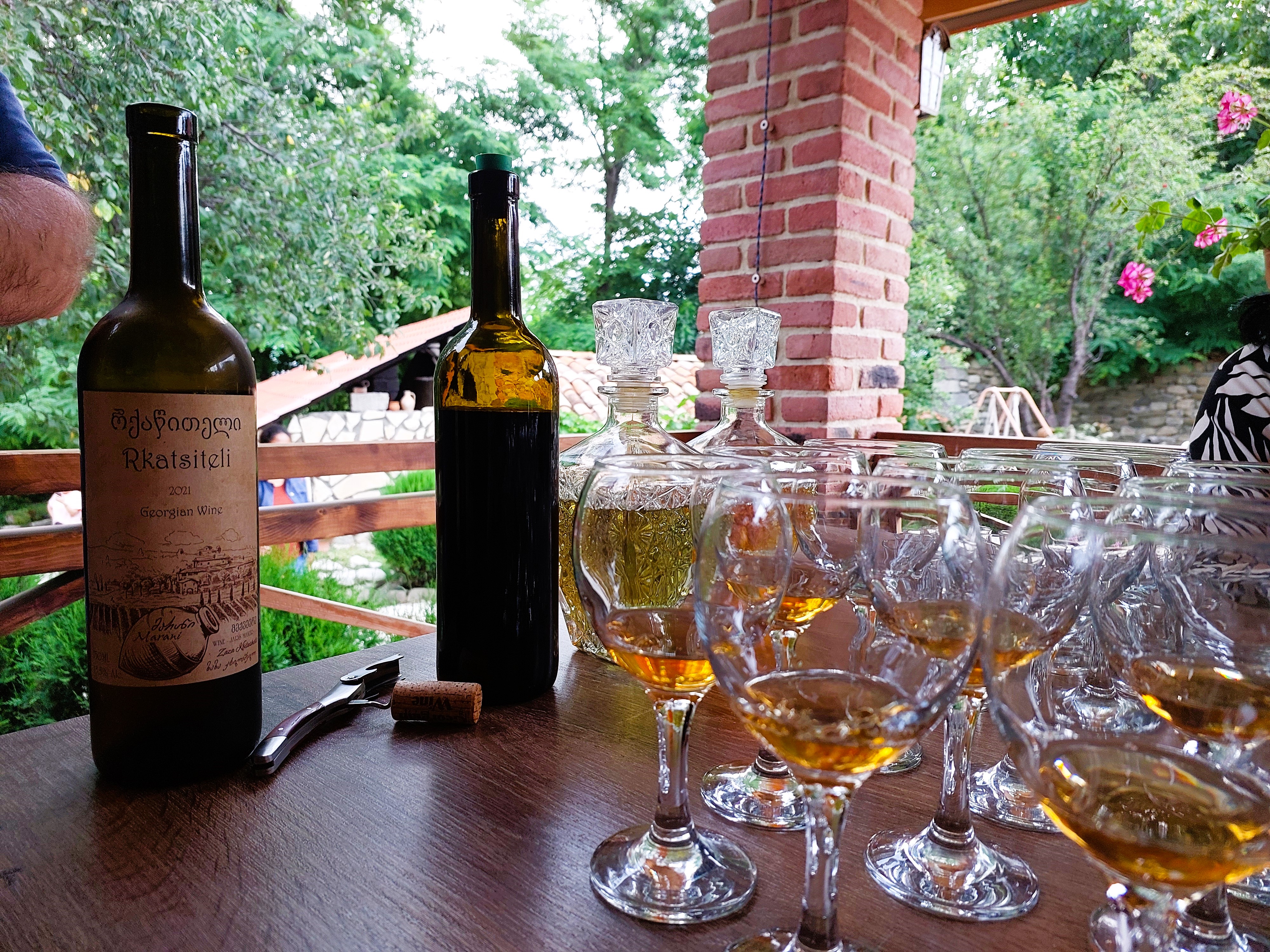
Georgia is one of the oldest wine producing regions in the world. The inception of wine began in Georgia, from around 8000 BC, much before the Greeks and the Europeans.
Wine is embedded in their culture, traditions and worship.
You cannot separate a Georgian from his wine, as they proudly say – wine is in their blood. The modern word for wine or vino could have originated from the Georgian word for wine – Ghvino.
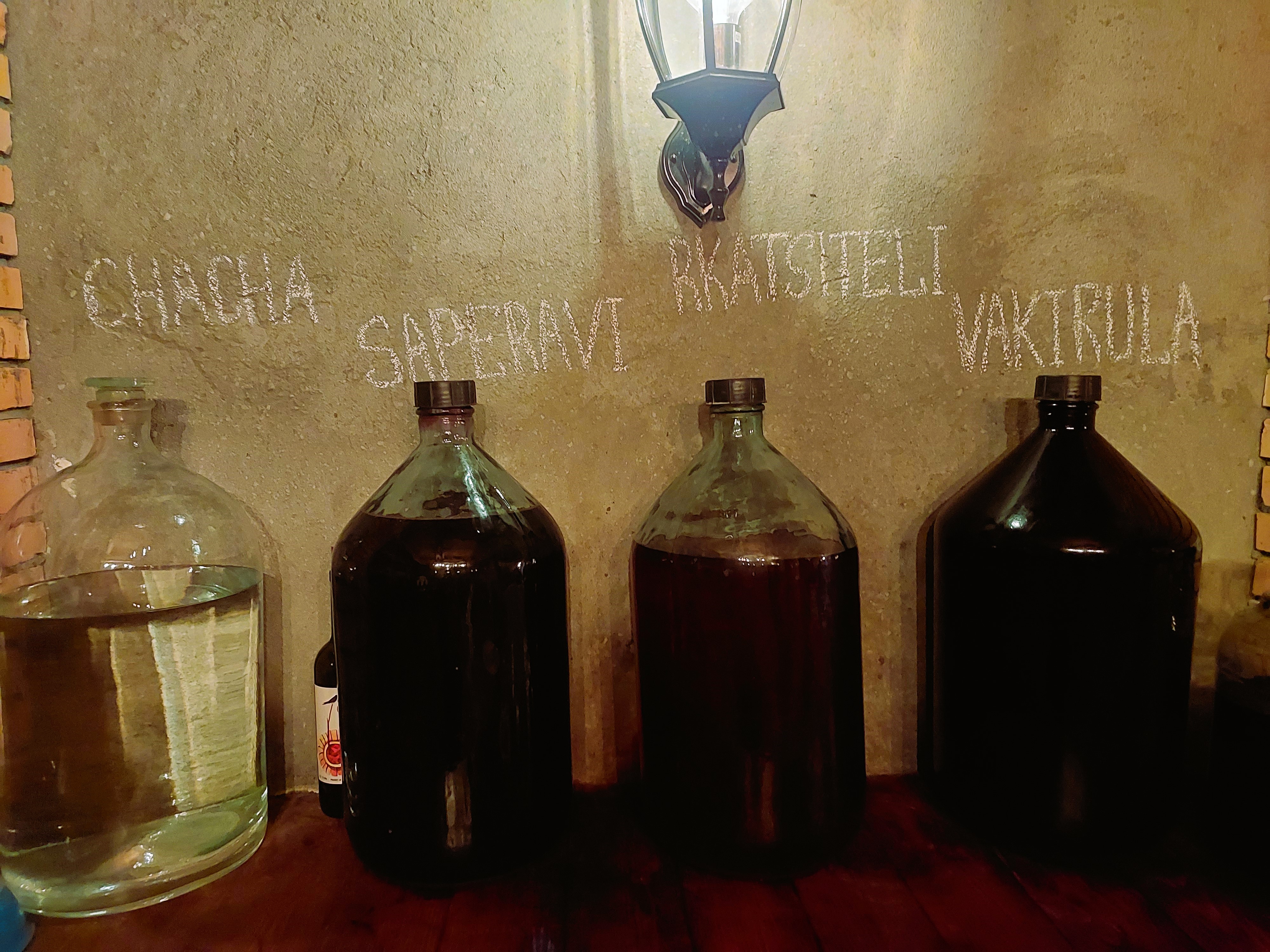
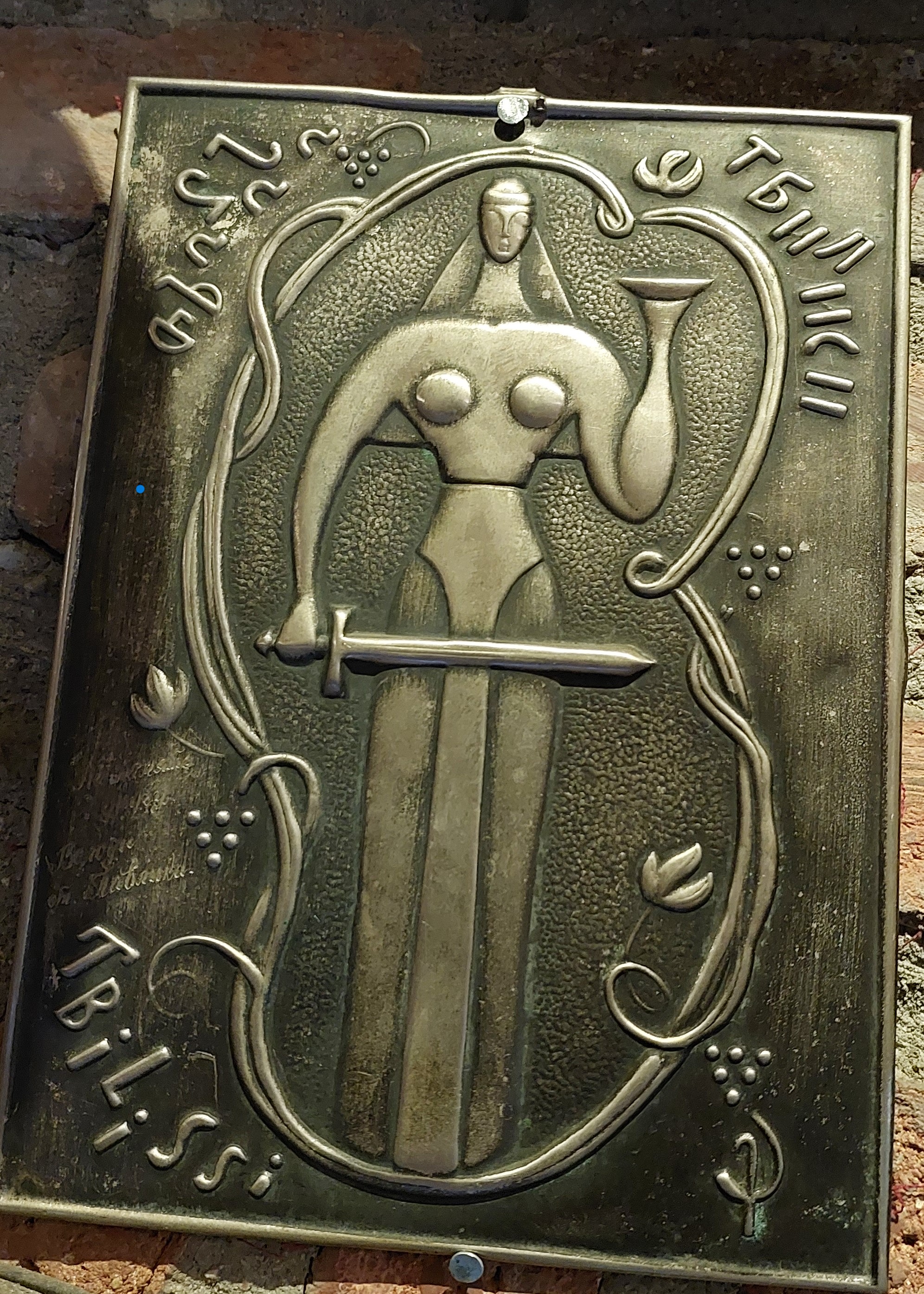
Even the iconic Mother of Georgia stands with a sword and a pyala (cup) of wine overlooking the capital city, Tbilisi.
The Alazani River valley in the Kakheti region has perfect climatic conditions for growing grapes and making wine.
As you traverse through the region, infinite rows of emerald vineyards, are seen, drooping with jewel toned grapes of purple, red and white.

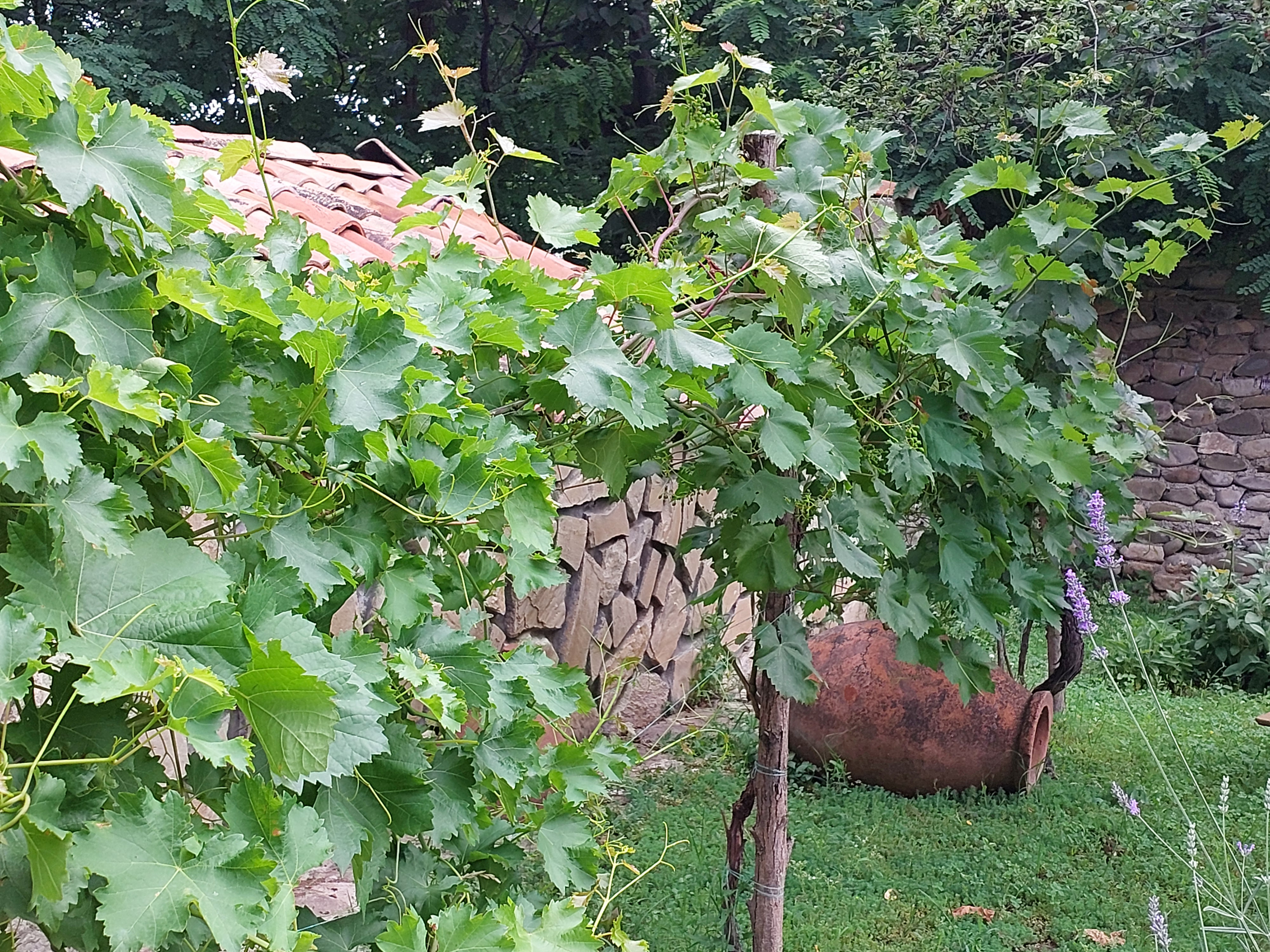
There cannot be wine, without Qvevri – the traditional egg-shaped clay pots used for fermenting the wine.
A well-made Qvevri is the secret to a great Georgian wine.
We met the Kbilashvili family and had a wholesome interaction with Zaza, a fourth generation, Qvevri maker.
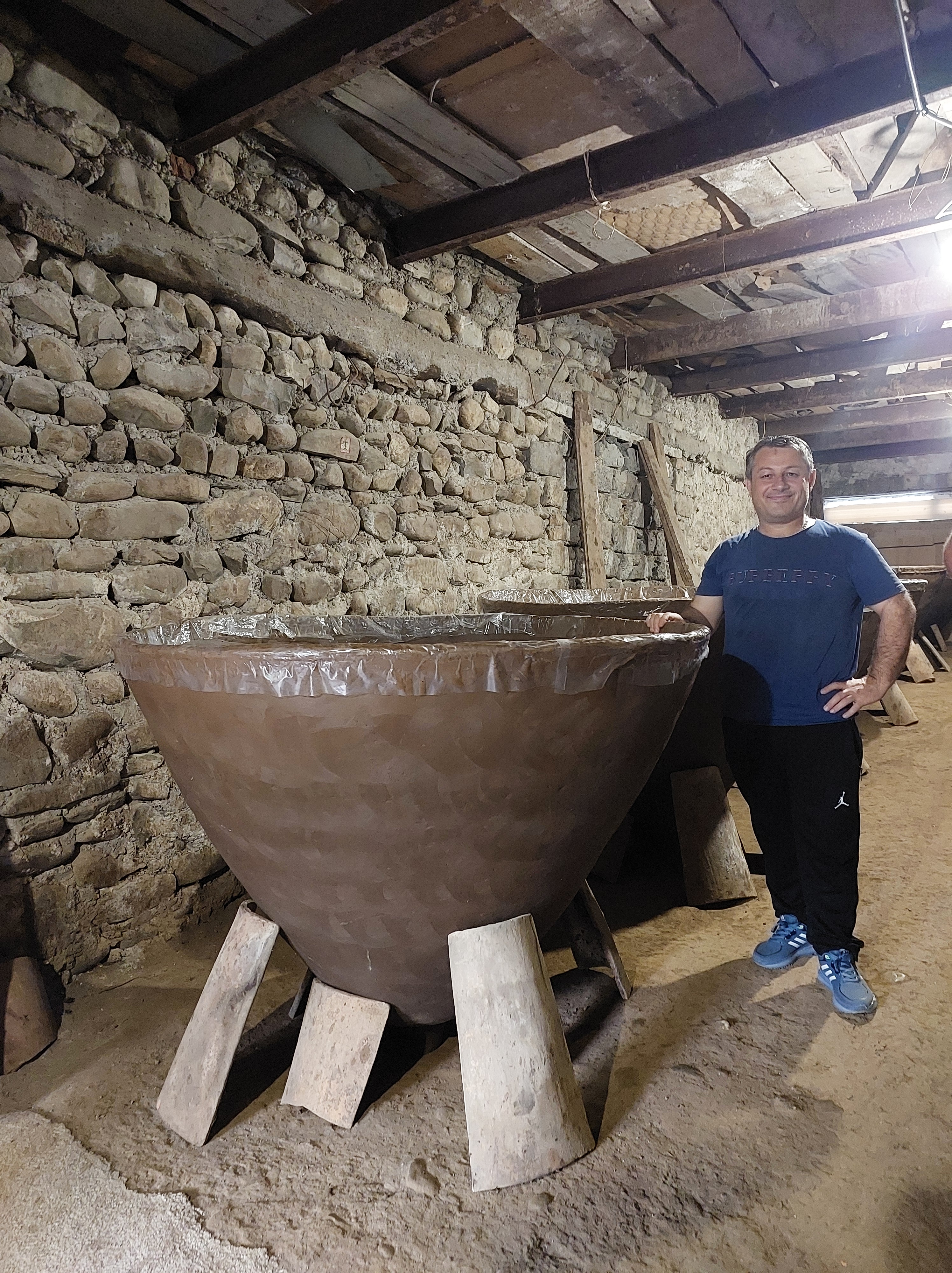
Zaza led us into a room which was as cool as a cellar, even though we were above ground. There were several wide-open clay pots which were in the process of being built.
He passionately explained the process of how a Qvevri is made from scratch.
The clay is got from the forest, and is kneaded in a closed room without breeze. The worker must work with their intuition on the shape and consistency when making the pots by hand. These pots are at a standing height of almost 6 to 7 feet, where a human can fit inside.
The pots are dried outside, after which they are ready to go into the kiln to bake for 8 days and 8 nights.
Again, an intuition is needed to know when to stop. It should feel like the pots tell you to stop and you should see them glow in the kiln.
The baked Qvevri are covered with beeswax on the insides to prevent outside liquids from seeping in and altering the wine.
A well-made Qvevri must make a ringing sound. The outside is covered with lime cement to further strengthen them.
Qvevri are supplied to many Georgian and international wineries.
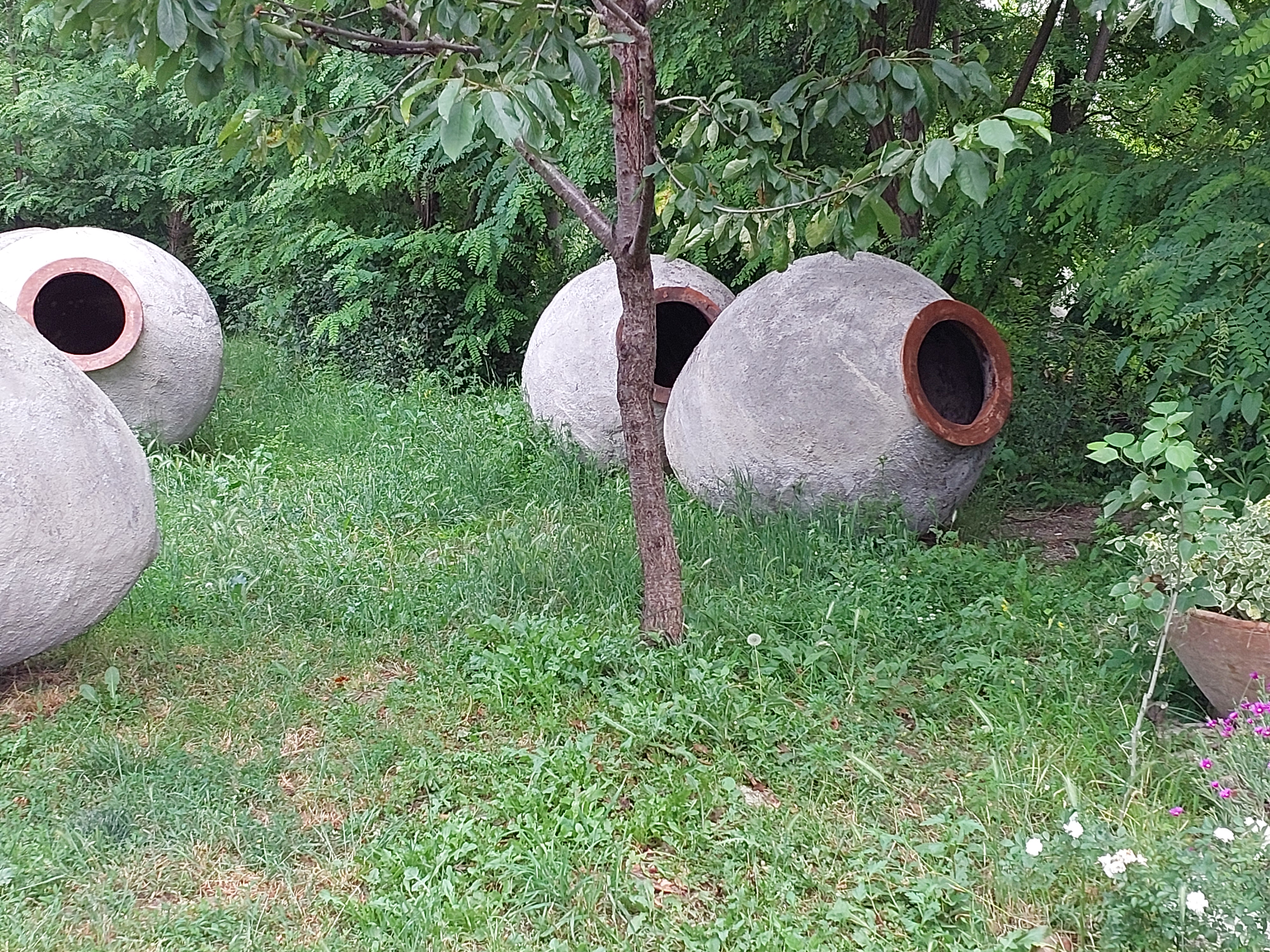
They are buried into the earth, up to the neck, in the wine cellar. Every year during wine season, someone goes inside them, cleans them by hand before pouring the grape juice for the fermentation.
So how is wine made in Georgia?
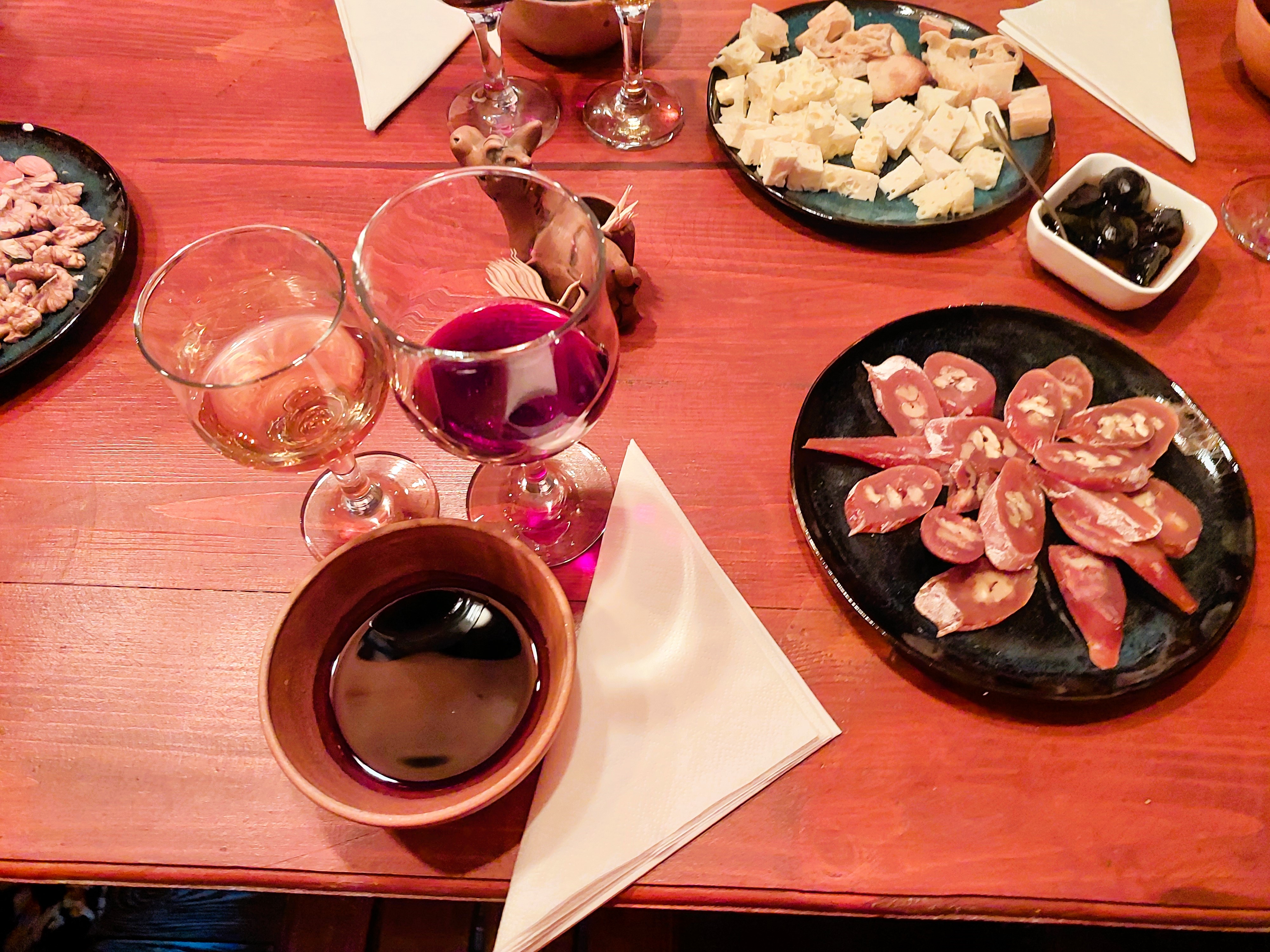
The science of making wine is a technique in practice from 8000 years ago, till today, in most wineries and Georgian households.
Several Marani or wineries dot the Kakheti region. You could pick anyone of them to experience a traditional wine tasting experience and get to know how wine is made.
If you would like to know a couple of winery recommendations, let me know in the comments.
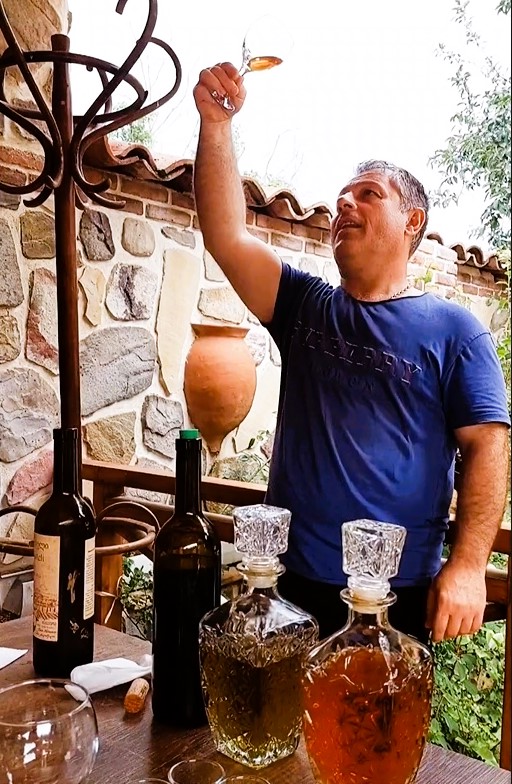
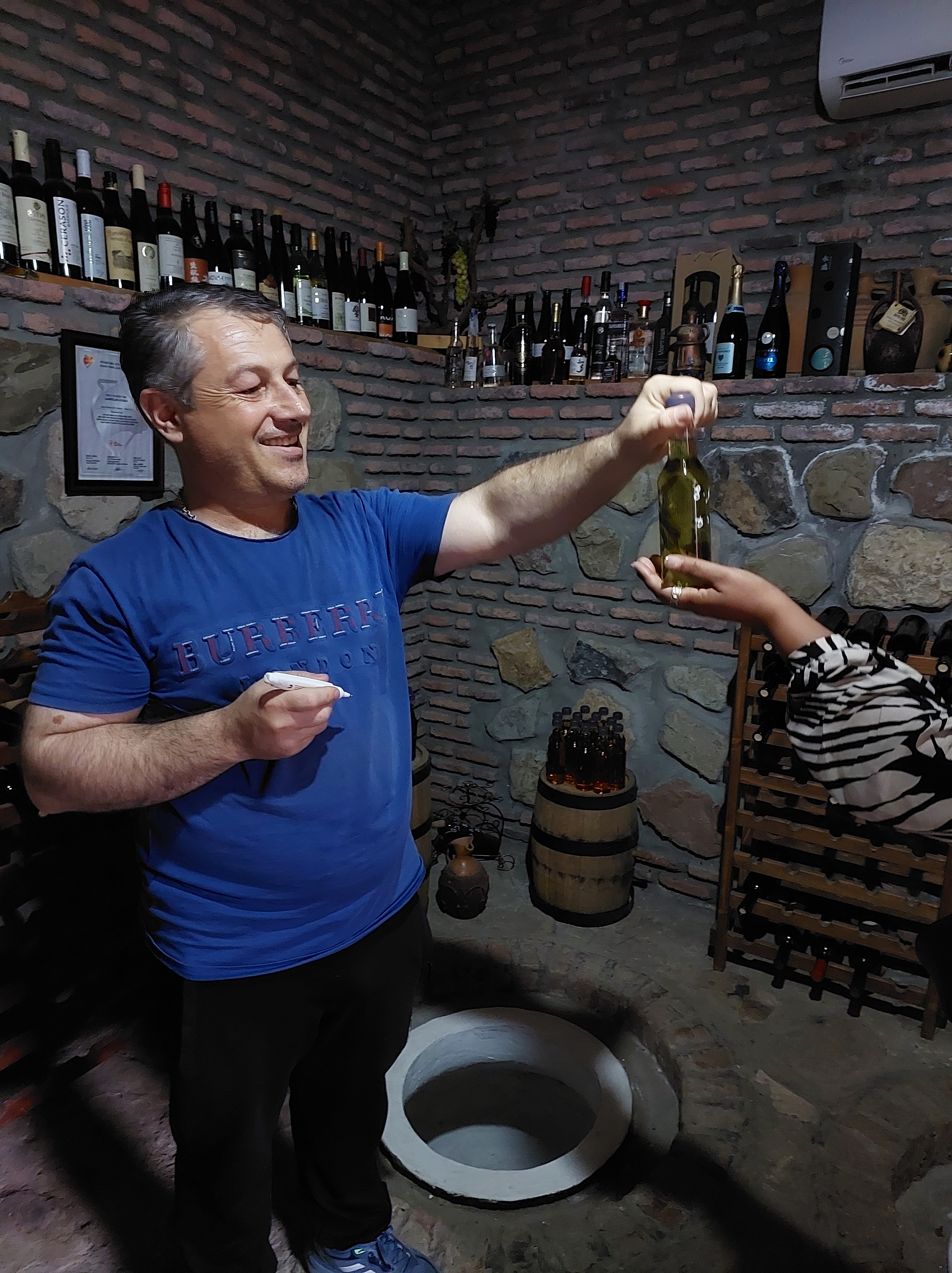
Someone stands inside a satsnakhekli – a long wooden structure like a boat to crush the grapes with their feet.
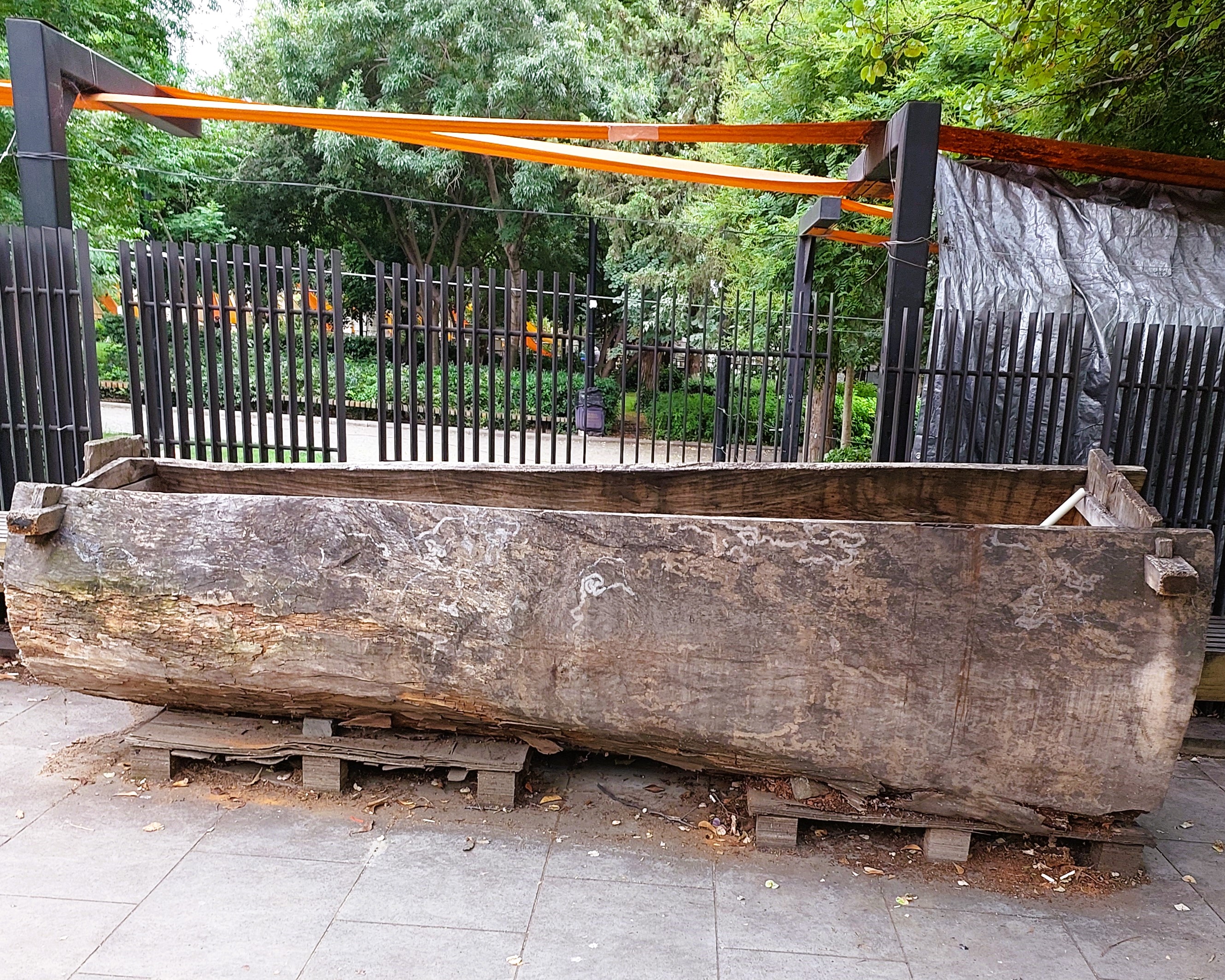
The juice, skin and seeds collectively known as Dedo flow from the satsnakhekli into the Qvevri. The Qvevri is sealed and the Dedo ferments inside for almost 6 months.
During fermentation, the grapes begin to move inside the Qvevri. After the fermentation is complete the residue settles at the elongated bottom of the Qvevri while is wine is above. This intelligent design of the Qvevri helps with the making of the wine. It is a completely natural process with no additives.
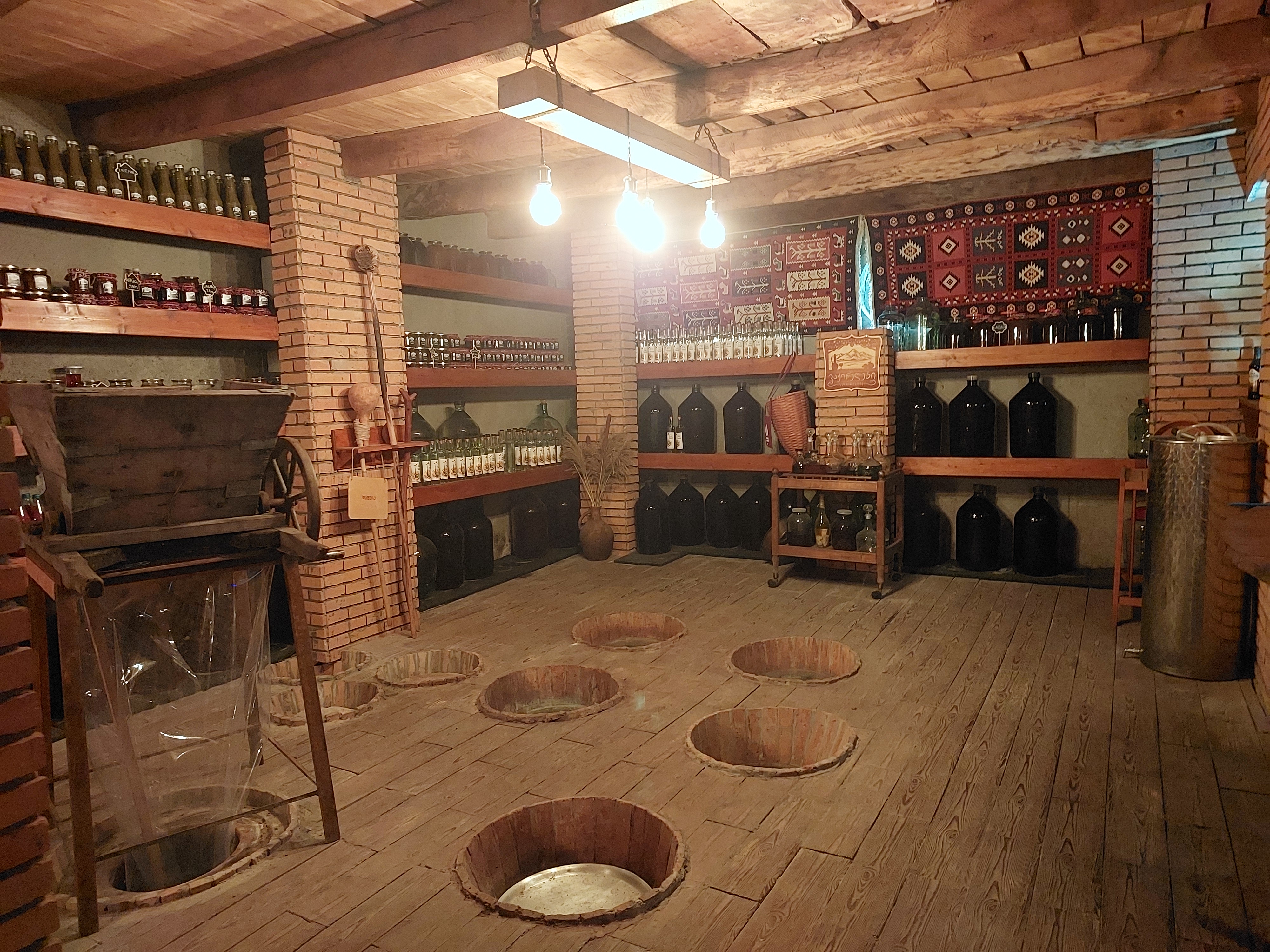
UNESCO has recognized the Qvevri wine making process as an Intangible Cultural Heritage of Humanity.
Qvevri and wine making is a family and community affair. Children are encouraged to observe and help with small tasks. This helps to continue the traditional ways.
The classic Georgian wine is highly acidic and amber in color with medicinal properties. This due to the Qvevri fermentation process followed since centuries.
A wise Georgian once said – Wine is everything for the Georgians, dignity, bravery, honesty!

 The Smiling Travellerr