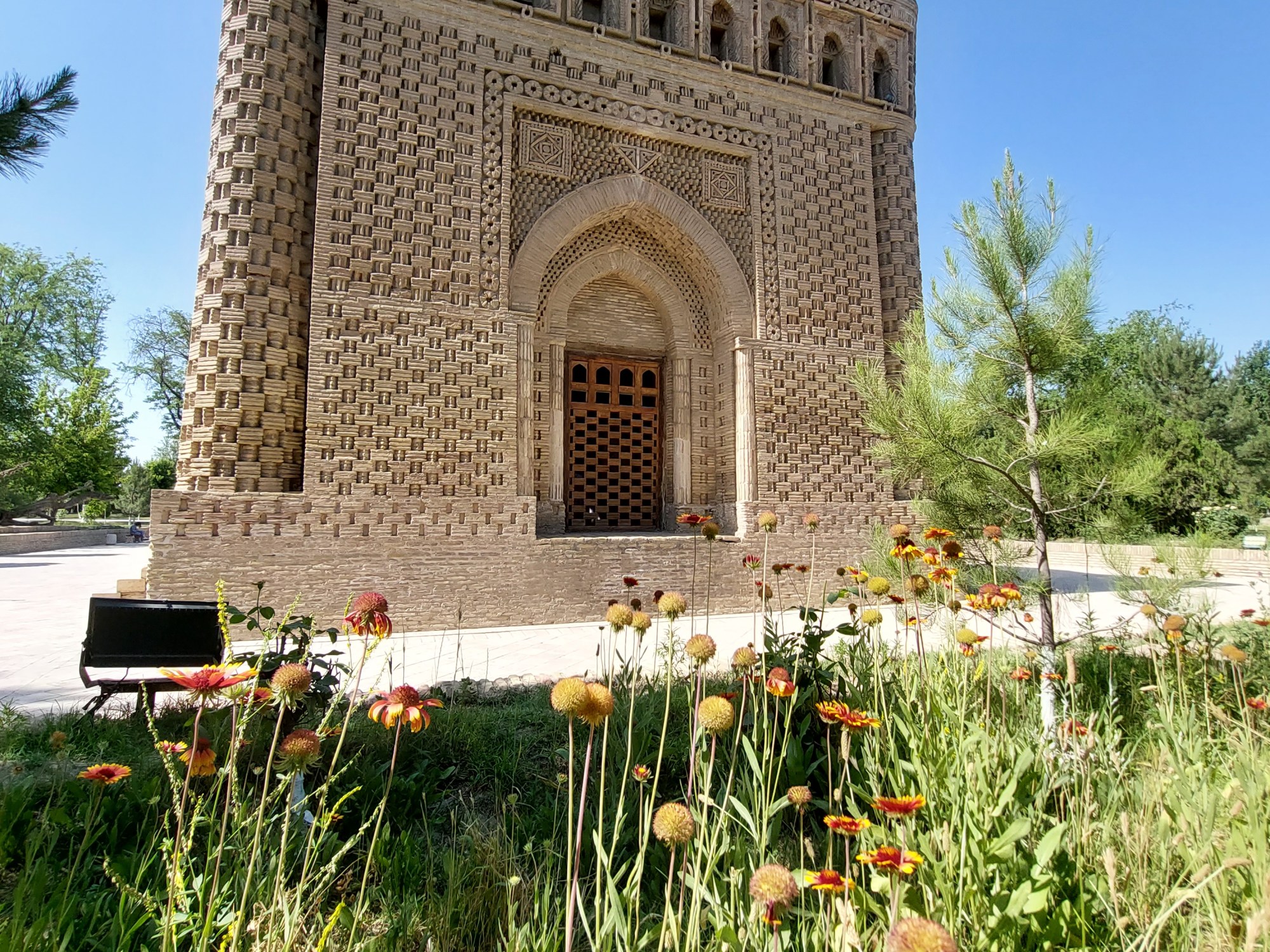
I was immediately attracted to the mausoleum of the Samanid Dynasty.
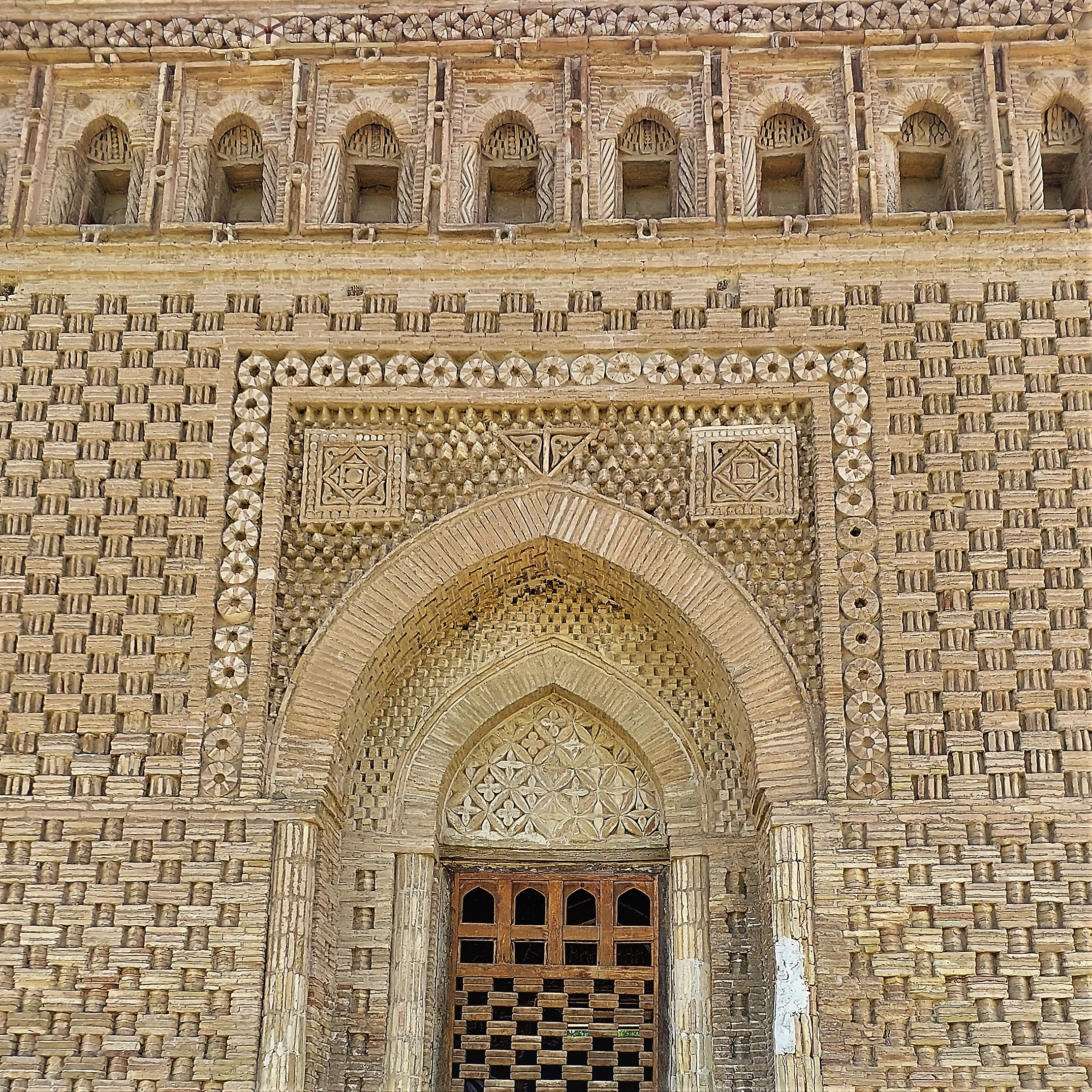
The simple brick building did not have any extraordinary features or carvings. The cubical shape indicated symmetry and balance. It is hard to put in words, why this monument was so attractive to me.

Ismail Samani, founder of the Samanid Dynasty wanted Bukhara to be a prominent city along the trade routes.
He built a family mausoleum in Bukhara, around the 10th Century BCE to emphasize his family’s power which would then put Bukhara on the international trade map.
Several centuries passed and this mausoleum was buried deep, under layers of sand. It lay undisturbed and unknown. Soviet archaeologists discovered it in the early 20th century and restored it.
The mausoleum has a strong influence of Zoroastrian and Islamic architecture. This could be due to the large presence of Zoroastrians in Bukhara, who were slowly converting to Islam at the time it was built.
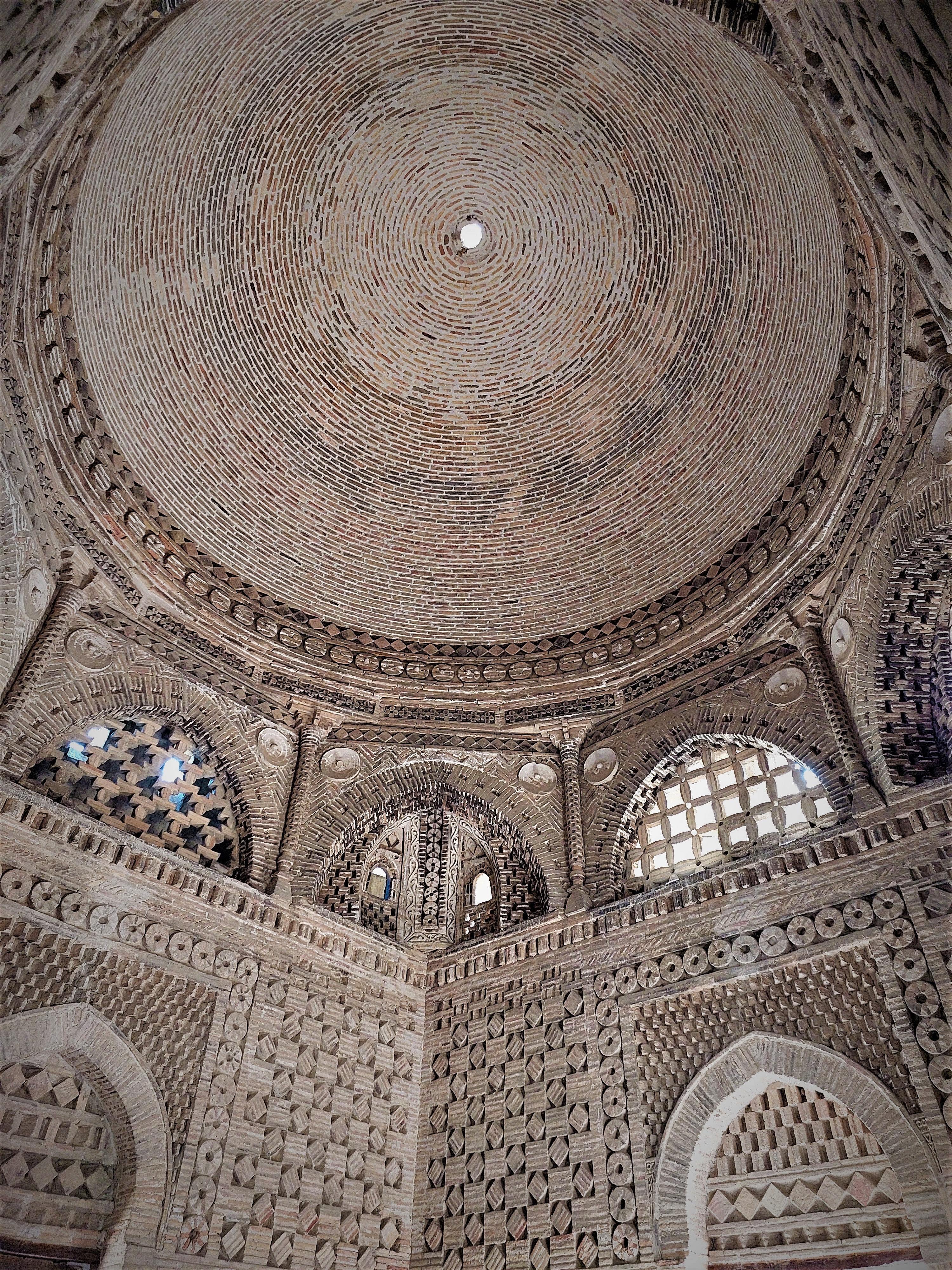
The main structure is cubical with burnt bricks placed in a weaving pattern to resemble a basket. It upholds a dome, and four pillars support the cube. Smaller arches support the main dome.
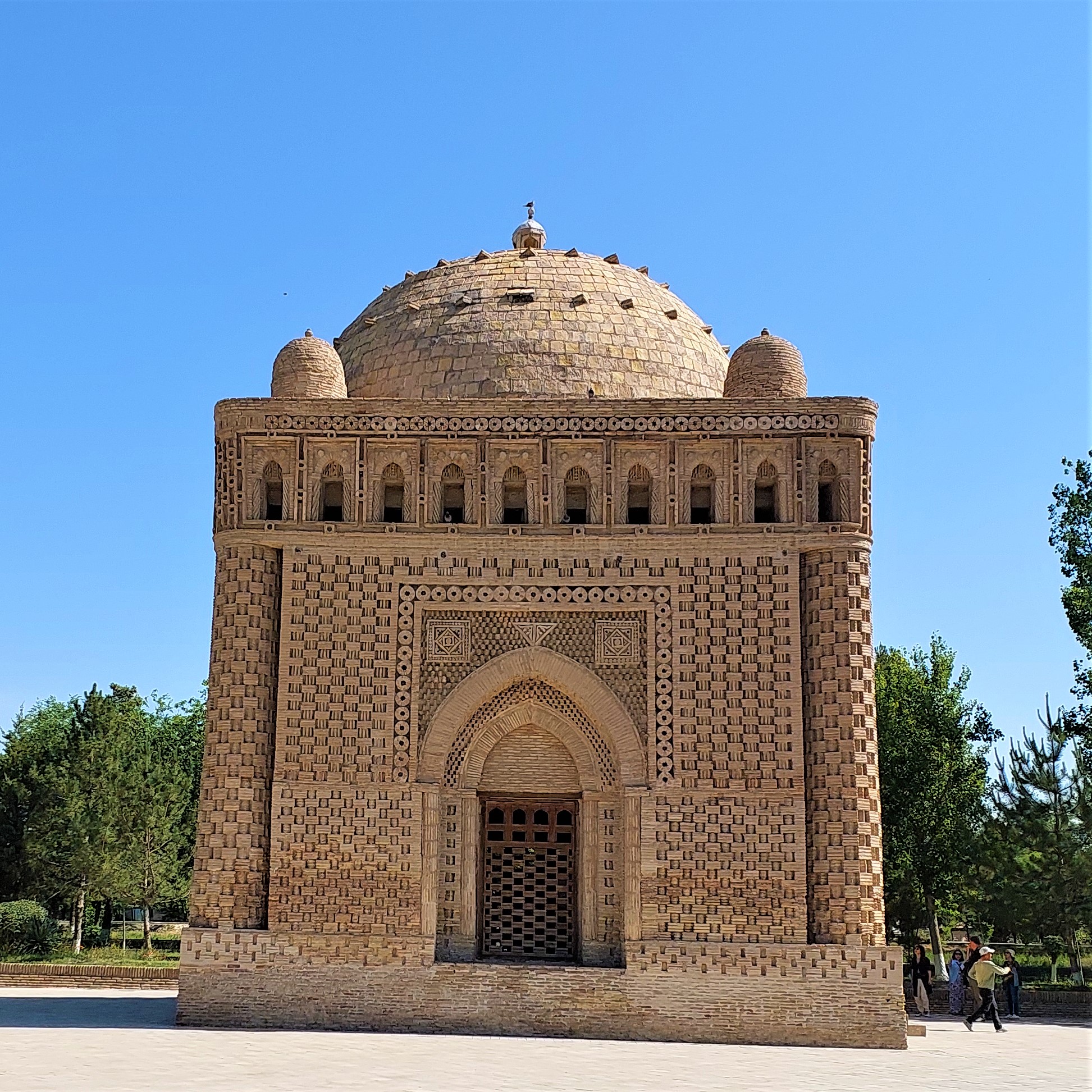
The windows seen on four sides of the monument, and the square shape of the structure resemble a Zoroastrian fire temple.
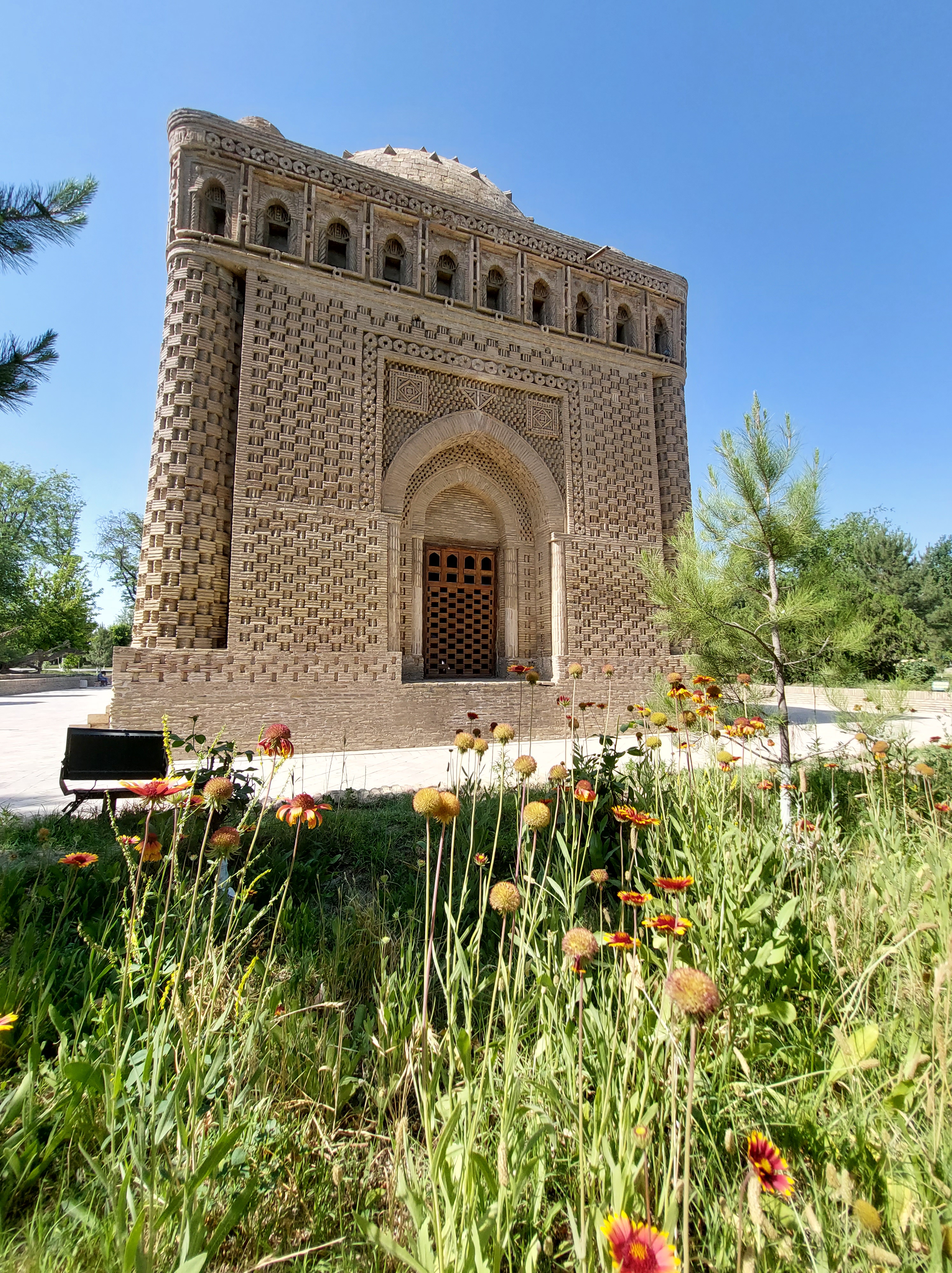
The dome and the four pillars are classic Islamic architectural features. The walls inside are enhanced with geometrical shapes of circles, squares, and diamonds, which are again an Islamic influence.
The architectural fusion seen in the mausoleum is an expression of a time where cultures coexisted in harmony.


 The Smiling Travellerr